

For years, the Toyota Camry has been the benchmark for midsize sedans, thanks to its reliability, fuel efficiency, and exceptionally high resale value. In recent years, however, the Kia K5 has been aggressively challenging the Camry’s throne with its bold design, abundant technology features, and impressive performance.
So, a critical question arises: between the 2026 model year versions, which one delivers better value for money — the Kia K5 or the Toyota Camry? To answer this, we’ll conduct an in-depth, comprehensive comparison of these two popular sedans across multiple dimensions, including performance, fuel economy, interior and technology, safety, and pricing.
Powertrain and Driving Performance
Let’s start by opening the hoods and looking at the heart of both cars — the powertrain. This is one of the areas where the two differ most significantly.
The Kia K5 offers two distinctly different engine choices to meet the needs of various drivers. Notably, its entry-level powertrain is already quite potent. The standard configuration is a 2.5-liter four-cylinder engine producing 191 horsepower and 181 lb-ft of torque. For buyers who simply want a reliable, fuel-efficient daily driver, this power is more than adequate.
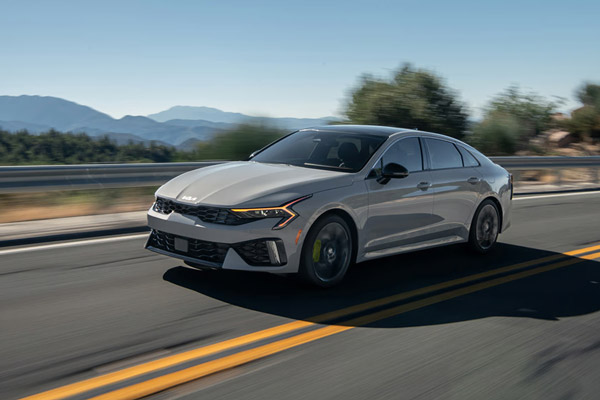
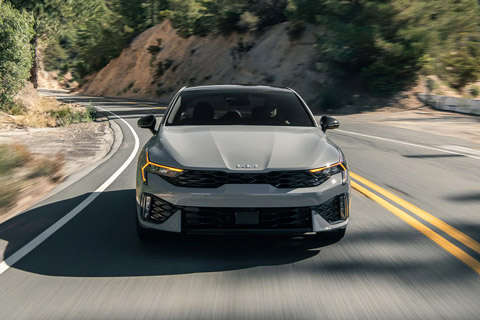
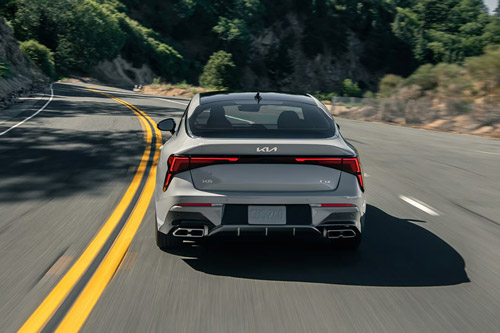
However, if you have higher performance aspirations, the K5 GT model will undoubtedly get your heart racing. It is equipped with a turbocharged 2.5-liter four-cylinder engine that unleashes an astonishing 290 horsepower and a class-leading 311 lb-ft of torque. Paired with a quick-shifting 8-speed dual-clutch automatic transmission, the K5 GT can sprint from 0 to 60 mph in just 5.4 seconds. Furthermore, the K5 GT comes with a sport-tuned suspension, 19-inch alloy wheels, and Pirelli P-Zero® high-performance tires, all of which push its performance to a new level. Even more impressively, the K5 also offers an all-wheel-drive system with torque vectoring, providing enhanced traction and driving confidence in all kinds of adverse weather conditions.
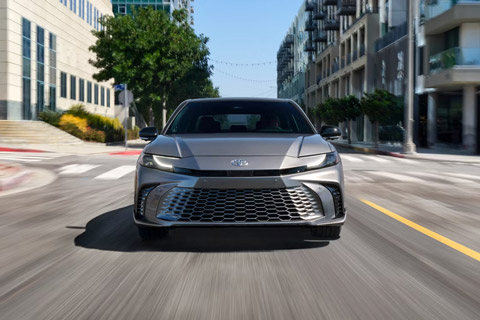
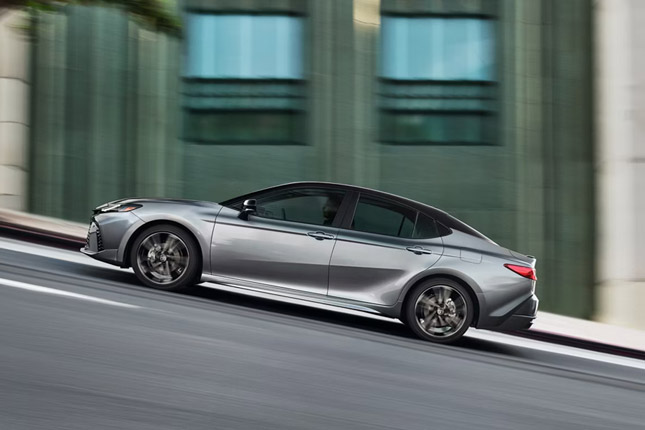
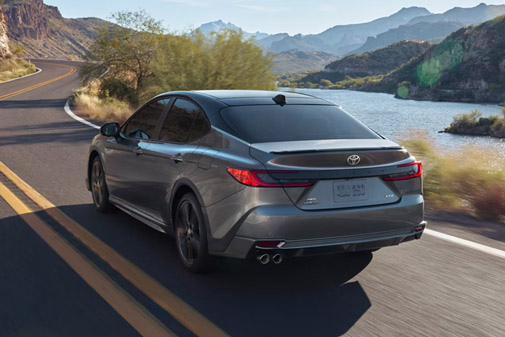
In contrast, the Toyota Camry has taken a different technological path — full hybridization. The 2026 Camry exclusively uses a 2.5-liter four-cylinder hybrid powertrain. The front-wheel-drive version produces a combined system output of 225 horsepower, while opting for the electronic on-demand all-wheel-drive system boosts the combined output to 232 horsepower. Admittedly, the Camry’s power output cannot match the brute force of the K5 GT, but its strength lies in unmatched smoothness and responsiveness. Its electronically controlled continuously variable transmission ensures seamless power delivery, while multiple drive modes — Sport, Eco, and EV — allow the driver to tailor the car’s character at will. The Camry’s suspension tuning also leans more towards comfort, delivering an exceptionally smooth ride.
Therefore, in the performance dimension, the conclusion is clear: if you prioritize driving pleasure and accelerating thrills, the Kia K5, especially the GT version, is the undisputed winner. Conversely, if you value a smooth, quiet, and highly efficient daily drive more, the Camry’s hybrid system is more appealing.
Fuel Economy
When discussing value for money, running costs are an unavoidable factor, and this is the Camry’s absolute strong suit.
The Toyota Camry’s hybrid system demonstrates astonishing efficiency. The EPA-estimated fuel economy for its entry-level LE trim reaches a remarkable 52/49/51 MPG (city/highway/combined). Even the sportier SE and XSE versions boast a combined fuel economy of around 45 MPG. This means that driving a Camry allows you to significantly reduce the frequency of visits to the gas station.
Turning to the Kia K5, its performance comes with a trade-off in fuel consumption. The front-wheel-drive model equipped with the standard 2.5L engine achieves fuel economy figures of 26/37/30 MPG (city/highway/combined), which is a mainstream level for the class. And for the ultimate-performance K5 GT, the fuel economy figures stand at 23/33/27 MPG — the price one must pay to enjoy the driving fun.
Without a doubt, in terms of fuel economy, the Toyota Camry wins by an overwhelming margin, which holds immense appeal for consumers who focus on long-term ownership costs.
Interior Design and Technology Features
Stepping inside, both cars strive to create a modern, tech-focused cabin, but with different design philosophies.
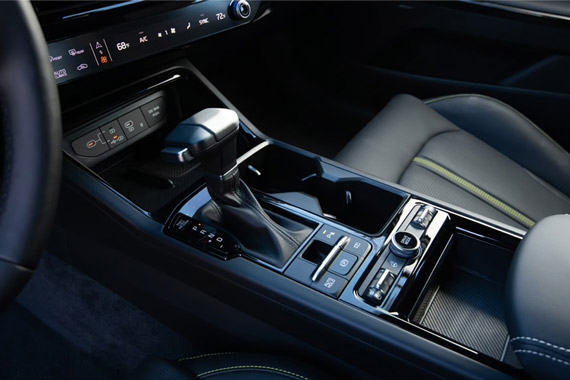
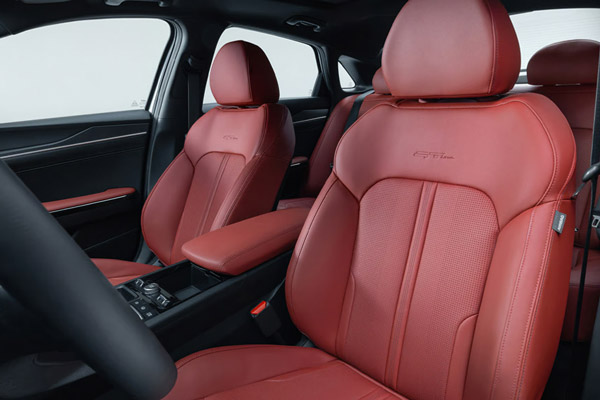
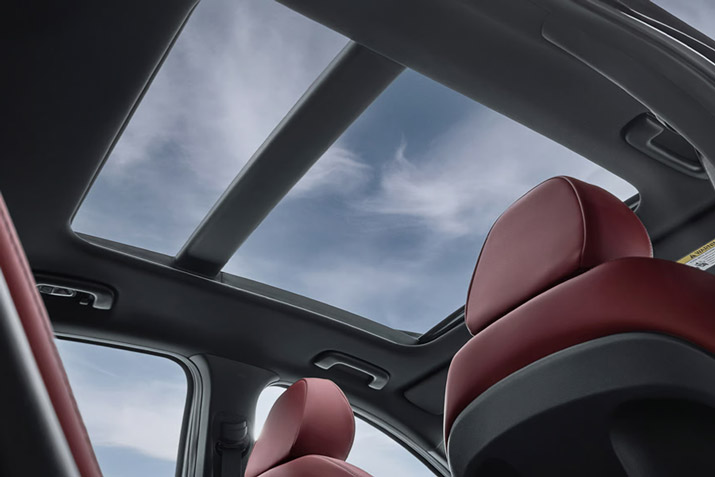
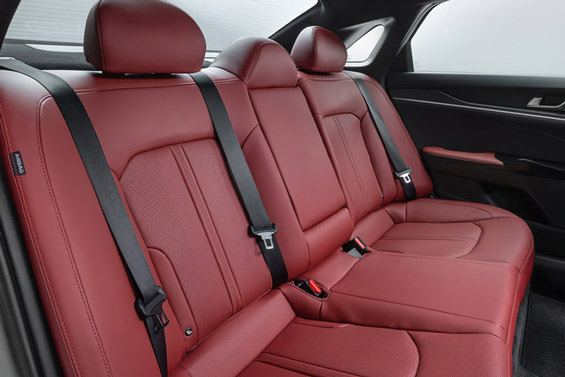
The Kia K5 makes no secret of its driver-centric design ambitions. As soon as you sit in the driver’s seat, you are captivated by the 24-inch integrated panoramic curved display, composed of a 12.3-inch instrument cluster and a 12.3-inch center screen. This system not only delivers a strong visual impact but is also extremely user-friendly, coming standard with wireless Apple CarPlay® and Android Auto™. The K5 also pays attention to detail. GT-Line and above trims feature SynTex synthetic leather seats, heated/ventilated front seats, a Bose® premium audio system, and a panoramic sunroof. Additionally, the K5 offers a range of smart convenience features such as Digital Key 2.0 (allowing you to lock, unlock, and start the vehicle with a smartphone), Amazon Alexa voice control, remote start with climate control, and over-the-air (OTA) updates. In terms of space, the K5 has 105.3 cubic feet of passenger volume, which is more spacious than the Camry.
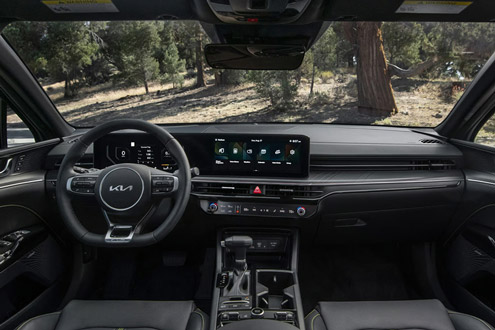
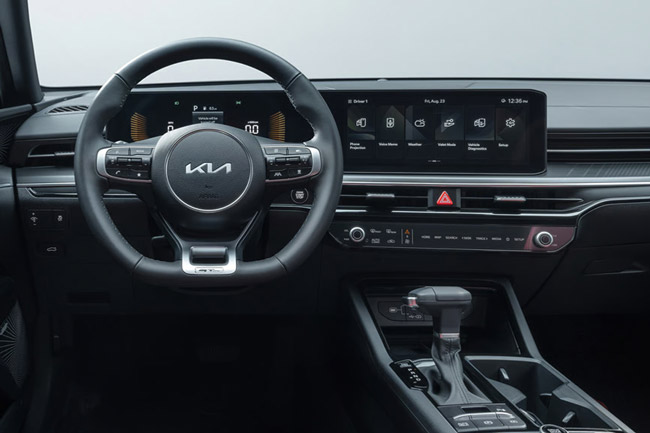
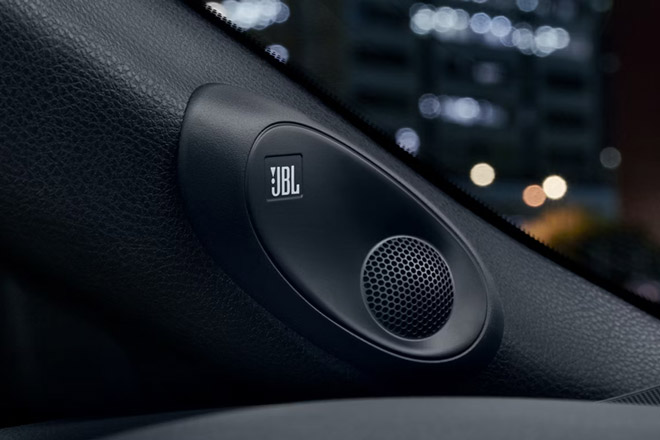
The Toyota Camry’s interior leans more towards a mature, refined, and practical design. The higher-spec XLE and XSE trims also come with a 12.3-inch digital instrument cluster and a 12.3-inch touchscreen infotainment display, and offer a JBL® premium audio system. The SofTex® or leather-trimmed interiors feel quite nice to the touch. The Camry’s tech features emphasize driving assistance more, such as its Traffic Jam Assist system, which enables hands-free driving at low speeds, and the available 12.3-inch color Head-Up Display that projects important information onto the windshield, giving it a strong tech feel. However, the Camry is slightly more conservative when it comes to the widespread availability of cutting-edge features like wireless charging and digital key.
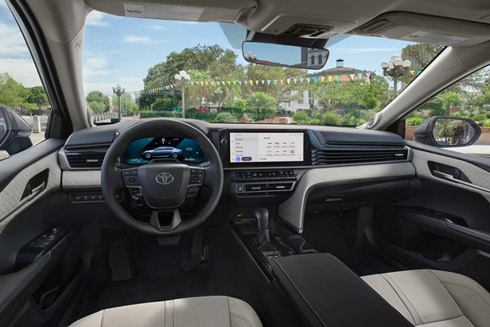
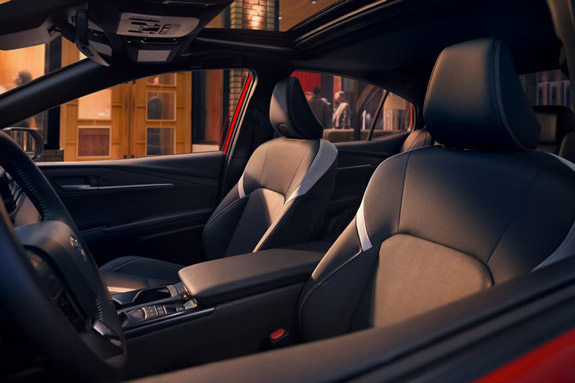

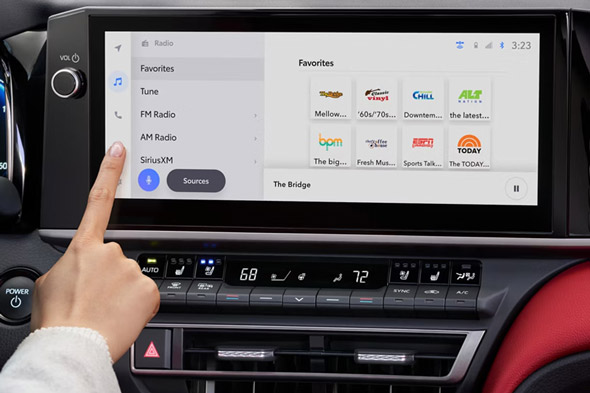
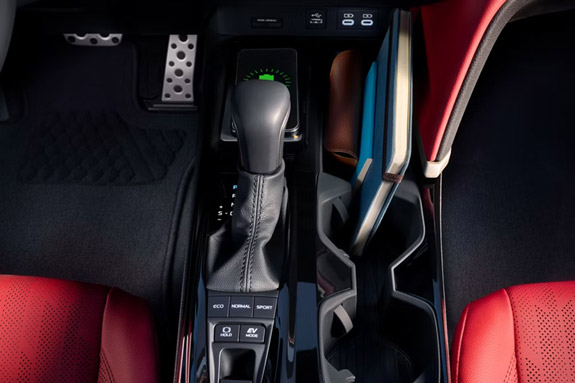
Simply put, the K5’s interior feels more tech-forward, younger, and sportier; while the Camry provides a superior driving assistance and information display experience. Both cars offer a 360-degree surround-view camera to help the driver observe their surroundings at low speeds.
Safety and Warranty Policy
On the safety front, neither car compromises, as both come standard with a comprehensive suite of active and passive safety systems.
The Kia K5 comes standard with multiple key safety technologies, including Automatic Emergency Braking with intersection turn detection, Blind-Spot Collision Warning and Avoidance Assist, and Rear Cross-Traffic Collision-Avoidance Assist. Additionally, its unique Blind-Spot View Monitor projects a real-time video feed of the blind spot on the side of the activated turn signal directly into the instrument cluster, which is particularly friendly for novice drivers. The 2026 K5 has also earned a 5-star safety rating from the National Highway Traffic Safety Administration (NHTSA), giving you greater peace of mind on the road.
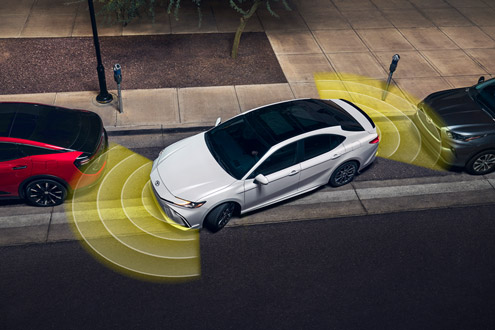
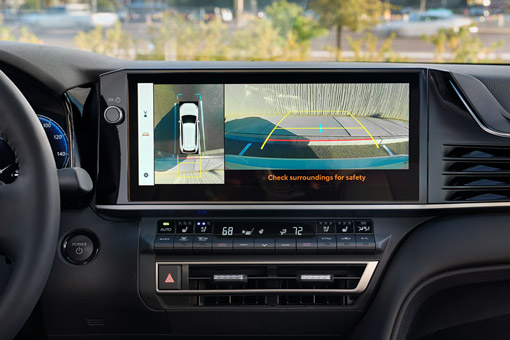
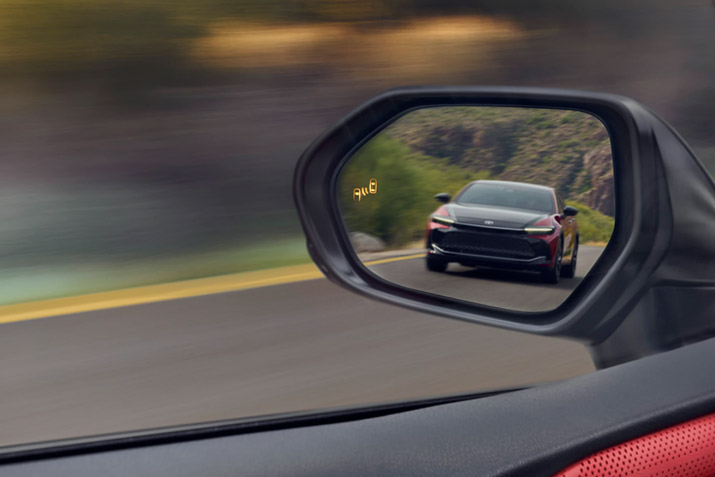
The Toyota Camry also comes standard with the Toyota Safety Sense™ 3.0 suite, which includes a Pre-Collision System, Lane Departure Alert, Full-Speed Range Dynamic Radar Cruise Control, and other similar functions. A unique advantage of the Camry is the Front Cross-Traffic Alert, which can detect approaching vehicles from cross directions when pulling into an intersection at low speeds, further enhancing safety.
However, what ultimately gives the K5 a significant lead in perceived value is Kia’s industry-leading warranty policy: a 10-year/100,000-mile limited powertrain warranty. This is almost double the duration of Toyota’s standard warranty. It is not just a promise; it represents a substantial saving on potential future repair costs, greatly bolstering confidence in long-term vehicle ownership.
Price and Value
Finally, let’s look at pricing, the core factor in measuring value for money.
- 2026 Kia K5 LXS (FWD): Starting MSRP $27,490. Standard equipment includes the 191-horsepower engine, a 12.3-inch touchscreen, wireless smartphone connectivity, and a comprehensive suite of safety systems.
- 2026 Toyota Camry LE (FWD): Starting MSRP $29,300. Although it comes standard with the highly efficient hybrid system, the starting price is nearly $2,000 higher, and the center screen is only 8 inches.
Let’s also look at a comparison of two high-spec trims:
- 2026 Kia K5 GT (FWD): Starting MSRP $33,590. For this price, you get the 290-horsepower engine, sport suspension, panoramic sunroof, and Bose audio system.
- 2026 Toyota Camry XSE (FWD): Starting MSRP $35,700. While well-equipped, it is more expensive, and its performance is far below that of the K5 GT.
It’s evident that the Kia K5 adopts a more aggressive pricing strategy. It offers a more powerful base engine, a larger screen, and more standard features at a lower entry threshold. Even when pursuing extreme performance with the GT version, its value for money far exceeds that of any Camry trim.
Conclusion: Which One Is Right for You?
After this comprehensive comparison, let’s return to the original question: which sedan offers better value for money?
If you want more power, a sportier appearance, cooler tech features, more spaciousness, and a longer warranty for less money, then the 2026 Kia K5 is undoubtedly the better value choice. The K5 GT, in particular, offers an above-class performance experience for just over $33,000, making it an excellent pick for driving enthusiasts who crave excitement.
However, if you seek the low long-term costs brought by exceptional fuel economy, an unparalleled reputation for reliability, a smooth and quiet ride, and high resale value, then the value of the Toyota Camry cannot be measured by a simple spec sheet. Although its purchase threshold is higher, the fuel savings from its hybrid system and the retained value when you sell the car in the future may offset the initial price difference over a long ownership cycle.
In summary, the 2026 Kia K5 is like a vibrant, feature-packed tech trendsetter that wins hearts with concrete specs and pricing; while the 2026 Toyota Camry is more like a steady, savvy life companion that earns trust with subtly effective efficiency and reliability. Your final choice is the best expression of your attitude towards life.


