

- Differentiated Products Bring Pricing Power
- High-Profit After-Sales Service and Parts Bundling
- The Flexible Arbitrage Opportunity of Parallel Imports
- Complementarity of Low-Mileage Used Cars and New Cars
- Financial Strategies to Hedge Against Exchange Rate Fluctuations
- Special Vehicles Meet Niche Market Demands
- Future Outlook Under the Trend of Globalization
In the global automotive market, imported vehicles consistently represent diversity, craftsmanship, and high perceived value. For savvy dealers, these cars from overseas are more than just showroom displays; they are powerful profit engines. Despite market fluctuations, operating an import car business can still generate significant profits for dealers. Below, we will analyze the sources of these profits from a global perspective and explore why, within this ecosystem, the wave of chinese cars for sale also brings new insights to peers worldwide.
Differentiated Products Bring Pricing Power
The core appeal of imported cars lies in their uniqueness. When dealers introduce models not produced locally—such as a German-made station wagon or an American-made full-size pickup truck—you escape the quagmire of price wars with local mainstream brands.
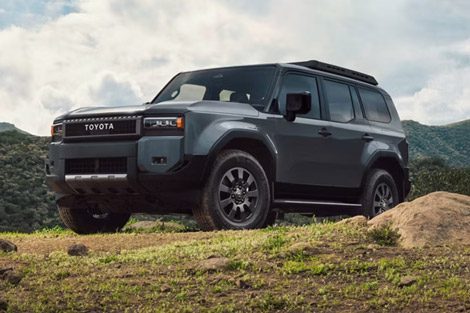
This scarcity grants dealers substantial pricing power. For example, in the U.S. market, a Toyota Land Cruiser imported from Japan, due to its legendary status in the off-road segment, often sells for above the manufacturer’s suggested retail price. Similarly, even in the fiercely competitive European market, Tesla models imported from the U.S. can sometimes command a premium due to shorter delivery times.
By offering configurations unavailable through the local dealer network—like specific interior colors or towing packages—you create a sense of urgency: “Buy it here, or you can’t buy it at all.”
High-Profit After-Sales Service and Parts Bundling
Selling an imported vehicle isn’t just about moving a car; it’s the beginning of a long-term after-sales service relationship. Owners of imported cars typically have higher standards for vehicle maintenance and prefer using original parts or specific grades of fluids.
A dealer’s service department is a vital profit center. When you sell an imported Mercedes-Benz or BMW, you effectively secure maintenance and repair business for years to come. The profit margins on parts for these vehicles are often significantly higher than the marginal profit from the vehicle sale itself.
Furthermore, imported cars often come with demands for personalized modifications. For instance, for Middle Eastern spec models, dealers can offer additional desert off-road packages; for European wagons, exclusive roof rack systems. These high-value-added accessories are a crucial supplement beyond new car sales.
The Flexible Arbitrage Opportunity of Parallel Imports
For dealers, parallel imports represent a dynamic profit model. This unofficial import channel allows you to bypass brand headquarters and source vehicles directly from overseas markets.
Suppose a Canadian dealer notices a particular Audi SUV with a diesel engine is in short supply locally in Europe. They could purchase the same model cheaply from the U.S. market (due to weak demand for that configuration there), modify it for compliance, and then introduce it to Canada. This cross-market price difference creates a direct arbitrage opportunity for the dealer.
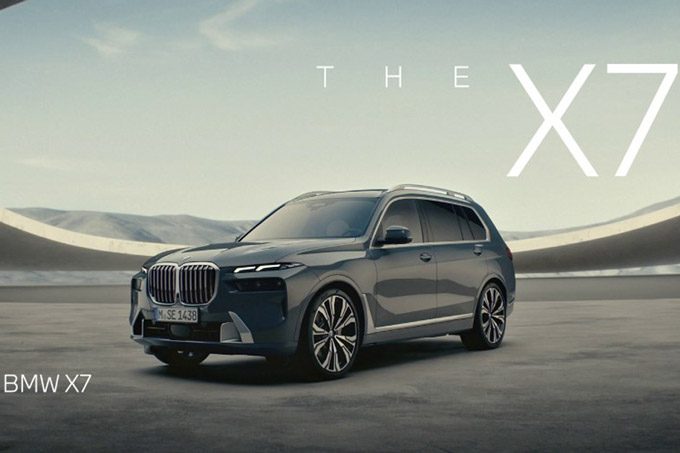
According to market research, parallel imported cars are typically 10% to 20% cheaper than officially channeled models. This price advantage can quickly attract customers. Although profit per vehicle might be compressed due to competition, turnover is extremely fast. For example, at the Tianjin Port, the once-popular BMW X7 model, during specific periods, yielded profits as high as 400,000 to 500,000 RMB (approximately $62,000 to $69,000 USD) through parallel imports.
Complementarity of Low-Mileage Used Cars and New Cars
The import vehicle business isn’t just about selling new cars; it also drives the export of high-quality used vehicles. Many developed countries (like Germany and Japan) have vehicles that, upon retirement, are still in excellent condition and can be sold to developing nations (like those in Africa and Southeast Asia).
For dealers, this creates a mutually beneficial closed loop. For example, a dealer in South Africa can import large numbers of low-mileage used cars from Japan to meet the local middle class’s demand for reliable transportation. Simultaneously, with the rise of China’s automotive industry, the volume of chinese cars for sale globally has surged, providing local dealers with new sourcing options. Dealers in Africa or South America can now choose not only traditional Japanese or German imports but also highly cost-effective Chinese-brand new or used cars, greatly enriching their product lines and catering to customers with diverse budgets.
Financial Strategies to Hedge Against Exchange Rate Fluctuations
Experienced import car dealers know how to use financial tools to their advantage. When you engage in import business, you are effectively dealing with the global currency market. If you anticipate the Euro weakening against the US Dollar, you can delay payment to European suppliers; conversely, you can lock in exchange rates in advance.
If executed properly, such financial maneuvers can directly translate into profit. Imagine a Brazilian dealer importing electric vehicles from China. When the Brazilian Real is strong, they can settle at a lower local cost, thereby significantly increasing the net profit per vehicle without lowering the selling price.
Special Vehicles Meet Niche Market Demands
Import car dealers can also profit by catering to specific industry needs. For example, supplying reinforced Toyota Land Cruisers to mining companies, or providing luxury electric vehicles as courtesy cars to high-end hotels.
These B2B sales often involve large multi-vehicle orders, and clients are less price-sensitive, focusing instead on whether the vehicle can perform under extreme conditions. A BMW X7, priced at $73,900 USD in Texas, USA, after import and customized modifications, could easily sell for well over $100,000 USD in a specific market to a multinational corporation looking to enhance its corporate image.
Future Outlook Under the Trend of Globalization
Currently, the automotive industry is undergoing dramatic changes. China has surpassed Japan to become the world’s largest car exporter, meaning the global dealer network is being reshaped. For dealers worldwide, the future of vehicle imports is no longer confined to “West to East” but represents true globalization.
Numerous cases of chinese cars for sale in Europe, the Middle East, and Australia indicate that the definition of an “import car” is expanding. Dealer profit points are also extending to providing localized services tailored for these new cars, installing charging facilities, and offering language localization (Sinicization/Anglicization) services for intelligent systems.
From bidding at used car auctions in Japan, to test driving on Germany’s speed-limitless highways, to the roll-on/roll-off ships carrying chinese cars for sale across the globe, the import vehicle business has always been one of the most fascinating sectors in automotive circulation.
For dealers, profits come not only from price differentials but also from your unique vision as “global buyers,” flexible inventory management, and irreplaceable localized services. When you hand over a car with a touch of foreign flair to a customer, you deliver not just a mode of transport, but a story about distant lands and quality. In this process, mastering the global supply chain and deeply cultivating local services will be the key to your invincibility.


