

- 2026 Trax: Key Highlights at a Glance
-
2026 Trax Five Trim Levels Explained: Which One Is Right for You?
- 1. LS (Starting at $23,495) — The Most Affordable Entry Point
- 2. 1RS (Starting at $24,995) — Entry-Level Sporty Flair
- 3. LT (Starting at $24,995) — The Tech and Comfort Balance
- 4. 2RS (Starting at $27,195) — The Ultimate Sporty Expression
- 5. ACTIV (Starting at $27,195) — Rugged Off-Road Styling
- Trim Level Summary Table
- Driving Experience: A Comfortable Companion for City Commutes
- Interior, Space, and Technology: A Premium Feel Beyond Its Price
- Competitor Comparison: Where Does the Trax Stand in the Market?
- 2025 vs. 2026 Model Year: Buy New or Hunt for a Leftover?
- Frequently Asked Questions
- Final Buying Recommendations
- Evaluating Value from a Global Perspective
If you are looking for a small SUV that is budget-friendly, stylish, and inexpensive to run day to day, the 2026 Chevrolet Trax absolutely deserves a serious look. With its bold design language, roomy interior, and generous tech features, this model has quickly become one of the hottest small SUVs on the market. In fact, the Trax is not only Chevrolet’s second best-selling SUV, but its full-year sales surpassed 200,000 units in 2025, outperforming strong rivals such as the Kia Seltos and Honda HR-V.
That said, the Trax is not without its flaws. In the following sections, we will analyze this vehicle from multiple angles—performance, space, fuel economy, trim levels, safety performance, and more—while also comparing it with its chief competitors. In addition, we will explore a topic you may find interesting: as more and more Chinese cars for sale appear in overseas markets, is the Trax’s position in the global small SUV landscape shifting? Let’s find out.
2026 Trax: Key Highlights at a Glance
The 2026 Chevrolet Trax does not undergo a radical redesign. Chevrolet sticks with the winning formula introduced in the 2024 refresh—bold styling, class-leading technology, and an interior quality that punches well above its price tag. Changes for 2026 focus mainly on two areas: the addition of two new exterior colors, White Sands and Apex Red, and the streamlining of certain optional accessories, meaning items like the all-weather floor mat package and cargo organizers are no longer offered.


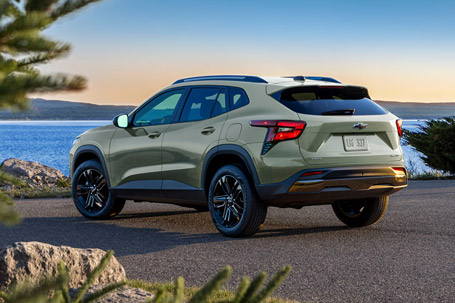
Core specifications are as follows:
| Item | Specification |
| Engine | ECOTEC 1.2L Turbocharged 3-cylinder |
| Maximum Power | 137 hp @ 5000 rpm |
| Peak Torque | 162 lb-ft @ 2500 rpm |
| Transmission | 6-speed automatic |
| Drive Type | Front-wheel drive (FWD); no all-wheel drive option |
| EPA Fuel Economy (City/Highway/Combined) | 28 / 32 / 30 mpg |
| Overall Length | 178.6 inches (4,537 mm) |
| Maximum Cargo Volume | 54 cubic feet |
| Seating Layout | 5 seats |
The 2026 Trax uses the same powertrain across the entire lineup and does not offer an all-wheel-drive option. This strategy is one of the keys to the Trax’s price competitiveness—eliminating the AWD system not only reduces manufacturing costs but also trims weight, which helps improve fuel economy.
2026 Trax Five Trim Levels Explained: Which One Is Right for You?
Chevrolet divides the 2026 Trax into five trims, with starting prices ranging from $23,495 to $27,195. Each trim has a distinct positioning so you can choose based on your needs and budget.
1. LS (Starting at $23,495) — The Most Affordable Entry Point
The LS is the most basic and economical version in the Trax family. Despite the lowest price, the LS does not skimp on core safety and tech features. You still get:
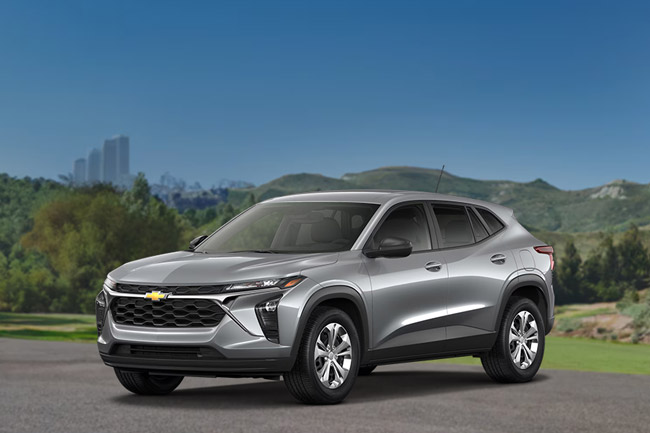
- Chevy Safety Assist suite, including Forward Collision Alert, Automatic Emergency Braking, Front Pedestrian Braking, Lane Keep Assist with Lane Departure Warning, Following Distance Indicator, and IntelliBeam® Auto High Beam Assist
- Wireless Apple CarPlay and Android Auto
- LED headlamps
- Active Noise Cancellation
As noted by TrueCar: “If you’re looking to keep monthly payments as low as possible without giving up modern safety and connectivity features, the LS is your best bet—it delivers all the essentials with no unnecessary frills.”
2. 1RS (Starting at $24,995) — Entry-Level Sporty Flair
The 1RS injects a dose of sporty DNA into the LS foundation. The powertrain is identical, but the exterior and interior exude more attitude. Key upgrades include:
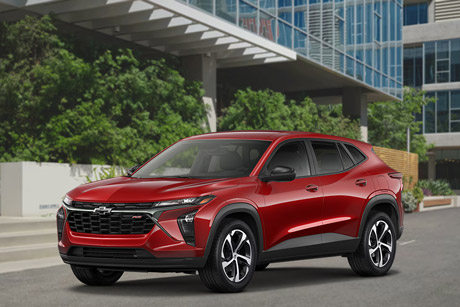
- 18-inch machine-faced two-tone aluminum wheels
- RS-specific badging and unique grille design
- Black Chevrolet bowtie emblems
- Red interior accents
If you want a small SUV that looks more distinctive and your budget hovers around the $25,000 mark, the 1RS is a very compelling value proposition.
3. LT (Starting at $24,995) — The Tech and Comfort Balance
The LT starts at the same price as the 1RS but takes a completely different approach. The LT prioritizes technology and daily convenience, trading sporty styling for features such as:
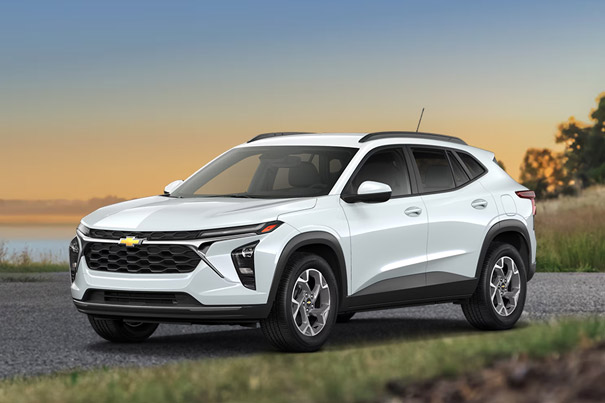
- 11-inch diagonal HD touchscreen infotainment system (LS and 1RS feature an 8-inch screen)
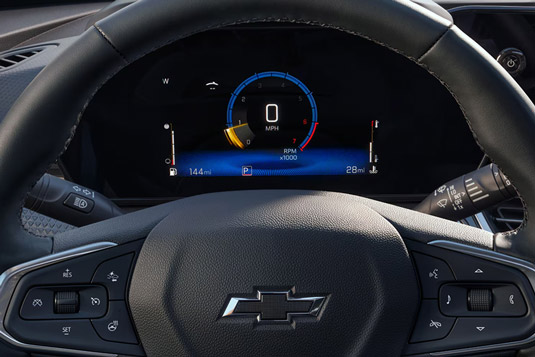
- 8-inch diagonal digital instrument cluster
- Remote start system
- Automatic climate control
- Available Adaptive Cruise Control
If everyday tech experience and comfort matter more to you than a sporty appearance, the LT is unquestionably the best value among the trims.
4. 2RS (Starting at $27,195) — The Ultimate Sporty Expression
The 2RS is the most aggressively styled trim in the Trax lineup. It builds on the 1RS with further enhancements:
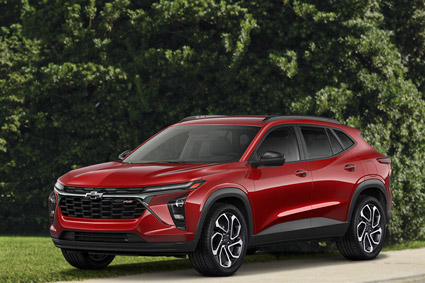
- 19-inch machine-faced two-tone aluminum wheels
- RS-specific badging and grille
- Black badging
- Red interior accents
- Sport-style flat-bottom steering wheel
- Evotex seat upholstery
Additionally, the 2RS comes standard with the 11-inch touchscreen and 8-inch digital instrument cluster, with options for a sunroof and wireless charging package. As described in a Torque News review: “The 2RS version of the Trax has a look that makes you glance back involuntarily when walking away in the supermarket parking lot.”
5. ACTIV (Starting at $27,195) — Rugged Off-Road Styling
The ACTIV trim shares the same starting price as the 2RS but offers an entirely different vibe. ACTIV leans toward a rugged, off-road-inspired aesthetic rather than a sporty one. Key features include:
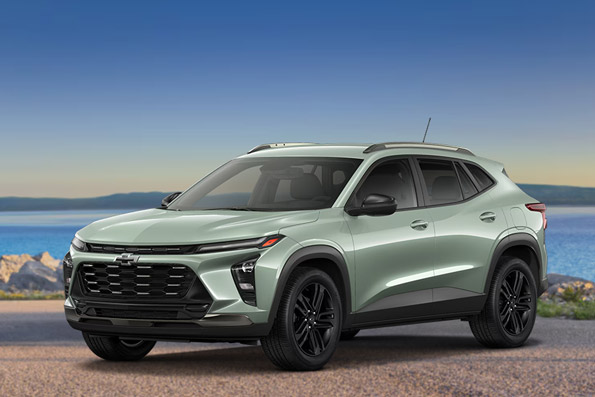
- 18-inch black painted aluminum wheels
- Titanium chrome-accented black grille
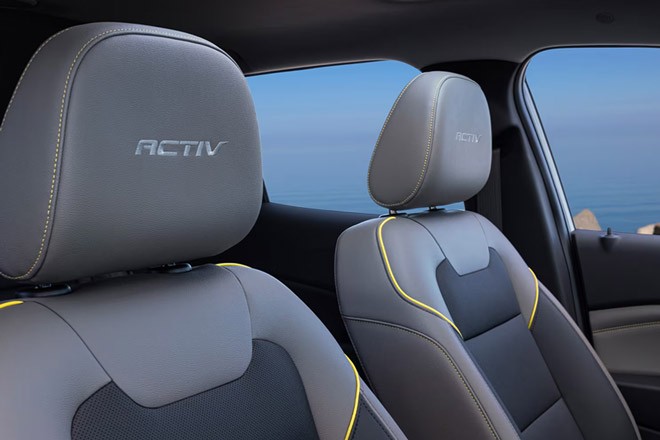
- Unique Evotex seating with yellow accents
- ACTIV-specific badging
- Heated steering wheel
- Imitation leather seat fabric
Chevrolet officially describes ACTIV this way: “Titanium chrome exterior accents, black wheels, and bold yellow interior details give the ACTIV trim confident, standout style for every journey.”
Trim Level Summary Table
| Trim | Starting Price (incl. destination) | Core Highlights |
| LS | $23,495 | Complete basic equipment; lowest budget entry |
| 1RS | $24,995 | Sporty style, 18-inch wheels, red interior accents |
| LT | $24,995 | 11-inch large screen, automatic climate control, tech-focused |
| 2RS | $27,195 | 19-inch wheels, flat-bottom steering wheel, strongest sporty feel |
| ACTIV | $27,195 | Rugged styling, yellow interior accents, heated steering wheel |
Recommended Choice: For the vast majority of consumers, the LT offers the best value. For around $25,000 it provides the 11-inch large screen, digital instrument cluster, and automatic climate control—delivering a level of comfort and tech sophistication far beyond the entry trims. If you crave a sporty appearance, the 1RS is also worth considering. The 2RS and ACTIV trims are suited for those willing to spend extra for personality and ambiance.
Driving Experience: A Comfortable Companion for City Commutes
The 2026 Trax is powered by a 1.2-liter turbocharged three-cylinder engine producing 137 horsepower and 162 lb-ft of torque, mated to a 6-speed automatic transmission. Let’s be clear—the Trax is not a vehicle built for driving excitement.
From a standing start, the Trax performs adequately for everyday city commuting. However, merging onto highways or passing requires planning ahead—power delivery is somewhat slow, and the engine can sound rather noisy under load. A Cars review bluntly states: “The engine lets you hear it working hard, and under heavy load the noise is noticeable and coarse.” In addition, the Trax’s engine start-stop system exhibits a pronounced shudder, though fortunately it can be easily deactivated with a button.
On the plus side, the Trax’s suspension tuning deserves praise—it absorbs road imperfections well, delivering a comfortable ride. At the same time, the Trax is one of the nimblest and easiest models to park in its class, excelling on tight city streets and in cramped parking spots.
AutoTrader gave it an overall score of 8.1 out of 10, with driving dynamics earning a strong 9.0. Consumer Guide’s test team found the Trax “comfortable, spacious, economical, and quiet,” yet also noted “the engine is a bit coarse and lacks punch for highway passing.”
In short, the Trax is a comfortable, economical city companion—not a toy for spirited driving enthusiasts.
Interior, Space, and Technology: A Premium Feel Beyond Its Price
If there is one area where the Trax most surprises, it is the interior and space utilization.
Interior Space
Although classified as a small SUV, the Trax offers surprisingly generous interior room. Its wheelbase was significantly lengthened compared with the previous generation, resulting in 38.7 inches of rear-seat legroom—2.2 inches more than a Subaru Crosstrek. The cargo area provides 25.6 cubic feet behind the rear seats, expanding to 54 cubic feet with the 60/40 split-folding rear seats folded down. That’s ample for weekend getaways, Costco runs, or hauling small furniture items.

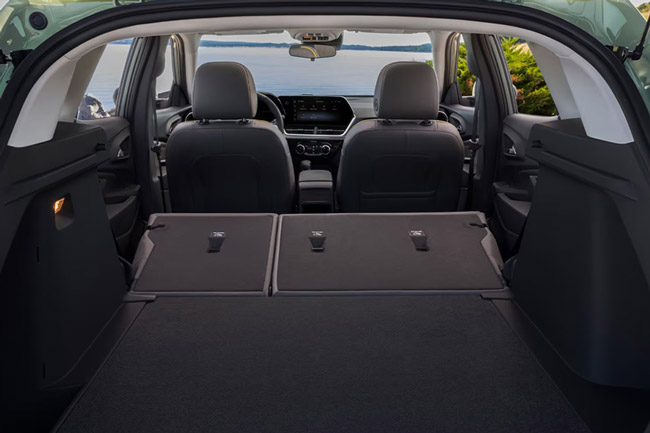
Consumer Guide gave the Trax’s space and comfort an A-grade rating, noting that “larger testers were very comfortable up front, and tall testers had no issues either.”
Interior Quality
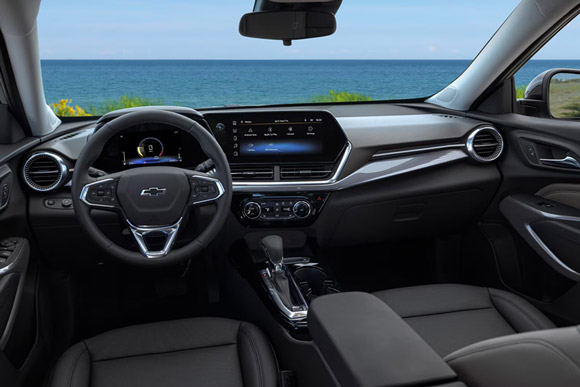
The Trax’s cabin indeed uses a fair amount of hard plastic, but Chevrolet’s execution is commendable—the layout is clean, materials are well coordinated, and there are no loose parts or rattles. A Torque News review puts it this way: “A lot of small SUVs at this price point are full of cheap plastic everywhere. Chevy uses plastic too, but it’s how they use it. The Trax’s layout is neat, the materials are chosen smartly, and nothing wobbles or makes noise.”
Technology Features
The Trax is equally generous when it comes to tech:
- Base LS and 1RS: 8-inch touchscreen + Wireless Apple CarPlay / Android Auto (standard across all trims)
- LT and above: 11-inch touchscreen + 8-inch digital instrument cluster
- Chevy Safety Assist suite standard on all trims
- Available sunroof and wireless charging package
- Available Adaptive Cruise Control (LT and higher)
The 11-inch screen is the absolute focal point of the Trax’s interior. It is crisp and responsive, and its presence at this price point feels like a class-above feature. As Torque News notes: “Thanks to that 11-inch wide display alone, the Trax’s interior feels much more expensive than it actually is.”
Fuel Economy: A Penny-Saver for Daily Driving
Fuel economy is a strong suit of the Trax. EPA official estimates for the 2026 Trax stand at 30 mpg combined (28 city / 32 highway). In real-world testing, Cars logged over 400 miles (primarily highway driving) and averaged 30.2 mpg, aligning closely with EPA figures. Consumer Guide’s test vehicle, in a 65% city / 35% highway mixed cycle, returned 30.1 mpg.
The Trax runs on regular unleaded gasoline—no premium fuel required—further reducing everyday operating costs. Overall, the Trax is not only affordable to buy but also easy on the wallet at the pump.
Safety Performance: A Shortcoming That Cannot Be Ignored
If there is one drawback that demands the most careful consideration, it is the Trax’s safety performance. The IIHS (Insurance Institute for Highway Safety) conducted comprehensive crash tests on the 2026 Trax, and the results are concerning:
| Test Item | IIHS Rating |
| Driver-side small overlap front | Good |
| Moderate overlap front (updated test) | Poor |
| Side impact | Acceptable |
| Front crash prevention: vehicle-to-vehicle | Poor |
| Front crash prevention: pedestrian | Marginal |
| Headlights | Marginal |
In the IIHS’s latest “moderate overlap front” test—which adds an assessment of potential rear-seat occupant injury to the driver-side small overlap evaluation—the Trax received the lowest rating of “Poor.” This result is particularly troubling.
The NHTSA (National Highway Traffic Safety Administration) has not yet completed full crash testing for the 2026 Trax, but the 2025 model earned an overall four-star rating.
One overseas media outlet put it bluntly: “Despite the extremely affordable price and spacious interior, safety performance is a fatal flaw. In the IIHS’s latest ‘moderate overlap front’ test, the Trax earned the lowest possible ‘Poor’ rating, and side impact was only ‘Acceptable.’ This means that in the event of a crash, the low purchase price may not provide adequate survival space.”
Important Note: If safety is your top priority—especially if you frequently carry children or rear-seat passengers—it is advisable to weigh the Trax’s crash-test results carefully before purchasing. Of course, the standard Chevy Safety Assist suite (including Automatic Emergency Braking and Lane Keep Assist) still offers a certain level of active safety protection in daily driving.
Competitor Comparison: Where Does the Trax Stand in the Market?
Trax vs. Subaru Crosstrek
The Subaru Crosstrek is one of the Trax’s most important rivals. The differences between the two are pronounced:
| Comparison Item | 2026 Trax | 2026 Crosstrek |
| Starting Price | $23,495 | Approx. $28,000 |
| Engine | 1.2L turbo 3-cyl, 137 hp | 2.5L naturally aspirated 4-cyl, 180 hp |
| Drive Type | FWD only | Standard Symmetrical All-Wheel Drive |
| Rear Legroom | 38.7 inches | 36.5 inches |
| Cargo Volume (rear seats up) | 25.6 cubic feet | 19.7 cubic feet |
Conclusion: The Crosstrek offers stronger power, standard AWD, and better brand reputation, but costs roughly $4,500 more. The Trax wins in space, price, and fuel economy.
Trax vs. Hyundai Venue
The Hyundai Venue is the most affordable small SUV in the U.S. market, starting at $22,150. Both models are front-wheel-drive only, but they differ in space and features:
| Comparison Item | 2026 Trax | 2026 Venue |
| Starting Price | $23,495 | $22,150 |
| Engine | 1.2L turbo 3-cyl, 137 hp | 1.6L naturally aspirated 4-cyl, 121 hp |
| Maximum Cargo Volume | 54 cubic feet | 31.9 cubic feet |
| Center Touchscreen | 8-inch or available 11-inch | 8-inch |
Conclusion: The Venue is slightly cheaper, but the Trax holds a clear advantage in power, space, and tech. If budget is not the absolute foremost consideration, the Trax is the more well-rounded choice.
Trax vs. Kia Seltos
The Kia Seltos ranks third in Car and Driver’s small SUV rankings, with an overall score of 8.5/10. Starting at $25,285, it offers both FWD and AWD choices. The Seltos’s strengths include a broader powertrain lineup, AWD availability, and Kia’s excellent warranty coverage. Yet the Trax wins over many buyers with its lower price and larger 11-inch screen.
Trax vs. Mazda CX-30
The Mazda CX-30 ranks second in Car and Driver’s small SUV rankings, scoring 9.5/10 and starting at $27,470. The CX-30 is renowned for near-luxury interior quality and engaging driving dynamics, though its rear seat and cargo space are notably smaller than the Trax’s. The CX-30 appeals to buyers seeking driving enjoyment and premium feel, while the Trax emphasizes value and practicality.
2025 vs. 2026 Model Year: Buy New or Hunt for a Leftover?
If you are debating whether to purchase a 2026 model or seek out a leftover 2025 inventory vehicle, the answer is quite simple:
The 2025 and 2026 models are essentially identical. The powertrain, platform, interior design, and technology features—all of these core elements remain unchanged. Both model years offer the same five trims: LS, 1RS, LT, 2RS, and ACTIV.
The primary changes for 2026 are limited to:
- Addition of two new exterior colors (White Sands and Apex Red)
- Deletion of certain optional accessories (such as floor mat packages)
- A price increase across the lineup ranging from about $400 to $1,100
Buying Advice: If you can find a 2025 model on a dealer’s lot and negotiate a discount, the 2025 is unquestionably the better deal—you get exactly the same vehicle for less money. However, if you have your heart set on one of the newest exterior colors or the 2025 inventory is gone, the 2026 Trax remains a worthwhile purchase.
Frequently Asked Questions
Q: Does the 2026 Trax have all-wheel drive (AWD)?
A: No. The Trax is offered exclusively with front-wheel drive. If you require AWD, consider the Chevrolet Trailblazer, Subaru Crosstrek, or Kia Seltos.
Q: What is the Trax warranty coverage?
A: Chevrolet provides a 3-year/36,000-mile bumper-to-bumper limited warranty and a 5-year/60,000-mile powertrain limited warranty. The first scheduled maintenance visit is included as well.
Q: Is the Trax suitable for families?
A: For a small family, the Trax is a solid entry-level option. The rear seat accommodates child safety seats, and the cargo area can hold a stroller and daily gear. If you need significantly more space or regularly travel with five occupants, a larger SUV would be a better fit.
Q: How well does the Trax hold its value?
A: Chevrolet’s resale value tends to be mid-pack within the industry. However, given the Trax’s affordable starting price, the absolute dollar amount of depreciation is relatively manageable.
Q: Where is the Trax built?
A: The 2026 Chevrolet Trax is manufactured in South Korea.
Final Buying Recommendations
Who Should Buy the 2026 Chevrolet Trax?
- First-time buyers with a budget around $25,000 – The Trax is one of the most complete and stylish new cars available in this price range.
- Urban commuters – Low fuel consumption, nimble footprint, and easy parking make it ideal for city life.
- Small SUV shoppers seeking maximum space – The Trax’s rear legroom and cargo capacity are among the best in its class.
- Consumers who value technology features – An 11-inch large screen, wireless CarPlay/Android Auto, and generous standard equipment.
Who Should Look Elsewhere?
- Buyers who need all-wheel drive – If you live in a snowy region or frequent unpaved roads, prioritize the Subaru Crosstrek or Kia Seltos.
- Those who place extreme importance on safety – The Trax’s performance in certain IIHS crash tests is worrisome. If safety is your paramount concern, consider the Honda HR-V, Mazda CX-30, or Toyota Corolla Cross.
- Driving enthusiasts – The Trax’s power is adequate for daily use but it is far from a driver’s car. If driving pleasure matters, the Mazda CX-30 is a better choice.
- Users who require stronger power – With 137 horsepower, highway passing can feel strained. If you frequently drive on highways, look at models with more robust engines.
Evaluating Value from a Global Perspective
Car and Driver ranks the 2026 Chevrolet Trax first in its small SUV segment, awarding a perfect 10-out-of-10 score and commenting: “The Trax is one of the cheapest new cars on the market, but its build quality and pleasant driving manners exceed its price tag by a wide margin.”
Of course, we also recognize that the competitive landscape of the global automotive market is shifting. As more and more Chinese cars for sale appear in overseas markets, traditional Western automakers are facing mounting competitive pressure in the entry-level SUV segment. Chinese brands such as BYD, Geely, and Great Wall Motor are conquering global small SUV markets with extremely competitive pricing and ever-improving product quality. For consumers, this is undoubtedly good news—more choices, better prices, and richer feature content.
The Chevrolet Trax has managed to distinguish itself in this intense competition precisely because of its “quality beyond its price point.” It proves that an entry-level SUV can indeed deliver outstanding design, spacious accommodations, and a wealth of technology features. If you can accept its lack of all-wheel drive, modest power output, and certain shortcomings in safety testing, the 2026 Trax is absolutely a great vehicle worth buying.


