

Fuel prices continue to fluctuate globally. Meanwhile, stringent emission regulations push automakers to improve vehicle fuel efficiency continuously. Examples include the EU’s Euro 7, the U.S. CAFE standards, and the globally harmonized WLTP test procedures. However, one thing remains constant no matter what you drive. Your driving habits directly determine your vehicle’s fuel consumption and wear rate. This applies whether you own a European luxury brand or an American pickup truck. It applies to a Japanese economy sedan as well. And it certainly applies to the increasingly popular chinese cars for sale models in global markets today. Good driving practices save you significant money on fuel. They also extend the service life of the engine, transmission, brakes, and tires. This reduces long-term maintenance costs. This holds true for both gasoline vehicles and hybrids. In this article, we analyze the driving habits that best improve fuel economy and reduce vehicle wear.
Why Do Your Driving Habits Matter So Much?
Many car owners believe that design and manufacturing quality primarily determine a vehicle’s fuel consumption and lifespan. That is certainly true. A well-designed car has an inherent foundation of good fuel economy and reliability. This includes luxury sedans made in Germany. It also includes the increasingly popular chinese cars for sale brands gaining traction in the Middle East, Southeast Asia, and Latin American markets. However, the way you drive and maintain the vehicle afterward has an equally significant impact. It may be even more critical.
Data indicates that harsh driving conditions can reduce engine oil life by over 50%. This means engine wear can differ by a factor of two for the same 10,000-kilometer trip. It all depends on driving style. Furthermore, poor driving habits waste staggering amounts of fuel. For instance, during rapid acceleration, the engine fuel injectors may spray an additional 30% to 50% more fuel. Frequent hard braking followed by hard acceleration wastes up to 15% of fuel. This is the “on-and-off” cycle of the pedals. From an economic perspective, optimizing driving habits can typically save 10% to 25% on fuel. This translates to substantial savings every time you refuel.
More importantly, fuel economy standards worldwide are becoming increasingly stringent. The European Union plans to reduce average CO2 emissions. The target is 49.5 grams per kilometer for new passenger cars between 2030 and 2034. The U.S. NHTSA has also proposed a new standard. It aims for light-duty vehicle fleets to average approximately 34.5 miles per gallon by 2031. While these regulations primarily constrain automakers, they also reflect a global trend. Improving fuel efficiency and reducing emissions is an urgent necessity. As car owners, each of us should contribute to this effort. Improving driving habits is one of the simplest and most effective ways to do so.
Core Driving Habits: Smooth Driving is Fundamental
1. Gentle Starts, Smooth Acceleration
Stomping on the accelerator pushes you back into the seat. The sensation may feel exhilarating. However, you should not underestimate the damage this driving style inflicts on the vehicle. During rapid acceleration, the engine must deliver a large amount of power quickly. The fuel injectors spray more fuel. This leads to incomplete combustion. More carbon deposits form inside the engine. Over time, these deposits can clog the throttle body and injectors. They impair engine performance. They reduce power output. They may even shorten the engine’s lifespan.
The correct approach is to press the accelerator gently. Allow the vehicle to accelerate smoothly. For most family cars, keep engine revs below 2,000 RPM during acceleration. This saves fuel and reduces transmission wear. Additionally, drive gently for the first few minutes after a cold start. This allows the engine to warm up gradually. The process evenly preheats engine components. It can reduce wear by approximately 15%.
2. Anticipate Ahead, Decelerate Smoothly
Many drivers apply the brakes only when they are very close to a red light or stop line. This practice wastes kinetic energy. The vehicle could have used that energy for coasting. It also exacerbates wear on the brake pads and rotors. During hard braking, the braking system endures immense friction and heat. This happens in an extremely short period. Over time, this can warp brake rotors. It causes rapid wear of brake pads. In severe cases, it may compromise braking safety.
The correct approach is to observe road conditions ahead. When you see a red light or traffic congestion, release the accelerator early. Use the vehicle’s inertia to coast and decelerate. This reduces the frequency of brake usage. It extends the life of the braking system. It also saves a considerable amount of fuel. Studies show that anticipating road conditions can reduce fuel waste by up to 15%. Avoiding “on-and-off” throttle operation achieves this saving.
3. Maintain Economic Cruising Speed
Every vehicle has an “economic speed.” Fuel efficiency is highest in this range. For most ordinary passenger cars, the economic speed falls between 60 and 90 kilometers per hour. Aerodynamic drag increases dramatically when speeds exceed 120 km/h. Fuel consumption can be 25% to 40% higher than at the economic speed. One study shows a clear relationship. Fuel consumption increases by approximately 6% for every 10 km/h increase above 90 km/h. On the other hand, highway driving has benefits. Taking one or two longer highway drives per month helps the engine. It reaches normal operating temperature. It burns off carbon deposits and moisture. This prevents corrosion.
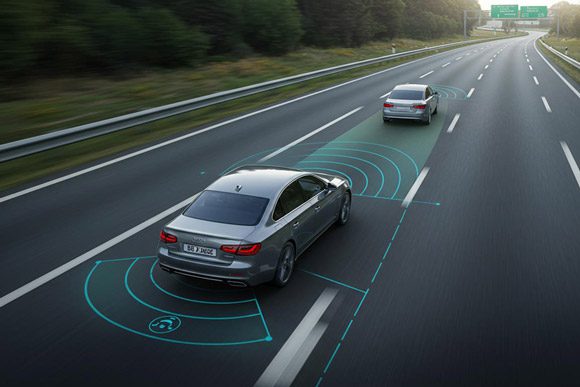
The correct approach is to use cruise control on the highway. Cruise control maintains a constant vehicle speed. It is more precise and fuel-efficient than manual throttle control. In a 5-speed manual transmission vehicle, the most fuel-efficient speed is usually 50 to 60 miles per hour. This is approximately 80 to 96 km/h. Maintaining speed within this range saves fuel. It also reduces the load on the engine and drivetrain.
4. Utilize Gears and Cruise Control Wisely
Selecting the right gear is crucial for manual transmission vehicles. Shift into a higher gear as early as possible. Do this without causing the engine to “labor.” Engine RPMs are lower in higher gears. This results in less fuel consumption. However, do not let the engine “struggle” at excessively low RPMs. The ECU will inject extra fuel to prevent stalling. The key is to find the “sweet spot” for each gear. The engine should run smoothly without excessive load. Cruise control is a valuable fuel-saving tool for automatic transmission vehicles. Using cruise control on flat highways maintains a constant speed. It reduces unnecessary acceleration and deceleration. This lowers fuel consumption and engine wear.
5. Avoid Prolonged Idling
Many drivers leave the engine idling while waiting. They do this when picking someone up or during long traffic lights. An idling engine consumes 0.5 to 1 liter of fuel per hour. This is pure waste. Worse still, prolonged idling causes problems. Unburned fuel mixes with the engine oil. This accelerates oil degradation and increases engine wear.
The correct approach is to turn off the engine. Do this if the stop lasts longer than one minute. Modern starter motors withstand frequent starts. Restarting consumes far less fuel than prolonged idling. Many new cars have start-stop systems that do this automatically. If your car lacks this feature, manually turning off the engine works just as well.
Vehicle Maintenance: A Solid Foundation for Fuel Savings and Wear Reduction
6. Regular Maintenance, Maintaining Optimal Condition
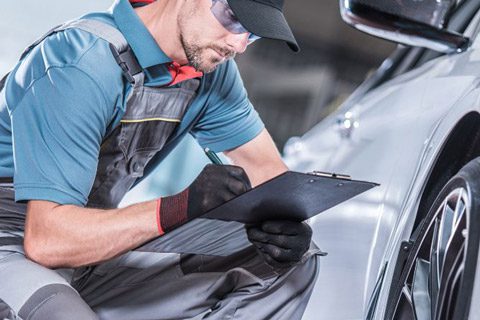
Good vehicle maintenance supports good driving habits. Regular maintenance ensures the vehicle operates efficiently over the long term. A dirty air filter or fuel filter can impair engine performance. It harms fuel economy. Neglecting oil changes leads to premature piston ring wear. It reduces engine efficiency. Replace key components at manufacturer-recommended intervals. This includes engine oil, air filters, and spark plugs. It keeps the engine in peak condition. Spark plugs are critical. Aging spark plugs cause ignition delay and reduced combustion efficiency. This directly increases fuel consumption. Choose engine oil with the manufacturer-recommended viscosity. Examples include 5W-30 or 0W-20. Higher viscosity oil increases internal engine resistance. It can potentially raise fuel consumption by 3% to 5%.
7. Maintain Correct Tire Pressure, Check Tires Regularly
Tires provide the only contact between your vehicle and the road. Their condition directly affects fuel economy and driving safety. Low tire pressure increases the contact area with the ground. This significantly raises rolling resistance. The engine must consume more fuel to overcome this resistance. Studies show the impact clearly. If just one tire’s pressure is 40 kilopascals (kPa) below standard, total fuel consumption can increase by 3%. If all tires are underinflated, fuel consumption may rise by 5% to 10%. For diesel trucks, this figure can reach 20% to 25%.
The correct approach is to check tire pressure monthly. Check them when the tires are cold. Ensure they match the manufacturer’s recommended value. You can find this on the driver’s side door jamb or inside the fuel filler cap. Additionally, rotate tires every 8,000 to 10,000 kilometers. This prevents uneven wear that causes resistance imbalances. A wheel alignment deviation of more than 1° can increase fuel consumption by 2% to 3%.
8. Reduce Vehicle Load, Minimize Aerodynamic Drag
A heavier vehicle requires the engine to output more power. Naturally, this results in higher fuel consumption. Data shows a direct correlation. Fuel consumption increases by approximately 5% to 8% for every 100 kilograms of added weight. Many car owners store heavy items in the trunk long-term. They leave unused roof racks installed. All of this invisibly increases fuel consumption. For every extra 25 kilograms, fuel consumption increases by 1% to 2%.
The correct approach is to clean out the trunk regularly. Remove unnecessary bulky items. Remove roof racks or cargo boxes if you do not use them frequently. Furthermore, consider the impact of open windows at speed. At highway speeds, aerodynamic drag from open windows consumes more energy than air conditioning. Close windows and use A/C on the highway. Opening windows for ventilation at lower speeds is acceptable.
9. Use Air Conditioning Reasonably
The air conditioning system is another significant fuel consumer. In hot summers, the engine drives the A/C compressor. This increases engine load. For every 1°C decrease in set temperature, fuel consumption can increase by 3% to 5%. Air conditioning can increase fuel consumption by 5% to 20%. The exact figure depends on vehicle type, outside temperature, and usage frequency.
The correct approach is to ventilate the vehicle first. After the vehicle sits in the sun, open the windows for 3 minutes. This prevents placing the compressor under high load initially. Set the A/C temperature to a comfortable range of 24°C to 26°C. Use A/C with windows closed at highway speeds. Open windows for ventilation at low speeds (below 60 km/h). Switch flexibly based on speed to balance energy and comfort.
Advanced Techniques: From “Fuel-Efficient Driving” to “Hypermiling”
If you have mastered the basic techniques above, consider trying advanced strategies. Enthusiasts pursuing extreme fuel efficiency pioneered these “hypermiling” techniques. Ordinary drivers now accept them increasingly.
10. The “Brake-Free” Driving Method
The core philosophy of “brake-free” driving relies on inertia. Use the vehicle’s inertia to control speed instead of frequent braking. This requires greater focus on the road ahead. Anticipate changes in traffic flow. For example, release the accelerator early when you see a red light or slowing traffic ahead. Let the vehicle coast naturally. Do not wait until the last moment to brake. Studies indicate significant benefits. If a driver reduces speed by 20 mph when possible, MPG can improve by up to 45%.
This driving style saves fuel. It also greatly reduces wear on the braking system. This extends the life of brake pads and rotors. Of course, safety is always paramount. Apply braking without hesitation when you need immediate deceleration.
11. Plan Routes, Avoid Congestion
Spend a few minutes planning your route before you set out. This can yield unexpected fuel savings. Navigation apps help you find the shortest route. They also provide real-time congestion avoidance. Frequent stop-and-go traffic increases fuel consumption dramatically. Idling worsens the problem. Good route planning can help save 5% to 12% on fuel. Furthermore, combine multiple short trips into one longer journey. This reduces the extra fuel consumption from cold starts.
12. Periodic “Regenerative” Driving
Schedule one or two longer highway drives per month. Do this if your vehicle serves mainly for short commutes. Experts note the benefits of highway driving. Driving at moderately high RPMs for about an hour helps the engine. It clears carbon deposits. It burns off excess moisture in the oil. This restores proper oil viscosity and prevents corrosion. This practice benefits vehicles that spend most of their time in low-speed urban traffic.
Conclusion
Improving fuel economy and reducing vehicle wear does not happen overnight. It results from consistently maintained good habits. Smooth driving and anticipating ahead help. Regular maintenance and sensible route planning help. These seemingly small changes accumulate over time. They save you substantial fuel costs. They allow your vehicle to accompany you further and longer. These principles apply universally. They matter regardless of your car’s country of origin or brand. They apply to conventional gasoline vehicles, hybrids, and pure electric vehicles alike.


