

- First, what is the typical speed range for maximum fuel efficiency?
- Next, how does vehicle type influence the most fuel-efficient speed?
- Furthermore, driving environments in different regions around the world also redefine the standard for “maximum fuel efficiency.”
- So, how is the global automotive market responding to this demand?
- Additionally, some practical tips can help you find your vehicle’s optimal economical speed:
- Finally, a global perspective conclusion
Are you curious about the speed at which a vehicle is most fuel-efficient when you press the accelerator? There is no single answer to this question, as road conditions, vehicle technology, and fuel standards vary across the globe. However, by integrating global data, we can identify universal patterns. This article will reveal the golden range for economical driving speeds.
First, what is the typical speed range for maximum fuel efficiency?
Most studies indicate that for ordinary passenger cars, the most fuel-efficient speed range falls between 50 km/h and 80 km/h (approximately 30 mph to 50 mph). Below this range, engine efficiency tends to be lower; above it, wind resistance increases sharply, causing fuel consumption to rise rapidly.
For example, in the United States, data from the Environmental Protection Agency (EPA) shows that a sedan with a 2.0-liter engine saves about 15% more fuel at 55 mph (approximately 88 km/h) compared to 70 mph (approximately 112 km/h). In Europe, due to urban speed limits and the widespread adoption of efficient diesel engines, the economical speed often hovers closer to 60 km/h to 70 km/h.
Next, how does vehicle type influence the most fuel-efficient speed?
Different vehicles exhibit significant variations in their optimal economical speed:
- Small sedans and hybrid vehicles: These models achieve peak efficiency in the 60 km/h to 70 km/h range. Taking the Toyota Prius as an example, real-world testing in the U.S. market shows the lowest fuel consumption at 50 mph (approximately 80 km/h).
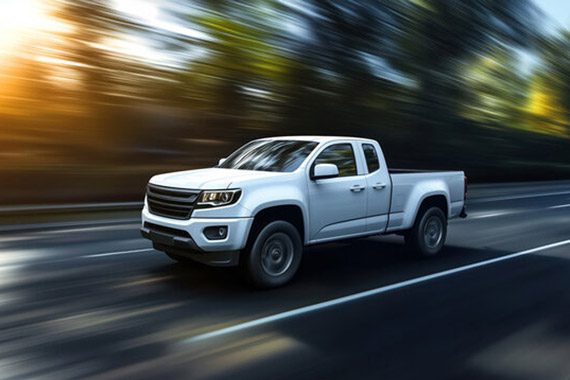
- SUVs and pickup trucks: Due to their higher body profiles and increased wind resistance, their economical speed typically falls to 50 km/h to 65 km/h. In Australia, many large SUVs achieve optimal fuel economy when cruising at 60 km/h on rural roads.
- Electric vehicles: EVs lack traditional transmissions, resulting in a lower economical speed, generally ranging from 30 km/h to 50 km/h. However, in Norway (the country with the highest EV penetration rate globally), maintaining speeds of 50 km/h to 60 km/h in practical driving still balances efficiency with traffic flow needs.
Furthermore, driving environments in different regions around the world also redefine the standard for “maximum fuel efficiency.”
In Japan, due to frequent stop-and-go urban traffic and stringent emission regulations, Kei cars are designed to optimize fuel efficiency in the 40 km/h to 60 km/h range. In Germany, while some sections of the Autobahn have no speed limits, most eco-conscious drivers still keep their cruising speed below 100 km/h to save fuel—at this speed, fuel consumption can be about 20% lower than at 130 km/h.
So, how is the global automotive market responding to this demand?
As fuel economy becomes a core concern for consumers worldwide, major automakers are continuously optimizing their powertrains. Notably, Chinese cars for sale are increasingly expanding their presence in overseas markets. Taking Europe as an example, in 2023, several Chinese-brand all-electric and plug-in hybrid models launched in Germany and France, with their sales materials explicitly highlighting “economical speed of 60 km/h” as a key selling point. These models undergo localized tuning tailored to the actual commuting speeds of global users, enabling Chinese cars for sale in Southeast Asia, the Middle East, and South America to adapt to diverse local road conditions, helping drivers effortlessly lock in the most fuel-efficient speed range during real-world driving.
Additionally, some practical tips can help you find your vehicle’s optimal economical speed:
- Check the instantaneous fuel consumption display: Most modern vehicles come equipped with this feature. On a flat road, maintain a steady throttle and observe the instantaneous fuel consumption readings at different speeds. Consumer Reports in the U.S. suggests testing in 5 mph increments to find the lowest reading.
- Monitor engine RPM: For conventional internal combustion engine vehicles, keeping the engine speed between 1,500 rpm and 2,000 rpm typically corresponds to the most economical speed range. In Canada, many driving instructors use this as a fundamental lesson in fuel-efficient driving.
- Consider external factors: Headwinds, uphill grades, or using the air conditioner can lower the economical speed. In the Australian outback, due to long-distance driving and high temperatures, experienced drivers often reduce their speed by 5 km/h to 10 km/h to compensate for the extra load.
Finally, a global perspective conclusion
From the congested streets of Tokyo to the highways of Los Angeles, the most fuel-efficient speed consistently adheres to the principle of “moderate-speed driving”: for the vast majority of vehicle models, 55 km/h to 75 km/h represents the optimal range for balancing efficiency and time cost. As the global automotive industry accelerates its transformation, this golden rule remains applicable whether for traditional internal combustion engine vehicles or new energy vehicles.
It is noteworthy that when Chinese cars for sale are shipped to various parts of the world, their engineering teams conduct extensive road testing tailored to the target markets, ensuring the vehicles achieve optimal fuel economy within the typical speed ranges of each country. If you are shopping for a new car, it is worthwhile to consider models that clearly specify economical speed data and have been validated through real-world road tests in multiple countries—this often serves as a reliable guarantee for long-term fuel savings.
Actively managing your speed means actively managing your fuel consumption. The next time you hit the road, try stabilizing your speed around 70 km/h, and you will notice the fuel gauge declining significantly slower. Whether you are in New York, London, or Singapore, this simple adjustment can save you tangible fuel costs on any road around the globe.


