

- Overview: Same compact SUV positioning, radically different vehicle philosophies
- Powertrain: How much power do you need?
- Drivetrain: Front-wheel drive or all-wheel drive?
- Fuel Economy: Which one is more frugal?
- Space and Comfort: Which is roomier?
- Interior and Features: Tech equipment and cabin ambience
- Safety Ratings: Which protects you better?
- Brand Resale Value: Which will be worth more after a few years?
- Global Market Background: China’s auto exports and intensifying competition
- Final Verdict: Which compact SUV comes out on top?
In the fiercely competitive compact SUV segment, two models stand out: the 2026 Chevrolet Trax and the 2026 Hyundai Kona. Both promise outstanding value. Yet each has its own strengths and weaknesses. So which one better suits your lifestyle? Let’s dive into this head-to-head battle.
Overview: Same compact SUV positioning, radically different vehicle philosophies
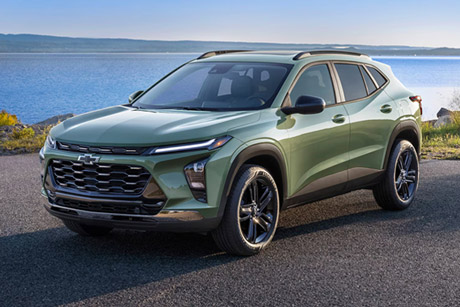
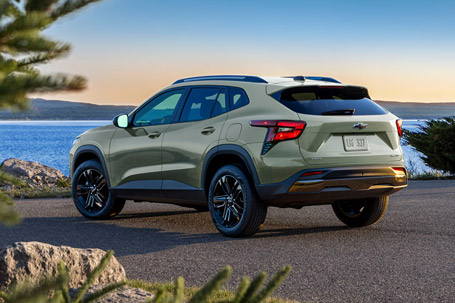
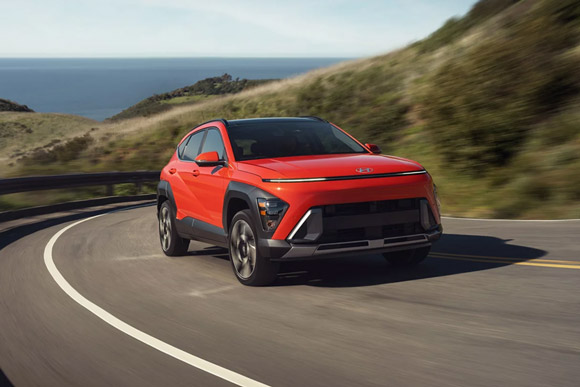
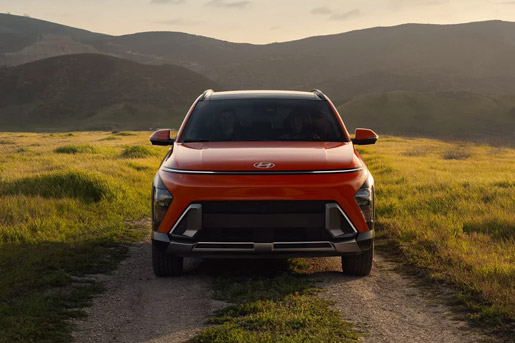
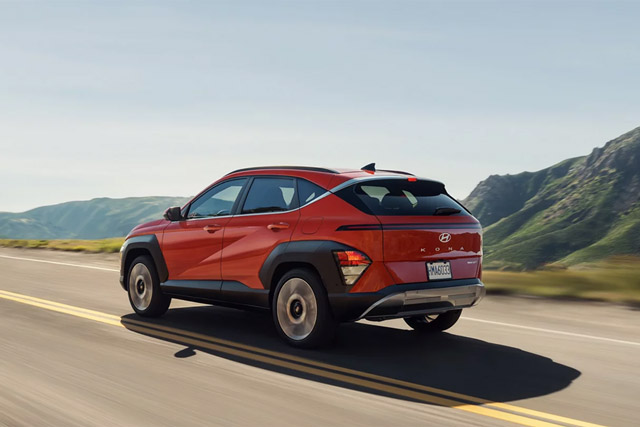
The 2026 Chevrolet Trax starts at $21,700 in the U.S. market (approximately RMB 157,000, excluding destination fees). In fact, it is not only the lowest-priced SUV in Chevrolet’s lineup, but also the most affordable new small SUV among all American brands. Hyundai, for its part, prices the Kona from $25,500 in the U.S. market. Both are priced within reach for the market. However, once you dig deeper into what each offers in terms of equipment, the differences become substantial. The Trax focuses on extreme value for money. The Kona delivers a richer choice of powertrains and drivetrain configurations.

Powertrain: How much power do you need?
The Chevrolet Trax keeps its powertrain choices very simple. All models are powered by an ECOTEC 1.2L turbocharged three-cylinder engine. This engine produces 137 horsepower and 162 lb-ft of torque. It is paired with a six-speed automatic transmission. The powertrain feels sprightly in city traffic. On the highway, however, it clearly struggles during merging and overtaking. Consumer Guide noted that this engine “lacks passing power,” and its running sound is not particularly pleasant. For urban commuters who rarely drive at highway speeds, this may be acceptable. But for buyers seeking a more relaxed driving experience, it could be a significant drawback.
The Hyundai Kona offers richer powertrain choices. The entry-level model features a 2.0L four-cylinder engine that delivers 147 horsepower and 132 lb-ft of torque. Higher-spec models are equipped with a 1.6L turbocharged four-cylinder engine, producing a maximum of 190 horsepower and 195 lb-ft of torque. In addition, a hybrid version is available. The difference in power output is noticeable in everyday driving. The Kona feels more composed and confident when accelerating to overtake on the highway. For those who frequently drive on highways or prefer more responsive power delivery, the Kona has the advantage.
Drivetrain: Front-wheel drive or all-wheel drive?
One critical difference needs to be underscored: the Trax is available only with front-wheel drive (FWD). This means Chevrolet is forgoing a fairly sizable market segment — consumers who need all-wheel drive (AWD) to handle snow, mud, or light off-roading. This is a clear product positioning decision aimed at controlling costs, but it also shuts the door on a large pool of potential buyers.
The Kona, on the other hand, offers both front-wheel drive and all-wheel drive options. This flexibility means the Kona can adapt to diverse climatic conditions and driving needs. Whether it is the sunny stretches of Arizona or the snowfields of Minnesota, whether on dry pavement or slippery roads, the Kona can cope with confidence. CarGurus explicitly points out that the Trax’s “lack of all-wheel drive” is one of its most obvious shortcomings. If you live in an area with harsh winters, this distinction could directly decide your purchase.
Fuel Economy: Which one is more frugal?
When it comes to fuel economy, the Trax has EPA-estimated figures of 28 MPG in the city, 32 MPG on the highway, and 30 MPG combined. For an SUV of this size, these numbers are reasonably competitive. The Kona’s fuel consumption varies depending on the powertrain. Taking the 2.0L engine as an example, its EPA estimates reach 29 MPG city and 34 MPG highway. But if you opt for the turbocharged engine, those figures drop to 26 MPG city and 31 MPG highway.
Comparing real-world daily commuting conditions, the Kona with the base engine indeed holds an economy advantage. Yet the Trax, with a standard 30 MPG combined rating across all trims, still posts solid numbers. If fuel efficiency weighs heavily on your mind, the gap between the two is not unbridgeable — until you begin driving the turbocharged Kona more aggressively, at which point fuel consumption starts to rise.
Space and Comfort: Which is roomier?
The Trax offers a maximum of 54 cubic feet of cargo space. For a small SUV, this figure is impressive. It makes the vehicle a highly practical daily companion.
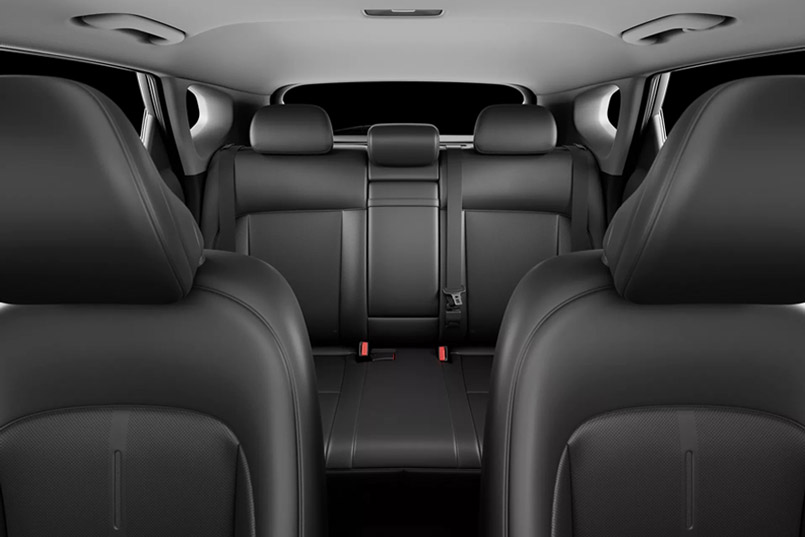


The Kona provides rear legroom of 38.2 inches, more generous than most of its rivals. Its cargo volume is also ample, though the height is slightly lower. MotorTrend praised the Trax for its “comfortable ride, precise steering” and “compliant driving dynamics.” The Kona delivers more upscale cabin materials and a quieter interior environment. In terms of rear-seat comfort, real-world comparison shows the Trax lags slightly behind the Kona; there is a discernible difference in rear passenger experience during long journeys.
Interior and Features: Tech equipment and cabin ambience
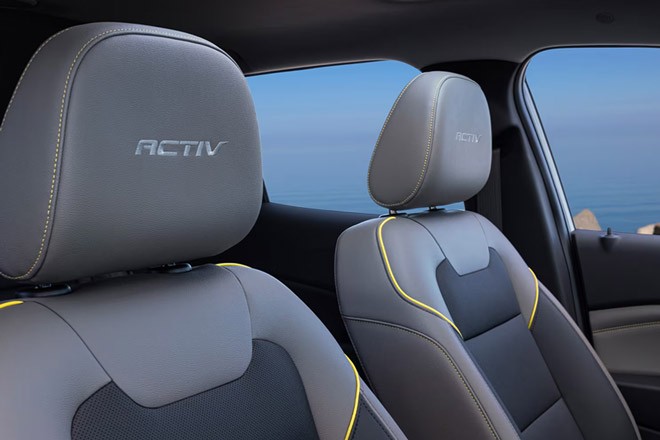
In terms of in-car technology, the Trax provides seamless operation via an 11-inch central touchscreen. Apple CarPlay and Android Auto come standard and support wireless connectivity. However, the base model only gets an 8-inch screen.
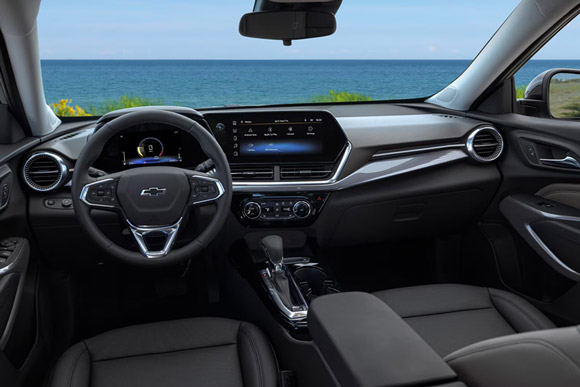
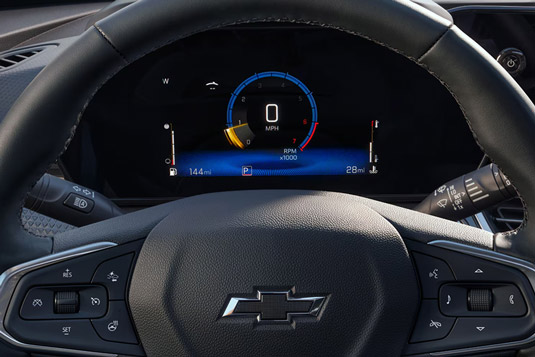
The Kona equips higher trims with a 12.3-inch central display. The user interface is intuitive and easy to use. Wireless Apple CarPlay and Android Auto are likewise supported. It is worth noting that the Kona’s cabin has a noticeably more premium feel.
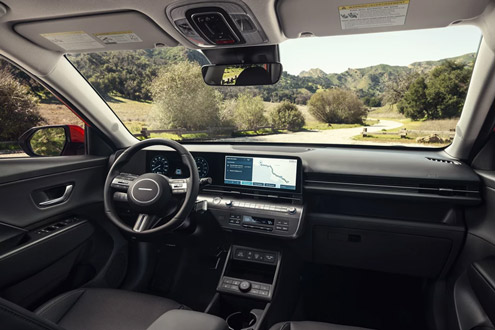
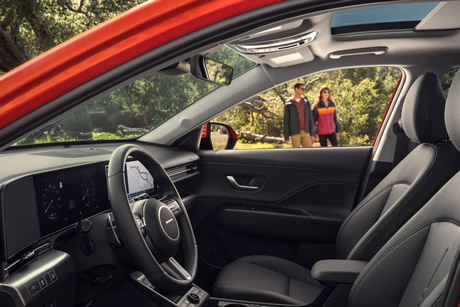

When it comes to comfort features, higher trims of the Kona offer heated and ventilated front seats, a heated steering wheel, and dual-zone automatic climate control. The top-of-the-line Trax provides heated seats and a heated steering wheel. Overall, the features are not far apart, with the Kona’s ventilated seats being an extra enhancement. Both systems respond quickly and fluidly in terms of infotainment responsiveness, but the Kona’s larger screen makes it more relaxing to use on a daily basis.
Safety Ratings: Which protects you better?
Safety is where the details matter, and the differences between the two cannot be overlooked. The Hyundai Kona earned a “Top Safety Pick+” (TSP+) rating in IIHS (Insurance Institute for Highway Safety) testing. NHTSA (National Highway Traffic Safety Administration) testing also gave it a five-star rating. Kelley Blue Book specifically noted that the Kona “consistently achieves top crash test ratings.”
The Chevrolet Trax’s safety ratings, however, are less reassuring. NHTSA awarded it only four stars out of five. The IIHS gave a “Poor” rating in the latest moderate front overlap crash test. Some reviewers warn consumers that this result is “alarming” and question whether the low price tag can provide adequate occupant protection in a collision. If safety is your top priority, the 2026 Kona is the clear winner.
Brand Resale Value: Which will be worth more after a few years?
Resale value is easily overlooked, yet it plays a key role in the overall cost of vehicle ownership. The Hyundai Kona’s residual value ranks in the upper-middle tier of the segment, helped by its outstanding warranty coverage (five-year/60,000-mile new vehicle warranty). The Trax likewise offers a standard three-year/36,000-mile warranty, which appears somewhat less competitive in comparison. In the eyes of used-car buyers, the Kona’s powertrain diversity and safety rating advantages make it more appealing.
Of course, the Trax wins on low entry price. Even if its residual value is lower than the Kona’s, the initial savings are still substantial. This becomes a calculation that must be factored into your purchase budget — do you save more upfront, or do you get a higher residual value at trade-in time?
Global Market Background: China’s auto exports and intensifying competition
From a global perspective, a broader competitive landscape deserves attention: both the Trax and the Kona increasingly need to be wary of rivals from Chinese brands. Over the past few years, China’s automobile exports have grown at a rapid pace, occupying an ever more important position in the global auto market. Currently, China’s share of global vehicle exports has risen to 11%, and the global influence of Chinese automakers has significantly strengthened. Numerous Chinese-brand vehicles are being sold as Chinese cars for sale through multiple channels, both in domestic markets and for export overseas.
Whether in South Korea, North America, or the Asia-Pacific region, compact SUVs from Chinese brands are exerting increasingly intense competitive pressure. For example, Hyundai Mobis faces fierce competition in the Korean market from Chinese compact SUVs with new-energy price positioning; in right-hand-drive markets such as New Zealand, the Kona likewise finds itself encircled by rapidly expanding Chinese brands. The Kona is encountering pricing pressure from Chinese compact SUVs in multiple markets around the world. Even the Trax is not immune. While the U.S. market has yet to see a massive influx of Chinese brands, the pressure has already been transmitted to the used car market — more affordable options are squeezing profit margins in the lower price tiers.
This trend means more choices and greater bargaining power for local consumers, but buyers should make comprehensive judgments by factoring in brand resale value, the convenience of after-sales service networks, and other considerations, avoiding focusing solely on short-term price while ignoring long-term hidden costs.
Final Verdict: Which compact SUV comes out on top?
Both are excellent compact SUVs, but they serve different types of buyers.
Reasons to choose the 2026 Chevrolet Trax:
- If you are chasing the ultimate low entry price, the Trax is the entry-level champion. It is the most affordable brand-new small SUV among American brands.
- If you live in a mild climate where all-wheel drive is not needed.
- If you prioritize cargo space and everyday practicality.
- If you don’t mind a slightly less refined power experience.
Reasons to choose the 2026 Hyundai Kona:
- If you need all-wheel drive to cope with winter weather or light off-roading.
- If you value top-tier safety ratings and a reassuring driving experience.
- If you want more potent engine options — everything from efficiency to performance.
- If you desire a more refined interior and a higher-quality ride.
- If you prize higher resale value and longer warranty coverage to enhance the ownership experience.
For the majority of buyers, the 2026 Hyundai Kona emerges as the stronger overall winner. It offers more comprehensive powertrain options, the flexibility of all-wheel drive, and significantly better safety ratings. These strengths cover a wider variety of lifestyles, climatic conditions, and usage scenarios.
The 2026 Chevrolet Trax stands out with its highly competitive starting price. For budget-first buyers living in warmer climates who do not require all-wheel drive, it remains a formidable contender. But its safety shortcomings and power limitations do pull down its overall value proposition. On balance, the Hyundai Kona is the more well-rounded car here — no matter where life takes you, it is the more worthwhile investment.


