

- Step 1: Tear off the labels and see your true situation clearly
- Deep insights from global markets
- If you decide to repair: Smart money-saving strategies
- If you decide to replace your car: A new-era guide to avoiding the pitfalls
- The ultimate decision framework: Just three steps
- Conclusion: There is no absolute right or wrong, only a wise choice
Your mechanic just called. The repair bill is a staggering $3,000. That number is enough to make any car owner’s heart sink. In an instant, you face a tough choice: Should you grit your teeth, pay the money, and give your old companion a new lease on life? Or should you take that sum and use it as a down payment on a brand-new car? This isn’t just about financial calculation. It’s about reliability, it’s about emotion, and it’s about your plans for the future.
Step 1: Tear off the labels and see your true situation clearly
First, calm down. Don’t act impulsively because of one expensive repair. In any country in the world, cars follow the same laws of physics. Whether a car is worth fixing does not depend on its age, but on its “state of health.” You need to conduct a thorough diagnosis of your car, just like a doctor.
Core Question 1: What exactly is this $3,000 repairing?
This is crucially important. The nature of the repair directly determines the answer.
If it is a routine wear-and-tear item, such as replacing the timing belt, a full set of brake discs and pads, or the radiator and water pump, then the repair is worth it. Because even a new car will need this kind of maintenance in the future.
If it is a catastrophic failure, such as a completely failed transmission, engine cylinder scoring, or severe frame rust, then you need to be extremely cautious. This type of failure often signals more trouble to come. In other words, it’s just the tip of the iceberg.
Core Question 2: Is your old car an asset or a liability?
Perform the universally applicable “one-dollar test.” Calculate your total spending on this car over the past year, including repairs, maintenance, insurance, and fuel. Then, divide that number by 12. Compare the resulting average monthly cost against the monthly payment for a new car.
If the average monthly cost of the repaired old car is significantly lower than the new car payment, repairing is clearly the better financial choice.
If the old car is already costing you a monthly amount close to or even higher than a new car payment, then it has become a financial bottomless pit. Cutting your losses is the wiser move.
Deep insights from global markets
Different markets offer you different perspectives, but the underlying principles are the same.
Perspective 1: The American “reliability-first” mindset
In the U.S., a car is a necessity of life. People place an extremely high value on reliability because breaking down on the road is not only a hassle but also expensive. Americans typically calculate it this way: If your car, after the repair, can go a year without another major repair of a similar amount, then repairing is more economical than buying a new car. Moreover, the U.S. has a vast used car market. You can easily find a three-year-old Toyota or Honda in excellent condition, use the $3,000 repair money plus the trade-in value of your old car as a down payment, and the monthly payment is usually not high. This is a very rational compromise.
Perspective 2: The European balance of “environmentalism and practicality”
Many European cities have low-emission zones. If your old car is an older diesel, even if you spend a lot to repair it, you might still be unable to drive it into the city center. Therefore, the value of the repair is greatly diminished. At the same time, Europeans tend to drive a car until the “end of its life.” In their view, as long as the car body is safe, repairing it is the more environmentally friendly behavior because it avoids the significant carbon emissions generated by manufacturing a new car.
Perspective 3: The “low-cost innovation” approach in Asia and emerging markets
In Southeast Asia, Africa, or South Asia, the decision-making logic is completely different. First, lower labor costs mean that with the same $3,000 budget, you might be able to completely overhaul the entire car, not just fix a single problem. Second, in these regions, original manufacturer parts are not the only option. The abundant market for aftermarket and used salvage parts makes repair costs highly competitive. Therefore, in these markets, “repairing and keeping the old car” is almost always the better choice. Replacing the car is the absolute last resort.
If you decide to repair: Smart money-saving strategies
Don’t become a prisoner of “emotional repairing.”
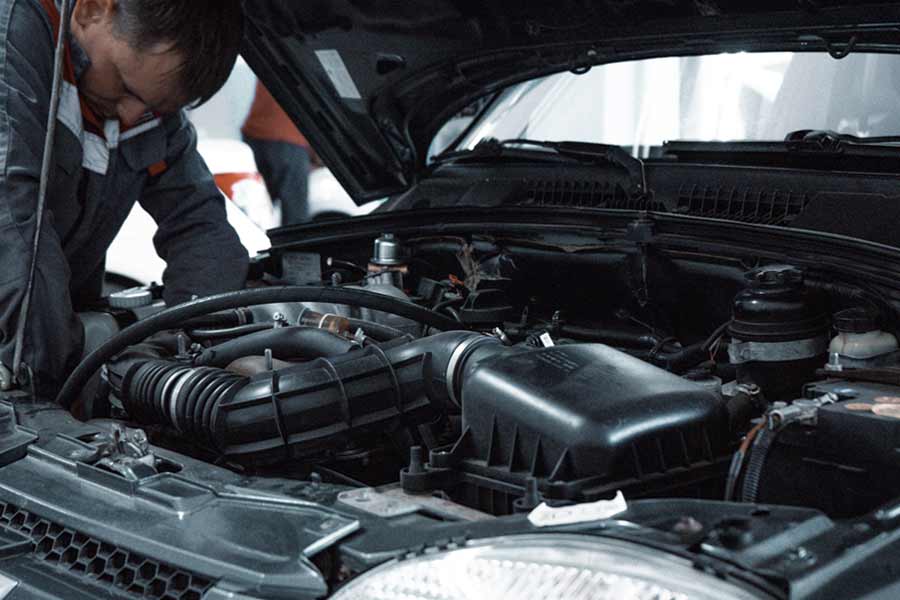
Find an independent repair shop. Globally, authorized dealerships typically charge the highest labor rates. A reputable independent garage may quote 30% to 50% less.
Ask about used or remanufactured parts. For an old car, a quality remanufactured starter is functionally no different from a brand-new one, but it may cost only a third of the price.
Insist on a warranty. For any repair exceeding $1,000, always demand a warranty of at least 12 months or 12,000 miles.
If you decide to replace your car: A new-era guide to avoiding the pitfalls
Today, replacing a car means facing the generational choice between internal combustion engines and electric vehicles. This decision also requires a global perspective.

Consider depreciation. In most global markets, a brand-new car depreciates by as much as 20% in the first year. From a purely financial standpoint, a reliable, 2-3-year-old “certified pre-owned” vehicle is the sweet spot between depreciation and reliability.
Don’t overlook new technology. Safety features like automatic emergency braking and lane-keeping assist that come with a new car may prevent an accident someday. These intangible values that cannot be measured in money are also worth factoring into your decision.
The temptation of electric vehicles. In China and Europe, EV infrastructure is already quite mature, and operating costs are very low. If you have home charging capability, using that $3,000 as a down payment for an EV could save you a significant amount on fuel in the long run. But in areas with sparse charging facilities, this may still be impractical.
The ultimate decision framework: Just three steps
To sum up, whether you are in New York, London, or Bangkok, you can follow this clear decision-making path.
Step 1: Calculate the sunk costs. Ignore the money you’ve already spent in the past. Focus only on the present and the future.
Step 2: Compare annualized costs. Estimate the total cost of the repaired old car for the next year, and compare it with the depreciation, insurance, and taxes for the new car you desire over the next year.
Step 3: Check your gut. If the numbers are close, ask yourself one last question: Does this old car still make you feel happy and safe? If the answer is no, then it’s time to wave goodbye.
Conclusion: There is no absolute right or wrong, only a wise choice
Spending $3,000 to save an old car loaded with memories is not laughable. Rationally choosing a new car that saves you worry and money is by no means a waste. What truly matters is whether you make this decision based on calm analysis, rather than momentary emotion. With this globally applicable guide in hand, whichever path you take, you will walk it with greater confidence. Now, open your calculator, and make the smartest choice for your freedom of mobility.


