

- Market Positioning and Pricing: A Head-to-Head Battle
- Version Breakdown: A Comprehensive Configuration Analysis of Shangjie Z7 and Xiaomi SU7
- Power and Range: Performance Monsters with Distinct Strengths
- Intelligent Driving Showdown: Huawei ADS 4.1 vs. Xiaomi HAD
- Design and Space: Shooting Brake vs. Sports Coupe
- Conclusion: Which One Is Your Ideal Choice?
The global electric vehicle market in 2026 is undergoing an unprecedented reshuffle. From China to Europe and Southeast Asia, major automakers are revealing their strongest hands. According to an outlook by The Economist, global new car sales in 2026 are expected to exceed 68 million units for the first time, with electric vehicle penetration projected to reach 38%. In this fierce competition, two highly anticipated mid-to-large-sized pure electric coupes—the Shangjie Z7 and the 2026 Xiaomi SU7—find themselves on a collision course.
This showdown is not merely a comparison of specifications but a clash of two distinct car-making philosophies. For global consumers searching for their next electric vehicle, this is undoubtedly one of the most agonizing choices. So, which one truly deserves the title of “technological ace”? This article will provide an in-depth analysis from a global perspective.
Market Positioning and Pricing: A Head-to-Head Battle
First, let’s look at pricing. The 2026 Xiaomi SU7 starts at RMB 219,900 in China, approximately USD 30,500. The Shangjie Z7, on the other hand, has a pre-sale price starting at RMB 229,800, roughly USD 31,800. As a result, the two models almost completely overlap in pricing, creating a direct competitive relationship.
In terms of market feedback, the Xiaomi SU7 saw locked-in orders quickly surpass 30,000 units after its launch, demonstrating strong brand appeal. Meanwhile, the Shangjie Z7 garnered over 18,000 small deposits within three hours of opening pre-sales, showing equally strong momentum. Therefore, it is safe to say that these two cars have already sparked intense competition right from the starting line.
Version Breakdown: A Comprehensive Configuration Analysis of Shangjie Z7 and Xiaomi SU7
For consumers, understanding the configuration differences between the various versions is often the first step in making a purchase decision. Let’s take a look at the version layouts of these two models.
Shangjie Z7: A Twin Choice Between Coupe and Shooting Brake
The Shangjie Z7 offers two body styles and three configuration versions, catering to different aesthetic preferences and practical needs. The Z7 is positioned as a coupe with sleek, dynamic lines, while the Z7T is a shooting brake model, featuring a more spacious trunk and a distinctive body design. For the corresponding configuration versions, the shooting brake Z7T costs RMB 10,000 (approximately USD 1,380) more than the coupe Z7. This premium buys you enhanced loading capacity and a unique body stance.
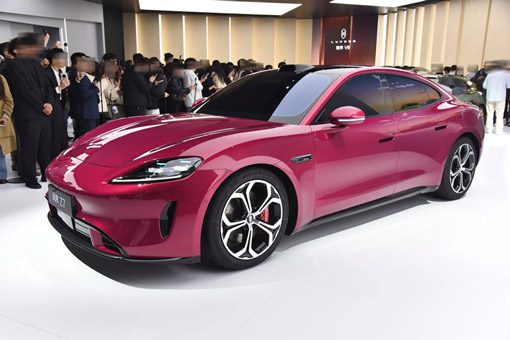
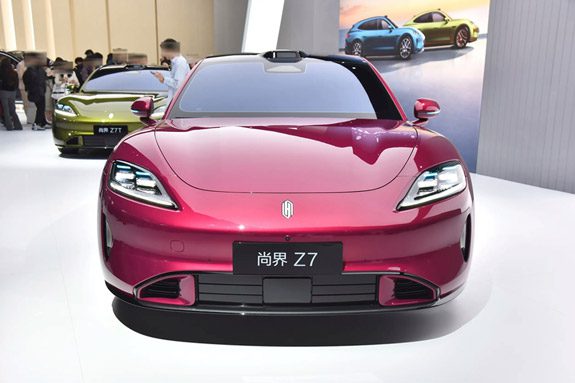
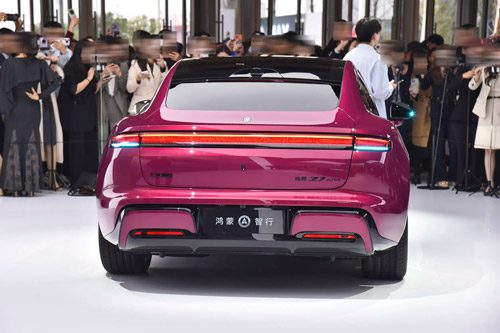
In terms of configuration, the Shangjie Z7/Z7T divides into three versions across the range. The entire lineup comes standard with the Huawei Qiankun ADS 4.1 system, an 896-line LiDAR, Huawei Tuling chassis, and Huawei’s 800V high-voltage battery platform. This means that even the entry-level version shares the same core intelligent driving and chassis technologies as the top-tier version.
| Version | Domestic Pre-sale Price (CNY) | Equivalent (USD) | Core Configurations & Upgrades |
| Max Edition | 229,800 | Approx. 31,800 | Entry-level with top-tier features: 81kWh battery, CLTC range ~720km, standard continuous damping control, passenger zero-gravity seat, HUD |
| Max+ Edition | 259,800 | Approx. 35,900 | Range & comfort upgrade: 100kWh battery, CLTC range 905km, added air suspension system |
| Ultra Edition | 309,800 | Approx. 42,800 | Performance flagship: Dual-motor all-wheel drive, 434kW power, 0-100 km/h in 3.44 seconds, added driver zero-gravity seat, Nappa leather, variable dimming panoramic roof |
2026 Xiaomi SU7: Three Configurations with Clear Positioning
The 2026 Xiaomi SU7 also offers three versions, but its configuration strategy differs from that of the Shangjie Z7. The biggest highlight of the new SU7 is that it comes standard with LiDAR and a 700 TOPS compute power autonomous driving chip, achieving “equal access to high-level intelligent driving” across all versions. Consequently, the differences between versions primarily lie in the powertrain type, range, and chassis configuration.
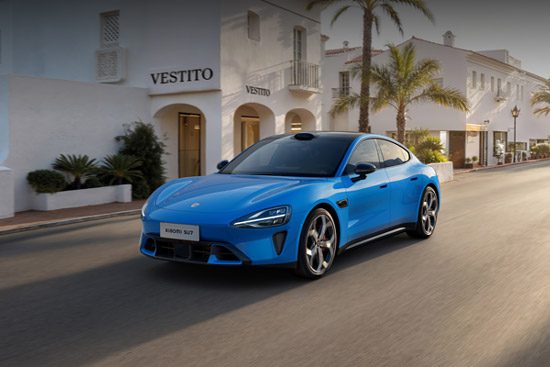
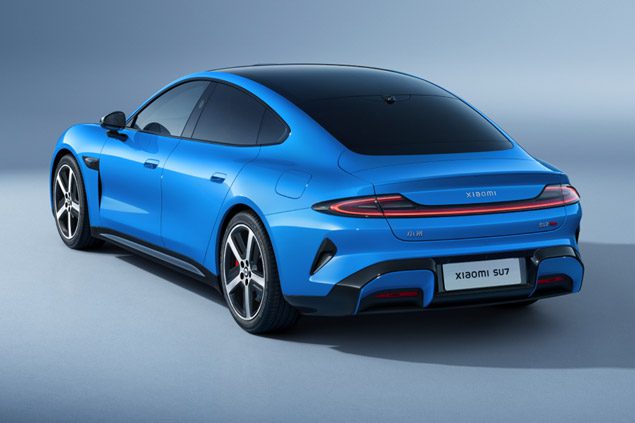
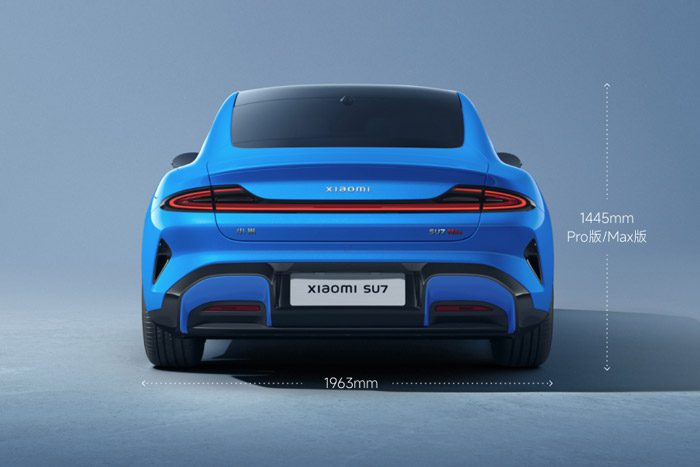
| Version | Domestic Price (CNY) | Equivalent (USD) | Core Configurations & Upgrades |
| Standard Edition | 219,900 | Approx. 30,500 | Equal access to intelligent driving: 73kWh LFP battery, CLTC range 720km, 752V high-voltage platform, 0-100 km/h in 5.28 seconds, standard LiDAR + 700 TOPS computing power |
| Pro Edition | 249,900 | Approx. 34,600 | Long-range champion: 96.3kWh LFP battery, CLTC range 902km, upgraded closed dual-chamber air suspension + CDC, heated/ventilated seats |
| Max Edition | 303,900 | Approx. 42,100 | Performance luxury flagship: Dual-motor all-wheel drive, 508kW power, 0-100 km/h in 3.08 seconds, 101.7kWh NMC battery, 897V ultra-high-voltage platform, 5.2C ultra-fast charging |
Power and Range: Performance Monsters with Distinct Strengths
In terms of powertrain configuration, both models come standard with an 800V high-voltage platform, ensuring efficient recharging speeds.
The Shangjie Z7 offers both single-motor and dual-motor versions. Specifically, the single-motor version has a maximum power output of 264kW, while the dual-motor version delivers 434kW. Its maximum CLTC range reaches 905km.
The Xiaomi SU7, in contrast, leans more towards extreme performance. Its dual-motor version boasts a maximum power output of 508kW, accelerating from 0 to 100 km/h in just 2.78 seconds (with optional package), with superior top-speed performance.
However, range is not the only deciding factor. The two models demonstrate different philosophies in their battery strategies. The Shangjie Z7 is equipped with NMC (nickel manganese cobalt) batteries across all versions, whereas the Xiaomi SU7 offers both LFP (lithium iron phosphate) and NMC options depending on the version. Therefore, for users in colder regions, the Shangjie Z7’s NMC batteries may offer an advantage in low-temperature performance.
Intelligent Driving Showdown: Huawei ADS 4.1 vs. Xiaomi HAD
This is perhaps the area where the two models differ most significantly, and it represents the “soul” of the consumer’s decision.
Huawei’s full-stack technology empowers the Shangjie Z7. It comes standard with an 896-line LiDAR, which features substantially higher hardware specifications compared to the Xiaomi SU7’s 128-line LiDAR. Coupled with the Huawei Qiankun Intelligent Driving ADS 4.1 system, the Shangjie Z7 boasts highly mature algorithms for handling complex urban road conditions and extreme scenarios, truly realizing an “entry-level with top-tier features” high-level intelligent driving experience.
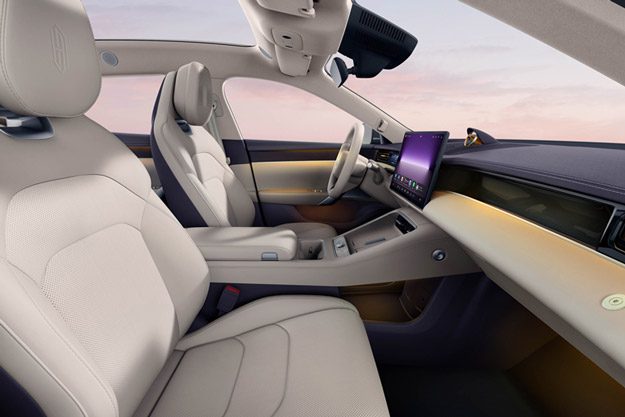
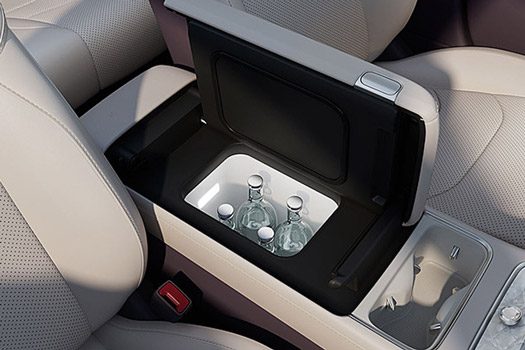
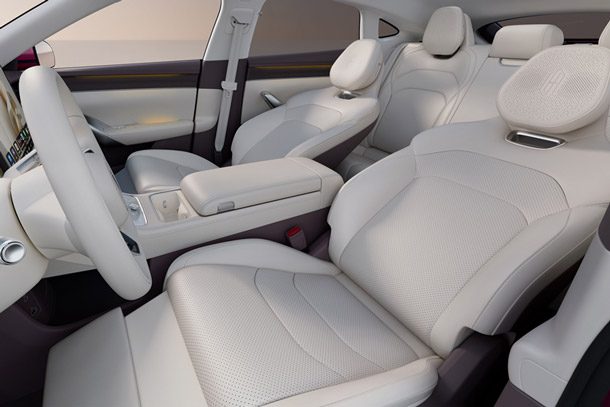
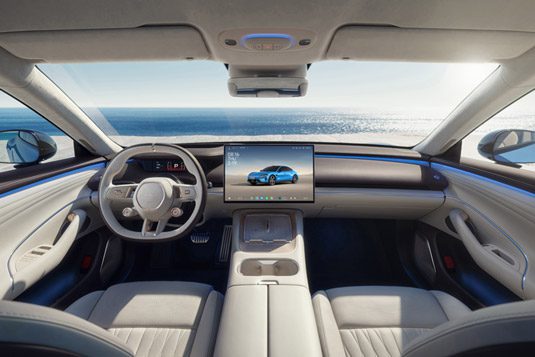
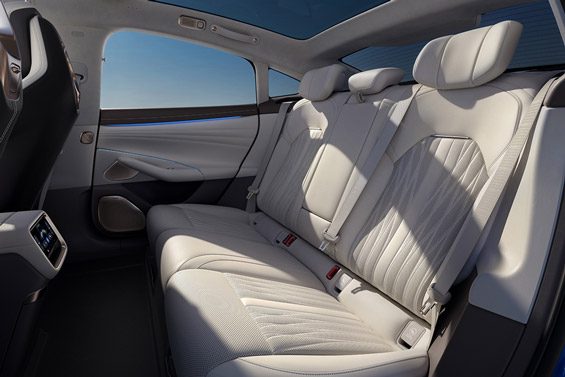
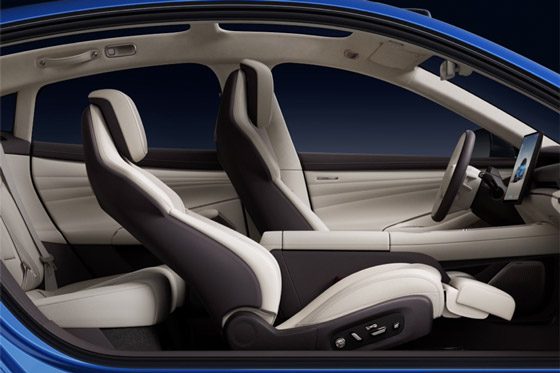
The Xiaomi SU7, on the other hand, is equipped with the Xiaomi HAD (Xiaomi Hyper Autonomous Driving) high-level intelligent driving system and comes standard with 4D millimeter-wave radar. Although its hardware may not be as “luxurious” as that of the Shangjie Z7, leveraging Xiaomi’s powerful ecosystem integration capabilities gives it a unique advantage in the “Human x Car x Home” smart ecosystem connectivity. Thus, if you are already deeply embedded in the Xiaomi ecosystem, the seamless experience offered by the SU7 is something other brands would find hard to replicate.
Design and Space: Shooting Brake vs. Sports Coupe
In terms of body dimensions, the Shangjie Z7 is slightly larger overall than the Xiaomi SU7. The Shangjie Z7 measures 5036/1976/1465mm in length/width/height, while the Xiaomi SU7 measures 4997/1963/1440mm. Notably, both models share the exact same wheelbase of 3000mm.
More importantly, the Shangjie Z7 also offers the Z7T shooting brake version. This model features a more sleek rear profile and enhanced loading capacity, catering to family users who desire a coupe-like appearance but value practicality. In contrast, the Xiaomi SU7 adheres to an extreme sports coupe style, boasting a remarkably low drag coefficient of 0.195Cd, which gives it a more aggressive design.
Conclusion: Which One Is Your Ideal Choice?
Overall, both the Shangjie Z7 and the Xiaomi SU7 deliver impressive results, but their strengths lie in different areas.
- Choose the Shangjie Z7: If you are an enthusiast of technology features, place high importance on the maturity and comfort of advanced intelligent driving assistance, or prefer the practical space of a shooting brake, then the Shangjie Z7, with its standard Huawei ADS 4.1 and 896-line LiDAR, would be the more reliable choice.
- Choose the Xiaomi SU7: If you pursue the ultimate driving thrill, enjoy the exhilarating acceleration of 2.78 seconds, or are already integrated into the Xiaomi ecosystem and want your car to become an extension of your smart life, then the 2026 Xiaomi SU7 remains the hard-to-overlook “well-rounded performance coupe.”
This pinnacle showdown is just beginning. With the pace of chinese cars for sale accelerating, global consumers will ultimately be the biggest winners.


