

When buying a car, many people face a classic dilemma: should you choose an SUV or a sedan? This is not merely a matter of appearance preference. It relates to driving experience, practicality, and long-term costs. In this guide, we will dissect the core differences between the two. Whether you are in the United States, Europe, or Asia, this comparison can help you make a wise decision. We will also take you through global market trends, including the highly watched dynamics of Chinese car sales.
Space and Practicality: Which Offers More Cargo Capacity?
SUVs offer greater vertical space. You sit higher and have a broader field of vision. For families with children, this means no need to bend over when installing child safety seats. The trunk opening is also larger, allowing you to easily fit strollers or large outdoor equipment.

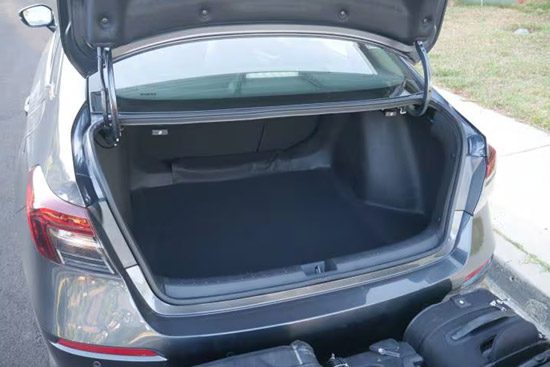
Sedans, on the other hand, have deeper trunks. Although the opening is smaller, the length is greater. When it comes to storing suitcases or golf equipment, sedans are generally more secure and offer better theft protection.
If you frequently transport large items, the SUV has a clear advantage. However, if you mainly commute in the city, sedans are more agile.
Driving Experience and Handling
Sedans naturally have a lower center of gravity. This makes them more stable during high-speed driving or cornering. You feel more connected to the road, with more precise handling. For those who seek driving pleasure, sedans are often the first choice.
SUVs have a higher center of gravity, resulting in slight body roll during sharp turns. However, modern technology has compensated for this. Many new SUVs are equipped with advanced suspension systems, offering a smoothness close to that of a sedan.
In congested traffic, sedans are easier to maneuver. On snowy or unpaved roads, four-wheel-drive SUVs perform more reliably.
Fuel Economy and Cost Considerations
Sedans are lighter and have lower air resistance, which translates to lower fuel consumption. Over the long term, this saves you a considerable amount on fuel costs. Currently, the average fuel economy for sedans in the U.S. market is around 30-35 miles per gallon.
SUVs are heavier and have higher wind resistance. Using the U.S. market as an example, compact SUVs typically achieve between 25 and 28 miles per gallon. However, hybrid SUVs are narrowing this gap.
Regarding price: within the same brand, SUVs are usually $3,000 to $5,000 more expensive than sedans (based on U.S. market MSRP). For example, the Toyota Camry starts at around $26,000, while the RAV4 in the same class starts at nearly $29,000.
Safety and Psychological Sense of Security
Many people believe SUVs are safer. The reasoning is simple: they are larger and heavier. In a collision, heavier vehicles do have a physical advantage. Additionally, the higher seating position allows you to spot road conditions earlier.
Sedans are not unsafe. On the contrary, sedans have a lower risk of losing control. Due to their low center of gravity, they are far less likely to roll over. According to data from the Insurance Institute for Highway Safety, modern sedans often achieve safety ratings on par with SUVs.
The key difference lies here: SUVs offer a “sense of security,” while sedans offer “the ability to proactively avoid risks.”
Global Perspective: Market Trends and “Chinese Car Sales”
Today, the global automotive market is undergoing significant changes. In the past, U.S. consumers favored pickups and SUVs, while European users preferred hatchbacks. But now, the lines are increasingly blurred.
Of particular note, the scale of Chinese car sales is influencing the global landscape. Whether in domestic or overseas markets, Chinese-made SUVs and sedans are challenging traditional segments with high cost-effectiveness. Many Chinese automotive brands are launching well-equipped models priced between $20,000 and $30,000. This provides global consumers with more high-quality options.
What does this mean? Regardless of whether you choose an SUV or a sedan, you can find extremely cost-effective options at overseas Chinese car sales outlets or dealerships. This is forcing traditional brands to lower prices or add features.
Final Decision Guide: Which One to Choose?
To help you make up your mind, please answer the following questions:
- What is your living environment like?
- If you live in the suburbs or rural areas and frequently drive on unpaved roads, an SUV is more suitable.
- If you live in a city center with tight parking spaces, a sedan is more convenient.
- What is your family structure?
- If you have more than two children or a large pet, an SUV offers more spacious rear headroom.
- If your family has fewer members, a sedan is sufficient for daily needs.
- What is your budget range?
- If you are on a tight budget and concerned about long-term fuel costs, a sedan is the economical choice.
- If you are willing to pay a premium for off-road capability and space, an SUV is a worthwhile investment.
Conclusion
By choosing an SUV, you gain versatility and a commanding presence. By choosing a sedan, you gain economy and driving pleasure.
Before making a decision, we recommend taking a test drive yourself. First, experience the sedan’s planted, agile feel, then the SUV’s elevated, far-sighted view. At the same time, it’s worth paying attention to new trends in the global car market. Particularly the current wave of Chinese car sales might allow you to find an ideal vehicle within your budget that exceeds your expectations.


