

In recent years, global automotive consumers—especially those interested in electric vehicles—often ask: Are Chinese cars, particularly Chinese electric cars, truly safe? Solid data and facts have now completely overturned the outdated stereotype that Chinese-branded vehicles are “unsafe.” Today, Chinese automobiles not only rank at the top in rigorous international safety tests, but their underlying safety technology standards also lead global trends. This offers users worldwide unprecedented safety assurance.
Outstanding Performance in Global Authoritative Tests: Earning Trust with Five-Star Ratings
Globally recognized third-party crash tests provide the most convincing benchmark for measuring vehicle safety objectively. Among these, the European New Car Assessment Programme (Euro NCAP) stands out. Its comprehensive and stringent assessments make it the widely accepted “gold standard” in automotive safety.
The latest Euro NCAP test results for 2025 strongly endorse the safety of Chinese automobiles. That year, 18 of the 28 tested models achieved the highest five-star safety rating. Notably, 13 of those top-rated models came from Chinese manufacturers. This means Chinese-made vehicles occupy over 70% of the top safety category. Even more impressive, 11 of these five-star models are battery electric vehicles, highlighting the technical prowess of Chinese EVs in safety architecture.
The table below lists selected Chinese-brand models that earned five-star evaluations in the Euro NCAP 2025 tests, along with their key highlights:
| Model | Brand/Group | Test Highlights |
| Zeekr 7X | Geely Group | High rank in Adult Occupant Protection; excellent performance in Safety Assist systems. |
| MG ES5 EV | SAIC Motor | Top-tier safety at high cost-effectiveness; perfect score in frontal collision test. |
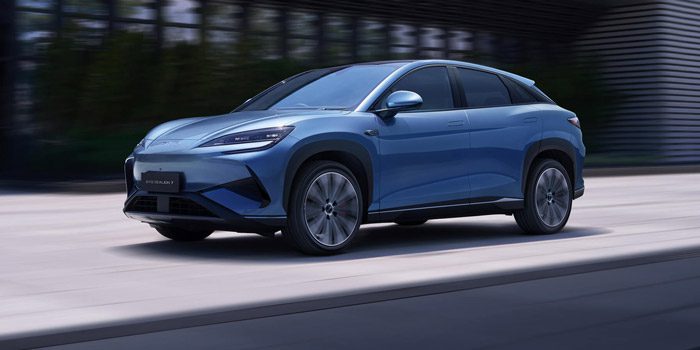
| BYD Sea Lion 07 EV | BYD | Outstanding Child Occupant Protection; equipped with an in-car child presence detection system. |
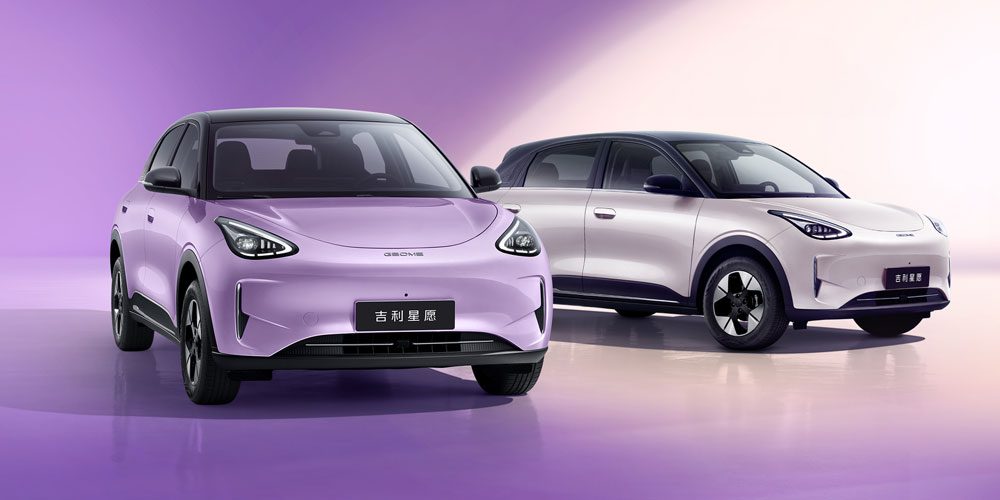
| Geely Galaxy E5 | Geely Group | Excellent Pedestrian Protection; its AEB system responded superbly to pedestrians and motorcycles. |
| Voyah Zhiyin | Dongfeng Motor Group | Comprehensive safety assist configurations; active safety systems responded quickly and stably. |
| Lynk & Co 02 | Geely Group | Achieved the highest score in the Safety Assist category (89%); leading overall safety performance. |
These models not only scored highly in traditional areas like Adult Occupant Protection, but also excelled in modern assessment dimensions such as Child Occupant Protection, Pedestrian Protection, and Safety Assist Systems. For example, the BYD Sea Lion 07 EV achieved high scores in child protection, while the Geely Galaxy E5 stood out in pedestrian protection due to its excellent Autonomous Emergency Braking (AEB) system. European media note that Chinese cars shine especially in the application and performance of active safety technologies—a key factor in their high scores.
Similarly, in China’s own stringent domestic safety test, the China Insurance Automotive Safety Index (C-IASI, often called “Zhongbaoyan”), Chinese-brand models consistently deliver excellent results. Several 2025 evaluations awarded multiple Chinese models the highest “Excellent (G or G+)” rating across three core indices: Occupant Safety, Pedestrian Safety, and Vehicle Assist Safety. This proves that, whether under European or Chinese testing standards, mainstream Chinese automobiles now offer world-class safety performance.
Deep Evolution of Safety Technology: From Regulatory Mandates to Electrical Safety Innovation
Systematic investment and rapid technological evolution drive these outstanding achievements. The progress mainly reflects two aspects: the regulatory-driven popularization of active safety technology, and breakthroughs in safety technologies specific to new energy vehicles.
1. Active Safety Becomes Standard: AEB Mandatory National Standard Drives Industry Upgrade
Previously, active safety features like Autonomous Emergency Braking (AEB) appeared mostly in mid-to-high-end models. This situation will change fundamentally. China has established a new mandatory national standard titled “Technical Requirements and Test Methods for Automatic Emergency Braking Systems of Light Vehicles.” It will take effect on January 1, 2028.
The new national standard carries great significance:
- It shifts from “Recommended” to “Mandatory,” requiring all newly produced passenger cars and light trucks to carry AEB systems as standard.
- It expands from “Vehicle-to-Vehicle” to “All-Round Protection.” Earlier standards mainly focused on vehicles ahead, but the new standard upgrades requirements significantly. Systems must now detect “vulnerable road users” such as pedestrians, cyclists, and kick-scooters, and must brake effectively in complex scenarios including crossing situations.
- It substantially raises technical specifications. For example, the effective test speed for a stationary lead vehicle increases from 30 km/h to 80 km/h, and more challenging test scenarios like intersections and right-turn following are added.
This means every future Chinese car will meet at least a very advanced threshold for active safety technology. EU research shows that AEB can reduce rear-end collisions by 38%. China’s move not only aligns with global safety regulatory trends but also demonstrates proactiveness in “setting standards” through more comprehensive scenario requirements.
2. Dedicated “Electrical Safety” System for New Energy Vehicles
For Chinese electric cars, safety extends beyond collisions to cover batteries, high-voltage electricity, and electromagnetic compatibility. The “2025 Annual Report on New Energy Vehicle Electrical Safety Technology” from the China Automotive Technology and Research Center notes that China’s electrical safety verification items have grown from over 300 to more than 330.
These new items address core user concerns directly:
- High-voltage, high-power fast-charging safety: ensures battery stability and high-voltage system insulation during rapid charging.
- Functional safety under combined driving assistance: ensures intelligent systems do not pose risks due to electrical failures in complex operating conditions.
- Extreme driving and lightning strike protection: simulates the impact of extreme environments on the three-electric (battery, motor, electronic control) systems.
Through comprehensive testing across six dimensions—charging safety, electromagnetic safety, high-voltage safety, functional safety, battery safety, and fire safety—China is building the world’s most systematic and stringent electrical safety verification system for new energy vehicles. This fundamentally enhances product reliability and safety.
Conclusion: Safety Has Become a Core Competitiveness of Chinese Automobiles
In summary, the answer to “Is it safe to purchase Chinese cars?” is clear and affirmative. Today’s Chinese automobiles have completed the leap from “meeting standards” to “defining standards.”
On the international stage, they have outperformed many established automakers, earning batches of five-star ratings in the authoritative Euro NCAP tests. Solid passive safety design and advanced active safety technologies make this possible.
Technologically, the upcoming mandatory AEB national standard will raise the entire industry’s safety baseline from a regulatory perspective. Meanwhile, the continuously improving “electrical safety” system solidifies the foundation for the booming development of Chinese electric cars.
Therefore, as you see more Chinese cars in the global market, you can feel fully confident in their safety. Safety is no longer a goal for Chinese automobiles to chase. Instead, it has become their solid starting point and core advantage in global competition and in winning consumer trust. Choosing a Chinese model with high Euro NCAP or similar ratings means choosing a safety guarantee verified by the world’s most rigorous tests.


