

- 1. Look Far Ahead and Plan Your Route in Advance
- 2. Build a 360-Degree Awareness Circle
- 3. Leave Ample Buffer Space
- 4. Communicate Your Intentions
- 5. Anticipate the Mistakes Others May Make
- 6. Control Your Speed, and Even More So, Control Your Emotions
- 7. Eliminate the Bad Habit of Distracted Driving
- Conclusion: Make Defensive Driving an Instinct
Driving is not just about getting a car from point A to point B. It is a journey that requires you to take active control of the situation. Defensive driving is not about reacting passively, but about anticipating and defusing dangers in advance. Mastering the following techniques can significantly reduce the risk of accidents. It not only protects yourself but also safeguards your family in the car and other road users. Let’s delve into these crucial driving strategies together.
1. Look Far Ahead and Plan Your Route in Advance
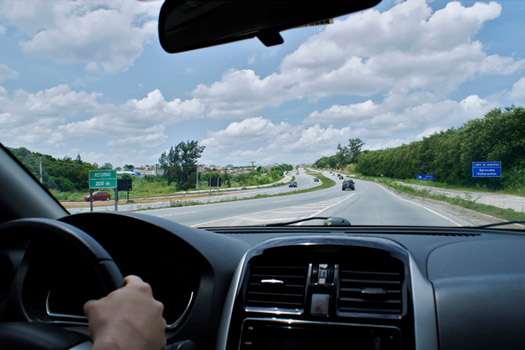
When driving, you must keep your vision far ahead. Don’t just stare at the bumper of the car in front of you; observe the road conditions at least 15 seconds ahead. This gives you ample time to anticipate. You can spot congestion, construction, or signs of an accident earlier. Consequently, you can adjust your speed smoothly, avoiding the risk of rear-end collisions caused by sudden braking. More importantly, you create choices for yourself, allowing you to change lanes calmly or stop safely. Remember, the car goes where your eyes go. Actively guiding your vision means actively guiding your safety.
2. Build a 360-Degree Awareness Circle
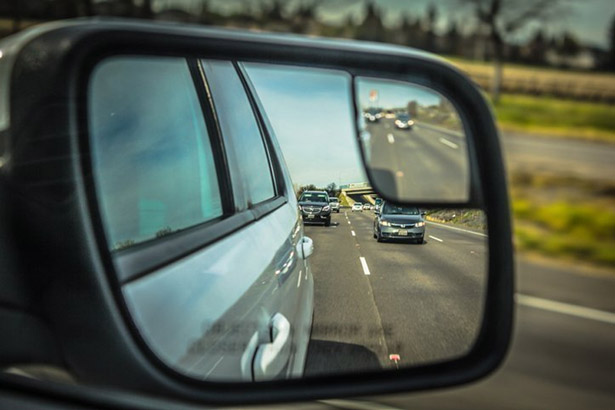
Never let your gaze freeze on a single point. You need to continuously scan your surroundings. First, check your rearview mirrors every 5 to 8 seconds. Next, quickly turn your head to check your side blind spots. At the same time, be aware of pedestrians and cyclists on the sidewalk. Also observe the movements of vehicles in the adjacent lanes. In this way, your brain can construct a complete, three-dimensional picture of the road. No object that suddenly intrudes will catch you off guard. For example, if you notice early that a vehicle on your right is starting to drift, you can immediately tap the brake or sound the horn as a warning. Keeping your eyes moving transforms you from a passive victim of a collision into an active avoider.
3. Leave Ample Buffer Space
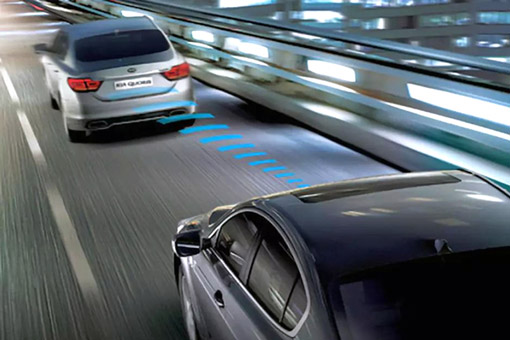
Space is your most important safety capital. Maintain at least a 3-second following distance from the vehicle ahead. If driving in bad weather or at night, double that gap. You should also avoid being boxed in by vehicles on both sides. Always ensure there is an escape route ahead and on at least one side. This space gives you precious reaction time. In case the car in front brakes suddenly, you can stop safely. More importantly, you can see the road conditions farther ahead without your view being completely blocked by large vehicles. The more space you have, the more options you have. And the safer you are.
4. Communicate Your Intentions
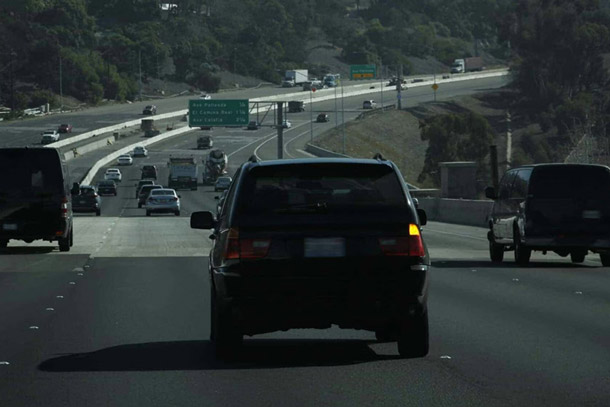
Never assume that others can see you. You must actively announce your presence. Always turn on your turn signal at least 3 seconds in advance, giving a clear signal before changing lanes or turning. You can even turn on your low-beam headlights on a clear day, as this makes your car stand out distinctly from the road background. Never linger in someone else’s blind spot for long. If you can’t see the other driver’s face in your rearview mirror, then they certainly can’t see you either. At that moment, gently accelerate or decelerate to leave that dead zone quickly. You can also use a short honk as a friendly reminder. See others clearly, and even more importantly, let others see you clearly, and collisions will naturally stay away from you.
5. Anticipate the Mistakes Others May Make
The core of defensive driving is anticipating in advance. Adopt the mindset that “other drivers may make mistakes at any time.” Watch the direction of the front car’s tires and pay attention to vehicles that are hesitant, speeding up and slowing down erratically. Anticipate that a car with its right turn signal on might suddenly merge left. When approaching an intersection, ease off the accelerator and hover your foot over the brake. Foresee that when a green light turns yellow, the vehicle behind might speed up to rush through, so you can gently tap your brake in advance to alert them. For example, if you see the wheels of a parked car on the roadside turned to the left, assume it might pull out without signaling. Because you have already thought of a countermeasure in advance, when a mistake really happens, you can respond calmly instead of panicking.
6. Control Your Speed, and Even More So, Control Your Emotions
The appropriate speed is determined by road conditions, not by the posted speed limit. When encountering heavy rain, thick fog, or icy roads, proactively reduce your speed by half. Decelerate sufficiently before entering a curve, and steer smoothly through the bend. Never try to prove a point or engage in road rage. If confronted by an aggressive driver, decisively slow down and yield, letting them go far away. Stay calm, and your decisions will always be clear-headed. Anger is the most dangerous self-destructive program in driving, and you are fully capable of actively uninstalling it.
7. Eliminate the Bad Habit of Distracted Driving
Looking down at your phone for 3 seconds is equivalent to driving dozens of meters blindfolded. Resolutely put your phone on silent and place it out of reach. Set up your navigation before you set off, and never operate the screen while driving. Do not eat or apply makeup while driving. You can actively ask a passenger to help you operate the air conditioning or audio system. Your full attention must be on the dynamically changing road conditions. A seemingly tiny distraction can devour all the preventive measures you have taken before. Staying focused is the greatest respect for all road users.
Conclusion: Make Defensive Driving an Instinct
Defensive driving is not a set of tedious dogma. It is the most precious life insurance you give to yourself and others. Every time you start the engine, silently remind yourself of these few techniques. Practice them repeatedly until they become your subconscious muscle memory. Starting today, actively look far ahead, scan, leave space, show your intentions, anticipate hazards, and control your emotions. No longer leave your fate to luck. Hold the steering wheel firmly, and also hold firmly the steering wheel of your own life.


