

- Quick Key Takeaways
- The Truth About Octane: What Exactly Is Premium Gas?
- Global Octane Standards: Why the Same Number Means Different Things in Different Countries
- The Real Benefits of Premium Gas (In the Right Vehicle)
- Premium Gas in a Regular Car: A Waste of Money
- How Much Extra Do You Pay?
- “Recommended” vs. “Required”: The Critical Difference
- Can You Alternate Between Regular and Premium Gas?
- 2026 Global Trends: The Premium Gasoline Market Is Evolving
- How to Correctly Determine What Your Car Needs
- Common Myths and Misconceptions
- Final Verdict: Is Premium Gas Worth It?
After we own a fuel-powered vehicle, we all face one question: should we fill up with premium gasoline or regular gasoline? This requires us to know the difference between premium and regular gasoline, and whether premium gasoline is really better than regular. Let’s explore this in detail below!
Quick Key Takeaways
Before diving deep, grasp these essential conclusions:
- Premium gas does not equal “better gas.” Octane rating measures knock resistance, not fuel quality or energy content.
- Most cars do not need premium gas. If your owner’s manual doesn’t explicitly require it, using premium generally yields no performance gain.
- “Required” and “recommended” are two completely different concepts. The former means you must use it; the latter means regular gasoline is equally safe.
- Global octane standards are not uniform. Different countries and regions use different measurement systems, and the same number may mean very different things depending on where you are.
- Using unnecessary premium fuel wastes a lot of money. Consumer Reports estimates that U.S. drivers could save up to $702 per vehicle per year.
The Truth About Octane: What Exactly Is Premium Gas?
The key to understanding premium gasoline lies in one concept: octane rating.
Octane rating measures a fuel’s ability to resist “knock.” Knock is when the fuel-air mixture ignites prematurely inside the engine on its own, rather than being ignited precisely by the spark plug. Knock not only produces an unpleasant metallic pinging sound but can also damage the engine over time.
This is exactly where premium gasoline comes in. The higher the octane number, the more resistant the fuel is to auto-ignition under compression.
However, a widespread misconception needs to be clarified here. Octane rating is not a measure of gasoline’s “strength” or energy content. Premium gasoline does not contain more energy than regular gasoline. It will not automatically make your car accelerate faster or make the engine run cleaner.
Global Octane Standards: Why the Same Number Means Different Things in Different Countries
This is the most confusing, and most important, part of understanding premium gasoline. Different regions around the world use different octane measurement systems:
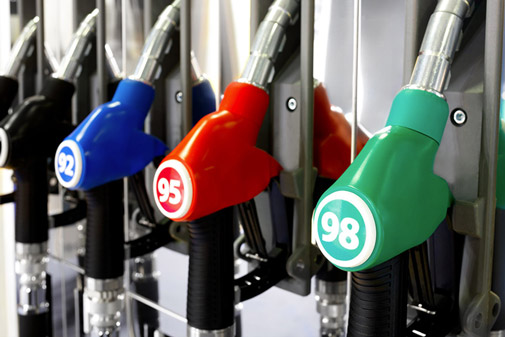
- Research Octane Number (RON): Widely used in Europe, Australia, New Zealand, most of Asia, and Africa. This standard measures knock resistance by running the fuel in a variable compression ratio test engine at 600 rpm.
- Motor Octane Number (MON): Also used in Europe, but under more severe test conditions—the fuel is preheated, and the engine runs at 900 rpm. MON results are typically 8 to 12 points lower than the RON of the same fuel.
- Anti-Knock Index (AKI): Used in the United States, Canada, Brazil, and other countries. AKI does not involve a separate additional test. It is simply the average of RON and MON, calculated as (R+M)/2. This means AKI is typically about 4 to 6 points lower than RON.
Practical conversion example: The “95” gasoline (RON 95) labeled at European gas stations is roughly equivalent to “91” gasoline (AKI 91) at U.S. pumps. Similarly, European “98” roughly corresponds to U.S. “93.”
Common Ratings by Region
| Region | Octane System | Regular Gas | Premium Gas |
| United States | AKI (Anti-Knock Index) | 87 | 91-93 |
| Canada | AKI (Anti-Knock Index) | 87 | 91-93 |
| Europe | RON (Research Octane Number) | 95 | 98-100 |
| Australia | RON (Research Octane Number) | 91-94 | 95-98 |
| Japan | RON (Research Octane Number) | 89-90 | 96-100 |
| China | RON (Research Octane Number) | 92 | 95/98 |
This difference explains why many travelers get confused when refueling overseas. A German driver seeing 87 gasoline in the U.S. might worry about its poor quality, but in reality European 95 RON is equivalent to U.S. 91 AKI.
The Real Benefits of Premium Gas (In the Right Vehicle)
Premium gasoline can indeed bring tangible benefits for specific types of vehicles. But only if the engine is designed for it.
1. Prevents Knock, Protects the Engine
This is the core function of premium gasoline. High-compression engines, turbocharged engines, and supercharged engines generate greater pressure inside the cylinders. Higher octane rating ensures the fuel burns on demand, rather than prematurely.
Vehicles equipped with high-compression engines or turbochargers often require premium gasoline to prevent knock. These engines operate under stronger internal pressure, and therefore need higher-octane fuel to achieve controlled combustion.
2. Unlocks Peak Power
For models that explicitly require premium gasoline, using premium fuel does make a difference. For example, tests by Consumer Reports and Car and Driver showed that on some turbocharged models, switching to lower-octane fuel reduced wheel horsepower by about 20 hp. This gap may be hard to notice in daily commuting, but on the track the difference is stark.
3. Optimizes Fuel Efficiency (Slight Improvement)
In vehicles specifically tuned to take advantage of premium gasoline, using high-octane fuel may bring slightly improved fuel economy. However, this improvement is usually very limited and often negligible in typical passenger cars.
4. Smoother Engine Operation
In engines designed with premium gasoline as the baseline, high-octane fuel supports a smoother combustion process and reduces the likelihood of irregular combustion events.
Premium Gas in a Regular Car: A Waste of Money
For most drivers, the harsh but simple truth is this: premium gas does absolutely nothing good for your car.
Multiple studies by Consumer Reports, AAA, and other independent testing organizations have consistently confirmed that for vehicles designed to run on regular gasoline, premium gas offers no improvement in acceleration, fuel economy, or overall performance.
AAA’s analysis found that for vehicles designed to use regular gas or that merely “recommend” rather than “require” premium, there is no benefit to using premium fuel. Lab tests showed no significant improvement in horsepower, fuel economy, or emissions.
This is because modern engines are equipped with sophisticated knock sensors and engine management computers. These systems detect knock in real time and adjust ignition timing to protect the engine. So when a regular gas car is filled with high-octane fuel, the computer does not magically unlock extra power—the engine simply operates within its designed parameters.
How Much Extra Do You Pay?
The price difference between premium and regular gasoline varies by country and region, but almost everywhere, this gap is quite significant:
- United States: In 2026, premium gasoline averages about $0.30 to $0.70 more per gallon than regular. Consumer Reports estimates the per-liter price difference is about $0.23.
- Europe: The price gap is larger due to higher fuel taxes. The European average is around €1.817 per liter (gasoline), far higher than in the U.S.
- Globally: Switzerland is among the countries with the highest gasoline prices in the world, with 95-octane gasoline costing about 23.5 RMB per liter; by contrast, oil-producing countries like Iran and Saudi Arabia have much lower prices, partly thanks to substantial government subsidies.
A Consumer Reports study estimated that for a typical fuel-efficient vehicle driven an average of 12,000 miles per year, a driver could save up to $351 annually by sticking with regular gasoline. For less fuel-efficient vehicles, the annual savings could reach $526 to $702.
“Recommended” vs. “Required”: The Critical Difference
Every vehicle’s owner’s manual gives specific instructions on fuel requirements. The difference in wording is crucial:
“Required” means you must use it
When a vehicle explicitly requires premium gasoline, it means the engine is specially designed and needs high-octane fuel to operate correctly. These are typically high-performance models—BMW M series, Mercedes-AMG, most Porsches, and many vehicles with turbocharged engines. Their compression ratios and tuning settings make the engines more sensitive to knock, thus requiring higher-octane fuel to ensure proper operation.
Using regular gasoline in these vehicles can cause persistent knock, forcing the engine computer to retard ignition timing. This not only reduces performance but may also lead to engine damage over time.
“Recommended” is merely a suggestion
When the owner’s manual only “recommends” premium gasoline, the situation is entirely different. Regular gasoline will not cause any damage—neither in the short term nor the long term. However, premium gasoline may help you unlock your vehicle’s peak horsepower, and perhaps improve fuel efficiency a bit.
This scenario is particularly common in turbocharged engines. Boost pressure can indeed benefit from higher octane, but the engine management system is intelligent enough to compensate accordingly when using regular gasoline. For example, in track tests of the Acura TLX and Nissan Maxima (both of which recommend premium), Consumer Reports found no difference in fuel economy or acceleration times compared to using regular gasoline.
Can You Alternate Between Regular and Premium Gas?
Short answer: Yes, you can safely mix them.
Mixing different fuel grades—whether half a tank of regular plus half a tank of premium, or switching fuel types during a long road trip—is safe for most vehicles and generally will not damage the engine.
When you mix fuel grades, you are essentially creating a blend with an octane rating somewhere in between. For instance, half a tank of 87 plus half a tank of 93 produces a mixture of about 90 octane.
While occasional mixing won’t cause problems, it is worth keeping the following in mind:
- Never make it a habit. If you need to mix fuels frequently, you may eventually still need to use the correct grade, otherwise it could affect performance and engine health over the long term.
- On vehicles that “require” premium gasoline, using regular can cause knock, reduced performance, and engine damage over time.
- Modern engines can cope. Most modern engines are equipped with knock sensors that can detect knock and adjust timing to prevent damage. This means the engine can adapt to lower octane to some extent.
If you accidentally fill up with the wrong grade, don’t panic. Simply use up that tank and fill up with the correct fuel next time. An occasional mistake will not cause lasting damage to most modern cars.
2026 Global Trends: The Premium Gasoline Market Is Evolving
Premium gasoline is not growing everywhere globally. Some interesting changes are taking place:
In India, the promotion of E20 fuel (a 20% ethanol blend) is reshaping the market landscape. Ethanol itself has a RON of about 108, which raises the overall RON of the blended fuel to above 95. As a result, the base E20 fuel already has a RON comparable to premium gasoline, greatly diminishing the octane advantage of premium gasoline brands. The remaining appeal of premium gasoline mainly comes from its specialized chemical additives such as detergents and dispersants, rather than the octane rating itself.
Global market growth is slowing
The global premium gasoline market is showing signs of slowing growth, influenced by factors such as fuel standardization, stricter emission regulations, and reduced consumer reliance on performance-enhancing chemical formulations. The International Energy Agency expects global oil demand growth to gradually slow, with electric vehicles projected to displace 5.4 million barrels per day of oil demand by 2030.
Innovation in the racing fuel sector
China recently launched its first domestically produced 103-octane racing fuel, marking a major advance in this cutting-edge field. This fuel is specifically designed for extreme racing conditions under high compression ratios and heavy loads. Its olefin content is controlled at around 1%, which is approximately 80% lower than traditional 98-octane gasoline, effectively improving combustion efficiency and throttle response.
How to Correctly Determine What Your Car Needs
For the vast majority of drivers, the correct decision is simple and straightforward:
- Consult your owner’s manual. This is the only authoritative source of information on what fuel your vehicle needs. It is clearly stated in the manual and on the fuel filler cap.
- Understand the wording. “Required” is not the same as “recommended.”
- Check the ratings at the pump. U.S. gas stations typically offer three grades: regular (approximately 87), mid-grade (approximately 89), and premium (approximately 91-93).
Here is a simple and practical decision-making flowchart in table form:
| Your Vehicle Type | Owner’s Manual Instruction | What to Do |
| Regular sedan/SUV | Requires regular gasoline | Use regular gasoline. Premium gas offers no benefit. |
| Economy vehicle | Recommends premium gasoline | Regular gasoline is safe. Choose based on performance preference. |
| Sports car/High-performance car | Requires premium gasoline | Definitely use premium gasoline to protect the engine. |
| Turbocharged model | Recommends premium gasoline | Regular gasoline is safe. Premium gas can unlock peak performance. |
| Large pickup/Heavy-duty vehicle | Recommends mid-grade or premium gas | Choose the appropriate grade based on load and operating conditions. |
Common Myths and Misconceptions
Myth 1: Premium gasoline cleans the engine better.
Fact: Cleaning ability comes from detergent additives in the gasoline, not the octane rating. Regular gasoline from top-tier fuel brands may contain more effective detergents than premium gasoline from budget brands.
Myth 2: Premium gasoline extends engine life.
Fact: For vehicles designed to use regular gasoline, premium gasoline has no proven benefit in extending engine life. More important is following the manufacturer’s recommended oil change intervals and using high-quality motor oil.
Myth 3: High-octane gasoline contains more energy.
Fact: Octane rating has nothing to do with energy content. Premium gasoline does not contain more energy than regular gasoline. Knock sensors ensure the combustion process stays smooth, but they do not increase power output.
Myth 4: Premium gasoline significantly improves fuel economy.
Fact: Independent tests have repeatedly shown that for vehicles designed to use regular gasoline, premium gasoline provides no significant improvement in fuel economy.
Myth 5: The higher the number, the better, when refueling overseas.
Fact: Different octane measurement standards mean that 95-octane gasoline in Europe is approximately equal to 91-octane gasoline in the U.S. Paying extra for a higher pump number might actually mean you are paying for something you don’t need.
Final Verdict: Is Premium Gas Worth It?
If your vehicle requires it, then it is absolutely worth it. In these cases, premium gasoline is not a luxury but a necessity to protect engine performance and extend its lifespan.
If it is only recommended, then it is a choice. You may get a slight performance boost. But regular gasoline is equally safe and will save you a significant amount of money.
If your vehicle is designed to use regular gasoline, then it is completely not worth it. All independent tests point to the same conclusion: on vehicles not designed for premium gasoline, premium gas offers no measurable advantage in performance, fuel economy, or engine protection.
Ultimately, the smartest approach is always to follow the manufacturer’s recommendations. Automotive engineers around the world have spent countless hours determining exactly what your specific engine needs—their guidance is far more trustworthy than marketing pitches at gas stations or circulating word-of-mouth advice.


