

- 1. Performance and Range: Which One Goes Farther?
- 2. Charging Speed: The Advantage of the 800V Architecture
- 3. Design and Space: Scandinavian Luxury Meets Silicon Valley Minimalism
- 4. Smart Technology: Google Gemini Takes on the Tesla Ecosystem
- 5. Safety Features: Volvo’s Forte
- 6. Price and Value: Which One Is More Worth Buying?
- Final Verdict: Which One Is Right for You?
The 2027 Volvo EX60 has officially arrived, taking direct aim at the world’s best-selling electric vehicle — the Tesla Model Y.
Volvo calls the EX60 a “game changer.” The vehicle is built on the all-new SPA3 pure electric platform, designed from the ground up rather than being a simple electric conversion of a combustion-engine car. At the same time, after its 2025 Juniper refresh, the Tesla Model Y has seen significant improvements in comfort and interior quality, remaining an undeniable benchmark in its class.
So, which of these two electric SUVs is the better fit for you? We’ll break it down across six key dimensions.
1. Performance and Range: Which One Goes Farther?
Volvo EX60: A Class-Leading Range Advantage
The Volvo EX60 offers three powertrain variants to cover different user needs:
- P6 Rear-Wheel Drive: Single motor producing 369 hp, with an EPA-estimated range of approximately 499 km.
- P10 All-Wheel Drive: Dual motors with a combined output of 503 hp, offering around 518 km of range.
- P12 All-Wheel Drive Top Variant: Dual motors delivering a combined 670 hp, with an EPA-estimated range of up to 644 km and a 0-96 km/h (0-60 mph) acceleration time of just 3.8 seconds.
Under the WLTP test standard, the P12 version achieves an astonishing range of up to 810 km, giving it an almost class-leading advantage among electric SUVs.
Tesla Model Y: Efficiency Remains the Trump Card
After the Juniper refresh, the 2026 Model Y’s drag coefficient has dropped to 0.22, further improving range efficiency. It is available in several powertrain configurations:
- Rear-Wheel Drive: Range of 593 km, 0-100 km/h in 5.9 seconds.
- Long Range All-Wheel Drive: EPA-estimated range of about 527 km, 0-60 mph in approximately 4.8 seconds.
- Long Range Rear-Wheel Drive: Equipped with 4680 battery cells, achieving a range of up to 821 km under the CLTC cycle.
It is worth noting that the Volvo EX60 P10 version has a combined energy consumption of approximately 182 Wh/km, while the Model Y consumes only 165 Wh/km. This means the Model Y uses less electricity per kilometer, resulting in lower daily running costs.
Bottom line: If you seek the ultimate range, the EX60 P12 wins; if you prioritize energy efficiency and daily operating costs, the Model Y is superior.
2. Charging Speed: The Advantage of the 800V Architecture
Charging speed is a key metric in the daily experience of owning an electric vehicle. In this regard, the Volvo EX60’s 800V high-voltage architecture delivers a clear edge:
| Comparison Item | EX60 P10 Version | Model Y Long Range AWD |
| Max Fast Charging Power | Up to 370 kW | Up to 250 kW |
| Range Added in 10 Minutes | 266 km | Approx. 243 km |
| 10%-80% Charging Time | Approx. 16 minutes | Approx. 27 minutes |
The EX60 P10 version supports DC fast charging up to 370 kW, replenishing about 266 km of range in 10 minutes and completing a 10%-80% charge in just 16 minutes. In contrast, the Model Y Long Range AWD has a maximum charging power of 250 kW and takes about 27 minutes to go from 10% to 80%. The top-of-the-line P12 supports ultra-fast charging at up to 400 kW, adding 278 km of range in 10 minutes.
Additionally, the EX60 comes standard with a NACS charging port across the entire lineup, allowing direct access to over 25,000 Tesla Supercharger stations across the United States. This means Volvo owners can also enjoy Tesla’s vast charging network.
Bottom line: In terms of charging speed, the EX60 clearly leads thanks to its 800V architecture.
Volvo EX60: Nordic Luxury Flair
The EX60 continues Volvo’s signature Scandinavian design. The body is 4,803 mm long with a wheelbase of 2,970 mm. The closed-off grille and “Thor’s Hammer” LED headlights give it a highly distinctive look. Its drag coefficient is 0.26, an excellent figure for an SUV.
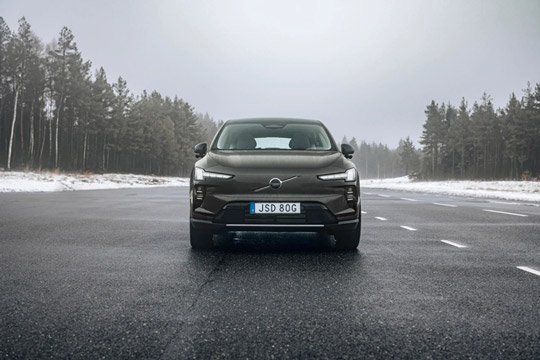
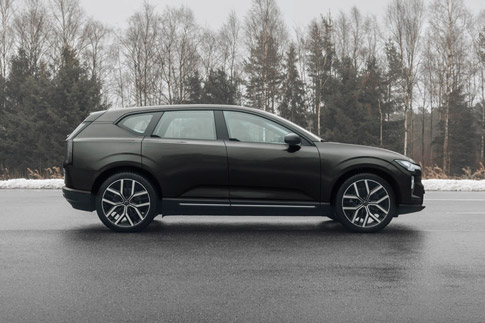
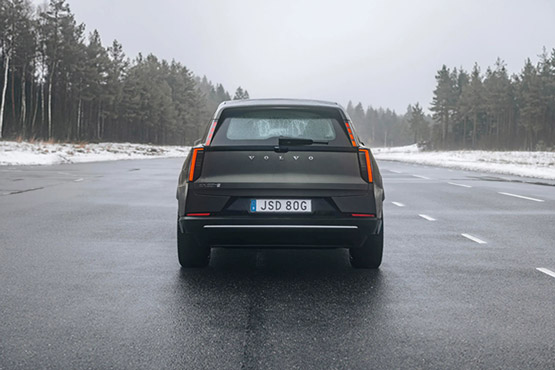
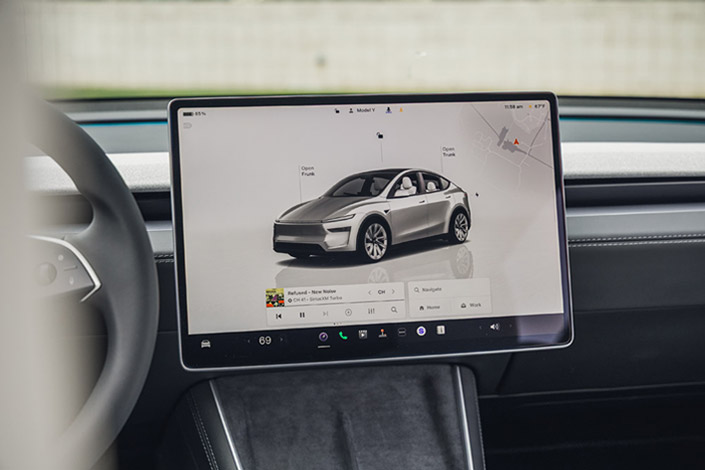
Inside, the car features a floating center console, equipped with an 11.4-inch digital instrument cluster and a 15-inch central touchscreen. The completely flat rear floor provides ample legroom.
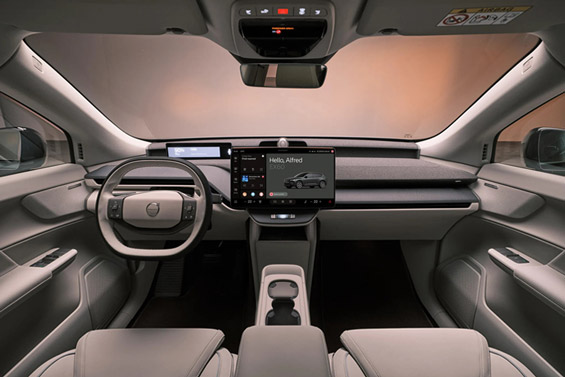
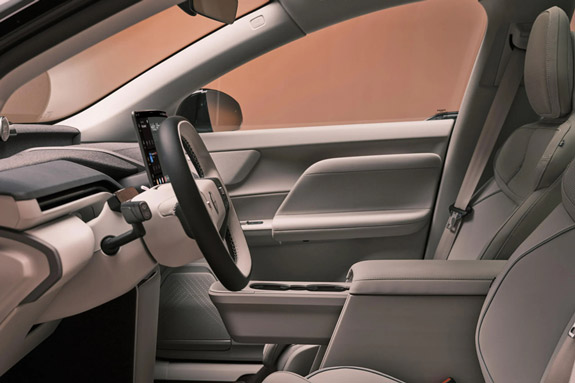
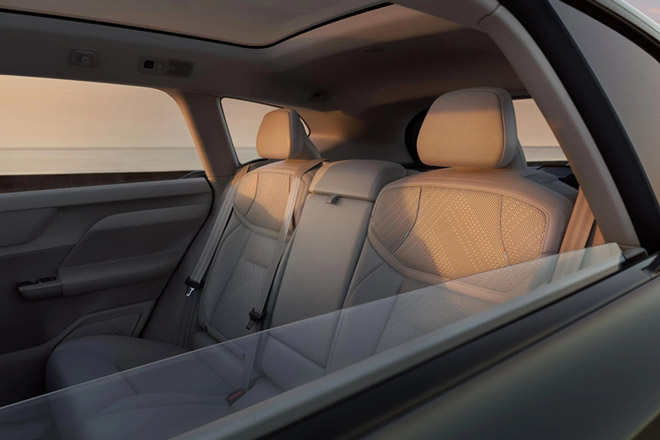
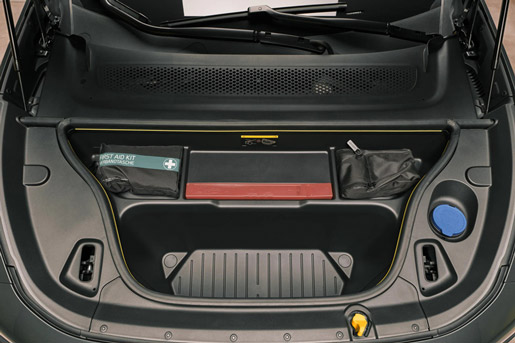
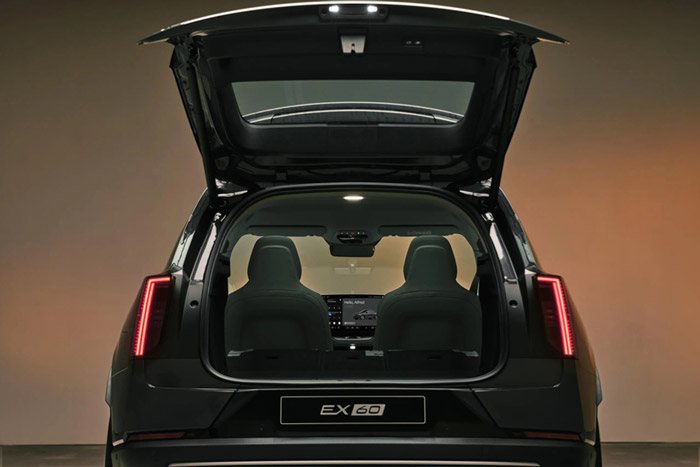
With the rear seats folded down, cargo space reaches 64.3 cubic feet, and the frunk is the largest of any Volvo model to date. However, the entire lineup is a five-seat configuration and does not offer a third row.
Tesla Model Y: Function First
The Model Y is slightly shorter in length but similar in width, with the Juniper refresh optimizing its aerodynamics. The fastback profile combined with a 0.22 drag coefficient strikes a balance between aesthetics and efficiency.
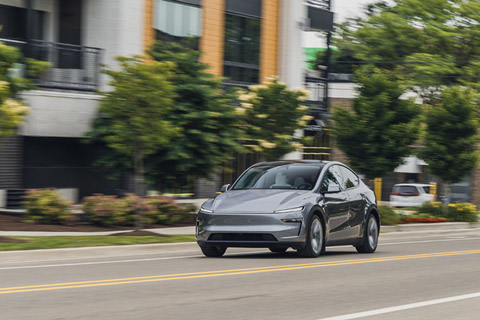
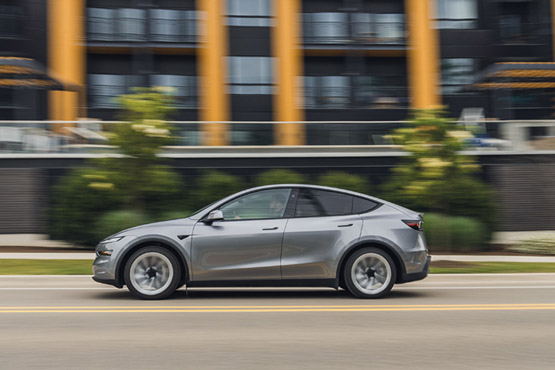
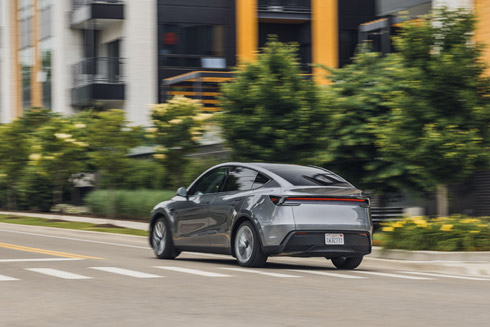
The interior continues the minimalist philosophy, with most functions operated through the 15.4-inch central touchscreen. After the refresh, the quality of interior materials and assembly has been enhanced. The Model Y can be configured with a seven-seat layout, and with the rear seats folded, total storage space reaches 1,869 liters, offering exceptional practicality.
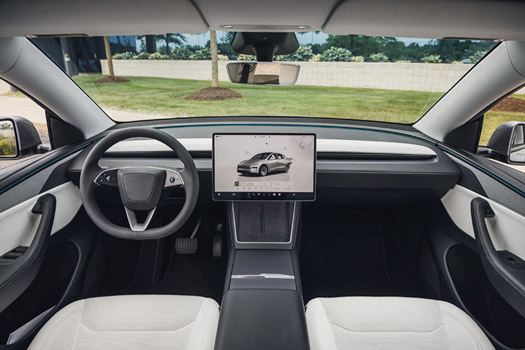
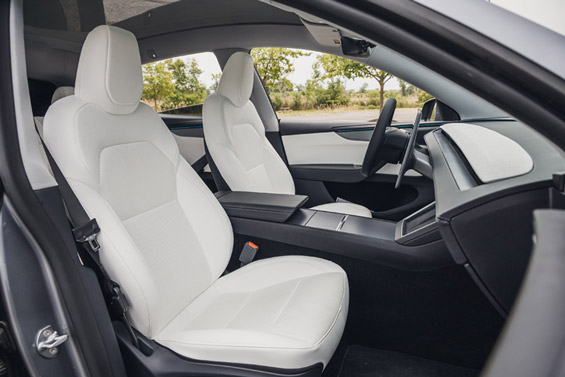
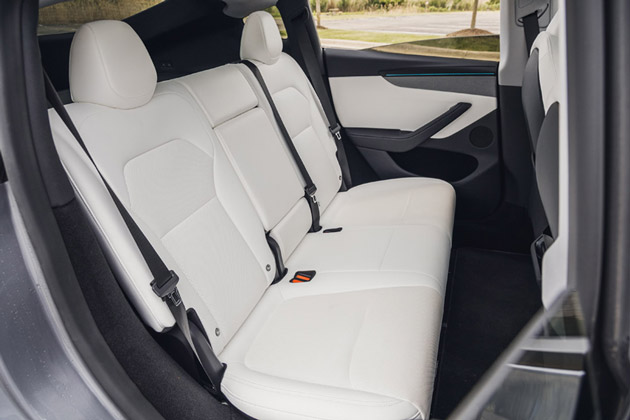
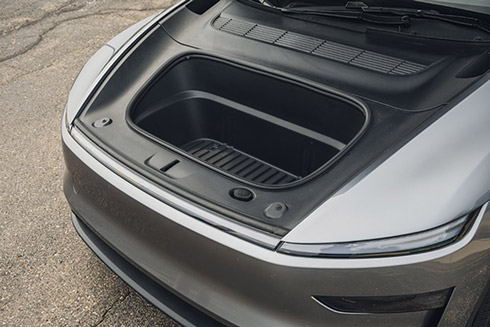
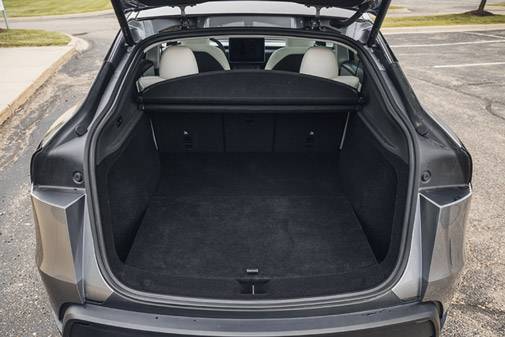
Bottom line: The EX60 outshines in terms of luxury feel and build quality, while the Model Y excels in space utilization and flexibility.
4. Smart Technology: Google Gemini Takes on the Tesla Ecosystem
Volvo EX60: An AI-Powered New Experience
The EX60 is the world’s first mass-produced vehicle to feature the Google Gemini AI assistant. It supports natural language conversations, so users don’t need to memorize fixed commands. The in-car system is powered by the HuginCore processor, jointly developed by Volvo, Google, Nvidia, and Qualcomm, which the company claims is the most responsive infotainment system in Volvo’s history.
For audio, the Ultra version offers a 28-speaker Bowers & Wilkins sound system, with headrest speakers on all four seats and support for Dolby Atmos.
Tesla Model Y: A Mature and Stable Tech Ecosystem
The Model Y’s infotainment system is driven by an AMD Ryzen chip, delivering excellent fluidity and gaming performance. After the refresh, the screen has been upgraded to a 16-inch 2K resolution unit.
Tesla’s killer feature lies in its frequent over-the-air (OTA) software updates and continuously optimized driver assistance systems. Its Enhanced Autopilot and Full Self-Driving suite remain among the leaders in the industry.
Bottom line: The EX60’s Gemini AI voice interaction is more natural and human-like; Tesla’s FSD and Supercharger network ecosystem are more mature and well-established.
5. Safety Features: Volvo’s Forte
Volvo EX60: A Comprehensive Evolution of Safety DNA
Safety has always been the core of the Volvo brand. The EX60 comes standard with the full Safe Space safety technology suite, encompassing a complete set of active and passive safety features. For the EX60, Volvo has also debuted a patented multi-adaptive seat belt that optimizes protection based on the occupant’s body type.
The body uses boron steel to create a reinforced safety structure, complemented by a rich array of sensors. The EX60 also comes standard with an all-weather environmental monitoring system. Volvo provides a 10-year warranty on the battery technology.
Tesla Model Y: A Data-Driven Safety Benchmark
The Model Y has repeatedly scored high marks in tests by global safety rating agencies. Thanks to the support of massive amounts of real-world driving data, Tesla’s active safety systems are continuously iterated and optimized. However, the Model Y does not offer a 360-degree surround-view camera feature.
Bottom line: Both vehicles achieve top-tier passive safety, but the EX60 holds an advantage in the completeness of its active safety features and safety innovations.
6. Price and Value: Which One Is More Worth Buying?
Volvo EX60: Sincere Pricing from a Luxury Brand
In the U.S. market, the EX60 P6 Plus starts at USD 59,795, which is lower than the plug-in hybrid XC60. The P10 AWD version starts at USD 62,145. Compared to luxury rivals in the same class — the BMW iX3 starting at USD 61,500 and the Audi Q6 e-tron at USD 63,800 — the EX60’s pricing is quite competitive.
Tesla Model Y: Price Remains the Killer Weapon
The Model Y’s MSRP is about 21% lower than that of the EX60. In some markets, the entry-level rear-wheel-drive version is priced significantly below the EX60. In terms of leasing, the Model Y’s monthly payment is similar to the EX60’s, but with a lower down payment. Additionally, the convenience offered by the Tesla Supercharger network and its lower running costs represent hidden value.
Bottom line: The Model Y is more affordable, with a clear advantage in value for money; the EX60 is positioned higher, justifying its price with luxury quality and technological features.
Final Verdict: Which One Is Right for You?
Reasons to choose the Volvo EX60:
- You seek a longer driving range; the P12 version’s 644 km EPA range is satisfying.
- You value charging speed; the 800V architecture delivers an industry-leading fast-charging experience.
- You prioritize luxury interior quality, ride comfort, and brand style.
- You consider safety features the primary factor when buying a car.
- You want to enjoy the Gemini AI intelligent voice interaction.
Reasons to choose the Tesla Model Y:
- Your budget is relatively limited, and you seek higher value for money.
- You prioritize energy efficiency to lower your daily charging costs.
- You are highly dependent on the Tesla Supercharger network ecosystem.
- You need a seven-seat layout for traveling with more people.
- You like the mature, stable autonomous driving features and the continuous OTA upgrade experience.
Both cars have their own strengths, and there is no absolute right or wrong choice. The EX60 represents a brand new chapter in Volvo’s pure electric transformation, while the Model Y is a market-tested, mature work. It is recommended that you personally schedule a test drive, because spec sheets cannot fully convey the driving experience — and that is often the decisive factor in making the final decision.


