

As the world’s first mass-produced hybrid vehicle, the Toyota Prius has been synonymous with fuel efficiency since its debut in 1997. After five generations of evolution, the 2026 Toyota Prius makes a stunning return. It brings breathtaking exterior design, significantly enhanced power performance, and its signature uncompromising fuel economy. Whether you’re an urban commuter conscious of running costs or a young consumer seeking driving enjoyment, the new Prius gives you ample reason to rediscover this hybrid pioneer. Let’s dive into a comprehensive review covering exterior, powertrain, fuel consumption, pricing, and features.
Exterior Design
The all-new Prius adopts a low-slung fastback silhouette paired with flowing body lines. This achieves a drag coefficient of just 0.23Cd. At the front, the sharp shark-nose design is complemented by boomerang-style headlights. Together, they create an aggressive and assertive front fascia. Meanwhile, the rear features a full-width taillight design. That enhances the visual width.
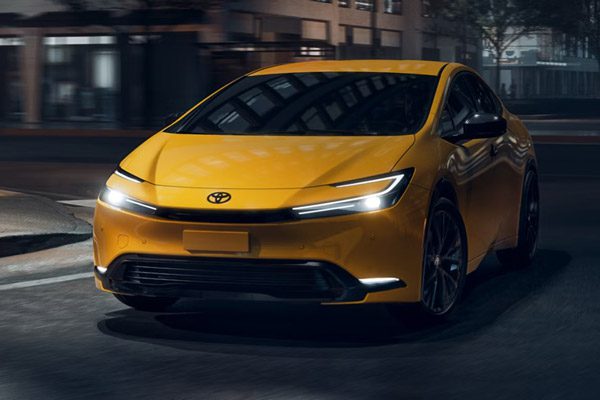

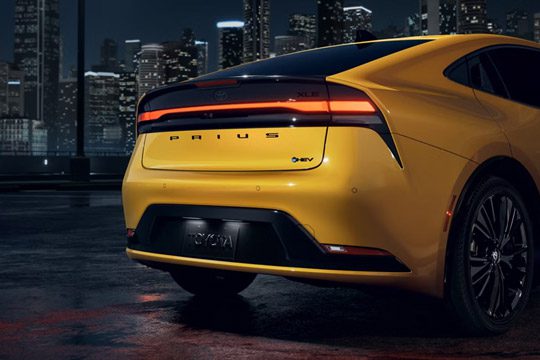
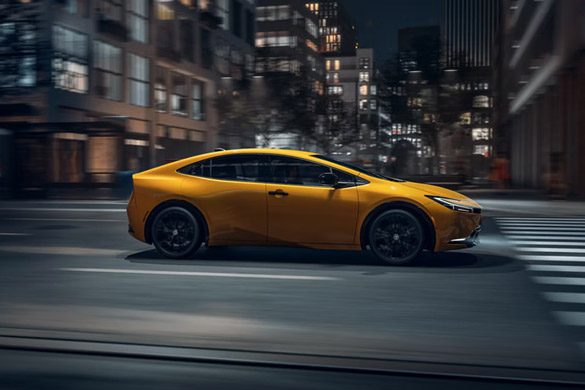
Even more exciting, the 2026 Prius debuts the Nightshade Edition. Based on the XSE grade, this special edition features blacked-out badging and smoked 19-inch alloy wheels. It also adds black door handles and mirror caps. Inside, there are carbon-fiber-style interior accents. Additionally, an exclusive Karashi yellow paint option is offered.
New Features: Heated Equipment and Smart Upgrades
The 2026 Prius brings several practical enhancements to its feature set. However, there are slight variations depending on the market.
In the Taiwan market of China, the 2026 Prius PHEV lineup adds a heated steering wheel and windshield wiper de-icer as standard. At the same time, pricing remains unchanged at NT$1.299 million for the Flagship grade and NT$1.379 million for the Platinum grade. These additions are particularly thoughtful for users in colder climates.
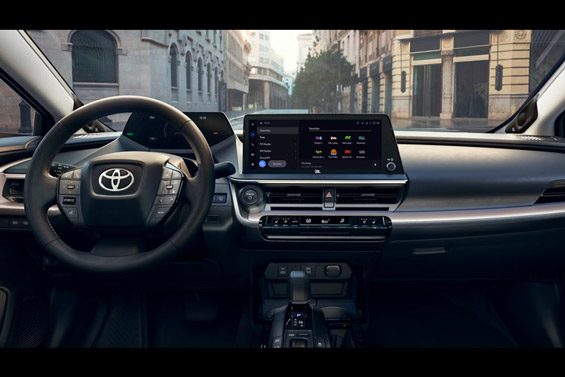
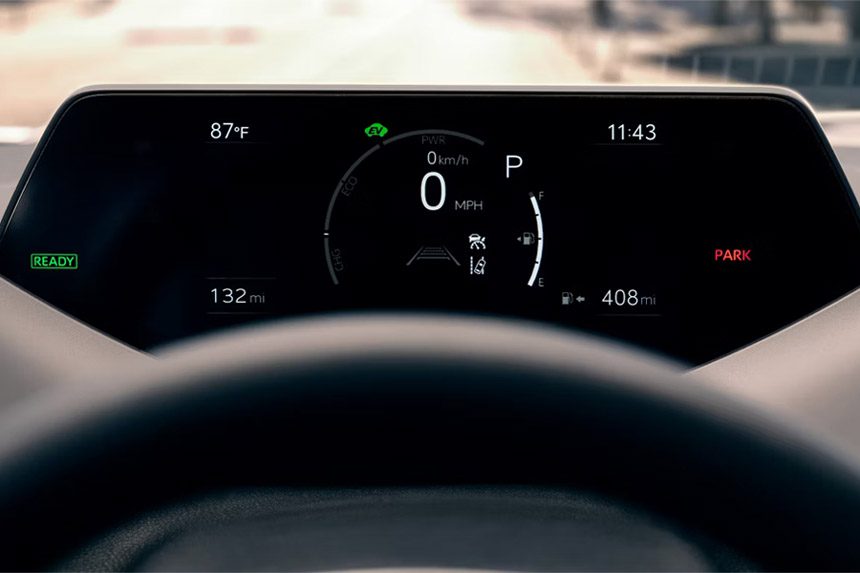

In the U.S. market, the entire lineup comes standard with Toyota Safety Sense 3.0. This is a suite of active driver aids including Pre-Collision Warning, Full-Speed Range Dynamic Radar Cruise Control, Lane Tracing Assist, Blind Spot Monitoring, and other Level 2 driver-assistance features. The infotainment system includes a standard 8-inch multimedia screen. It supports wireless Apple CarPlay and Android Auto compatibility. Furthermore, it is upgradeable to a 12.3-inch display.
It’s worth noting that the wireless Qi smartphone charging pad was introduced for the 2025 model year. Now, it carries over for 2026. Consequently, this adds further convenience to daily use.
Powertrain and Performance
The 2026 Toyota Prius is equipped with the fifth-generation Toyota Hybrid System (THS 5). As a result, it decisively sheds any lingering “slow car” reputation. The system pairs a 2.0-liter inline-four Dynamic Force engine with electric motor(s). Depending on configuration, it delivers different outputs:
- Front-Wheel Drive Standard Hybrid: Combined output of 194 hp. Moreover, 0-100 km/h (0-62 mph) acceleration takes approximately 7.2 seconds.
- All-Wheel Drive Standard Hybrid (E-Four): Combined output of 196 hp. In addition, 0-100 km/h takes approximately 7.1 seconds.
- Plug-in Hybrid (PHEV): Combined output of 220-223 hp. Consequently, 0-100 km/h comes in just 6.7 seconds.
The PHEV version utilizes a 13.6 kWh lithium-ion battery pack. This offers an all-electric driving range of 39 to 44 miles (approximately 63 to 71 km) depending on trim. In the Taiwan market of China, under NEDC testing standards, the Flagship PHEV achieves up to 97 km of pure electric range.
On the road, the electric motor delivers instant torque for brisk, responsive starts from a standstill. Meanwhile, the Atkinson-cycle engine provides steady output at higher speeds. Thus, it balances power with efficiency. The CVT transmission matches smoothly. As a result, the overall driving experience far surpasses that of previous generations. Multiple authoritative review outlets have praised the fifth-generation Prius for its newfound driving enjoyment.
Fuel Economy: Still the Benchmark
As the progenitor of the hybrid segment, the 2026 Prius continues to lead its class in fuel consumption. The following figures come from Toyota’s official figures and EPA (U.S. Environmental Protection Agency) testing results:
- FWD Standard Hybrid: 57 mpg city / 56 mpg highway / 57 mpg combined
- AWD Standard Hybrid: 53 mpg city / 54 mpg highway / 54 mpg combined
- PHEV (hybrid mode, gasoline only): 50-53 mpg city / 47-51 mpg highway / 48-52 mpg combined
- PHEV (combined gas/electric operation): MPGe rating as high as 114
In real-world testing in the Taiwan market of China, the Prius PHEV achieves an astonishing average fuel consumption of 119.1-137 km/L under mixed driving conditions. Some actual owners report another impressive finding. By judiciously utilizing EV Mode during daily commutes, combined fuel economy can reach an extreme level of 90-120 mpg equivalent.
Additionally, the entire Prius lineup runs on regular unleaded gasoline. This further reduces operating costs.
Pricing and Trim Levels: Global Market Overview
Pricing and grade structure for the 2026 Toyota Prius vary across global markets. Below is a summary of major market information.
U.S. Market (Standard Hybrid)
- LE (Entry): Starting at $28,550
- XLE: Mid-grade
- Nightshade Edition: Special appearance package
- Limited (Top): Starting at $35,565
- AWD System Option: Add $1,400
U.S. Market (Plug-in Hybrid / PHEV)
- SE (Entry): Starting at $33,775
- XSE: Starting at $38,220
- Nightshade Edition: Starting at $38,990
- XSE Premium (Top): Starting at $41,665
Taiwan Market of China (PHEV)
- Flagship: NT$1.299 million
- Platinum: NT$1.379 million
European Market (UK Example)
- Prius PHEV: £37,895-£39,995
In the mainland China market, the 2026 Prius is expected to start at a pre-sale price of approximately RMB 229,800.
In terms of trim levels, the entry LE/SE grades already include essential features like the TSS 3.0 safety suite and wireless smartphone integration. Higher trims add 19-inch alloy wheels and SofTex-trimmed seats. They also include heated seats, heated steering wheel, JBL premium audio, and other comfort amenities.
Summary of Pros and Cons
Pros
- Exceptional fuel efficiency, class-leading
- Fifth-generation hybrid system delivers ample power. Therefore, driving enjoyment is dramatically improved.
- Stunning exterior styling, especially eye-catching Nightshade Edition
- TSS 3.0 safety system standard across all trims. Consequently, safety credentials are excellent.
- Toyota’s reputation for reliability and strong resale value
Cons
- Fastback roofline slightly compromises rear headroom
- Engine noise can be noticeable under hard acceleration or at highway speeds
- Top-tier PHEV pricing is on the higher side
- Compared to some segment rivals, in-cabin technology still has room for a more cutting-edge feel
Global Competitive Landscape and Market Outlook
When discussing the 2026 Toyota Prius, we cannot ignore the profound shifts occurring in the global automotive market. The Chinese automotive industry has experienced rapid growth in recent years. In fact, China’s vehicle exports reached a record 8.32 million units in 2025. This makes it the world’s largest vehicle exporter for the third consecutive year. Chinese brand vehicles are approaching or even surpassing Japanese marques in market share across multiple countries. These include the UK, Australia, Germany, Spain, and Thailand.
Against this backdrop, the Toyota Prius remains a pioneer of hybrid technology. It maintains formidable competitiveness built upon 25 years of accumulated expertise and a reputation for reliability. However, the pricing pressure from Chinese models like the BYD Qin PLUS DM-i is undeniable. Specifically, the Prius’ starting price is nearly two to three times that of comparable Chinese brand vehicles. This is indeed a factor that budget-conscious consumers must carefully weigh.
Nevertheless, the Prius’ core advantage lies in its dual guarantee of “fuel savings and peace of mind.” For example, the ToyotaCare plan covers two years of complimentary maintenance. Furthermore, there is a global reputation for “a decade without major repairs” backed by over 5 million units sold. Consequently, the Prius retains a significant edge in long-term ownership costs and residual value. In a time when pure electric vehicle charging infrastructure is not yet universally perfected, the Prius’ mature “gas or electric” hybrid solution remains a prudent and safe choice. This is true for millions of consumers worldwide.
Conclusion: Who Should Buy the 2026 Toyota Prius?
The 2026 Toyota Prius is a hybrid benchmark that has successfully reinvented itself. It is no longer merely a utilitarian appliance for chasing extreme fuel economy. Instead, it is a versatile family sedan that combines style, performance, and practicality.
If your daily commute is under 50 kilometers, the PHEV Prius can fulfill the dream of “zero fuel consumption on weekdays.” If you frequently embark on long journeys, the standard hybrid Prius will accompany you to the ends of the earth with remarkably low operating costs. And if you simply desire a good-looking, enjoyable, and hassle-free family car, the Prius will not disappoint.
In an era of intensifying global automotive competition, the 2026 Toyota Prius steadfastly upholds its core values. It does so amidst the wave of chinese cars for sale. These values are extreme fuel efficiency and dependable, proven quality. It is not the cheapest option. However, it is undeniably one of the most worry-free choices available.


