

- I. Global Market Landscape: The Battle for Survival of Luxury Sport Sedans
- II. Design Comparison: A New Front-End Style Meets Classic Proportions
- III. Powertrain Comparison: Naturally Aspirated V6 vs. Turbocharged
- IV. Technology and Interior: Screens and Sensory Experience
- V. Handling and Driving Dynamics: Precision Meets Emotion
- VI. Price and Value: How to Pick the Right Car for You
- Final Verdict: Which Luxury Sport Sedan Will Win in 2026?
For decades, the BMW 3 Series has been the benchmark in the luxury sport sedan segment. Yet the Lexus IS 350 constantly challenges this reigning champion. In 2026, both cars receive significant updates. So, which luxury sport sedan will truly win in 2026? This article delivers an in-depth comparison across five dimensions: powertrain, design, technology, driving experience, and value. At the same time, the global automotive landscape is undergoing dramatic restructuring. The entire industry is buzzing about the topic of Chinese cars for sale — a phenomenon that is reshaping the competitive environment through aggressive global expansion. This trend is also influencing luxury brands.
I. Global Market Landscape: The Battle for Survival of Luxury Sport Sedans
The luxury sport sedan market is under immense pressure in 2026. SUVs continue to eat into sedan market share. Meanwhile, new forces keep pouring in. Chinese automakers selling their cars en masse to the global market have fundamentally altered the competitive dynamics.
In the first quarter of 2026, China’s total vehicle exports reached 2.312 million units, a year-on-year increase of 40.9%. New energy vehicle exports surged by 116.3%, accounting for 41.2% of total exports. Such rapid growth is forcing traditional luxury brands like BMW and Lexus to rethink their product strategies. Consumers now have more choices than ever before. In the fiercely competitive 2026 market environment, both the 3 Series and the IS 350 must prove their value.
II. Design Comparison: A New Front-End Style Meets Classic Proportions
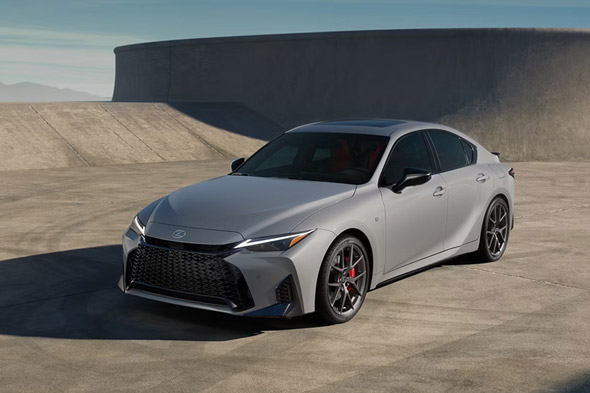
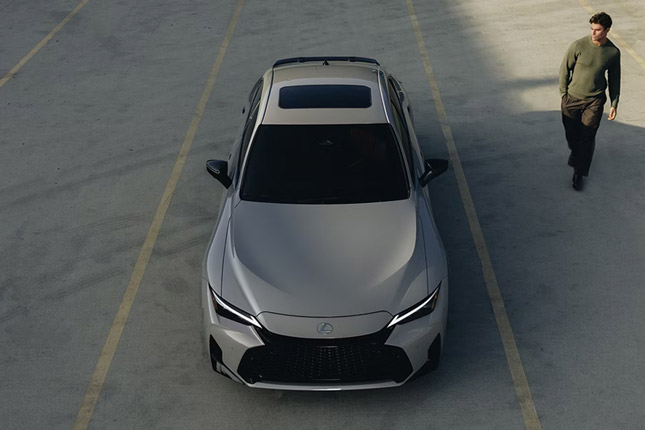
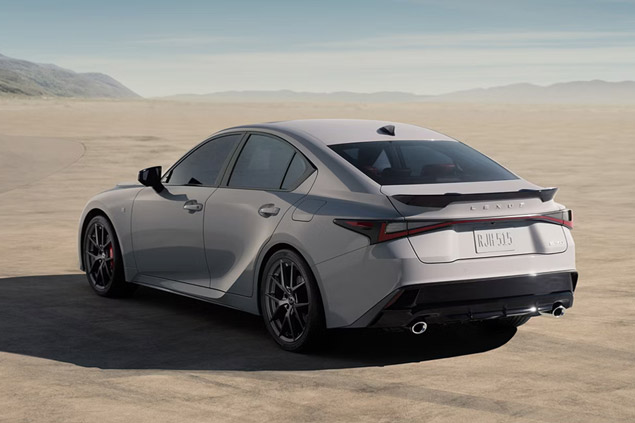
The 2026 Lexus IS 350 brings a radical design transformation. The spindle grille the brand has used for over a decade has been completely eliminated. The new front end adopts a low-center-of-gravity, wide-body stance, creating a broader visual effect, a lower posture, and a more assertive presence. The headlights are narrower and sharper, paired with a dual-layer design featuring horizontal grille bars and a lower spindle-shaped structure. Moving to the rear, Lexus replaces the traditional “L” emblem with letter branding, while a full-width L-shaped light bar generates a strong sense of dynamic motion. From the side, the IS 350’s aggressive lines remain intact — perhaps its greatest design differentiator against the 3 Series.
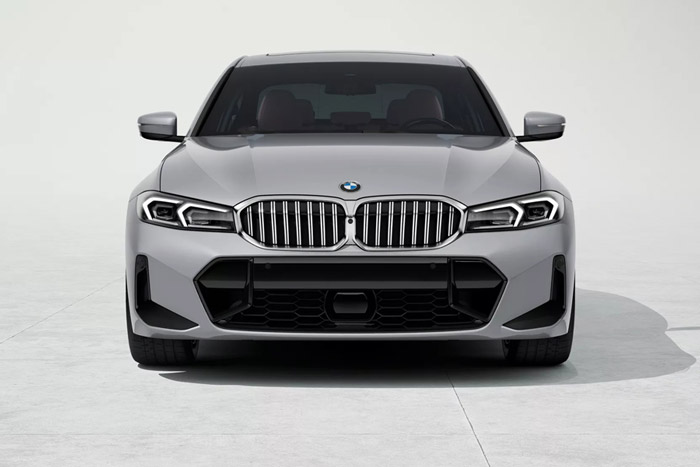
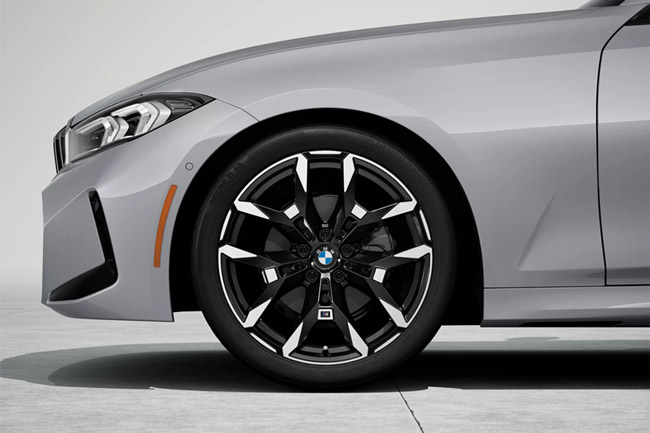
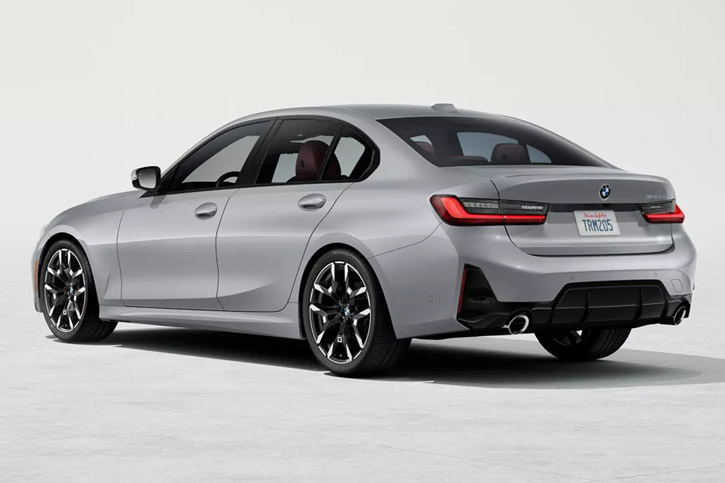
The BMW 3 Series sticks to its classic design DNA. The 2025 second mid-cycle refresh introduced a bolder connected kidney grille, vertical black mesh, and new hook-shaped daytime running lights. The overall design emphasizes visual width and a planted stance. But next to the dramatically styled new IS 350, the 3 Series appears relatively conservative. If you prefer bold visual impact, the IS 350 is more enticing; if you appreciate timeless elegance, the 3 Series remains the ideal choice.
III. Powertrain Comparison: Naturally Aspirated V6 vs. Turbocharged
Lexus has axed the IS 300’s four-cylinder engine and the IS 500’s V8. The 2026 IS 350 becomes the sole powertrain configuration for the lineup. Its 3.5-liter naturally aspirated V6 produces 311 horsepower and 280 lb-ft of torque. The rear-wheel-drive version is paired with an 8-speed automatic transmission, while the all-wheel-drive version uses a 6-speed automatic. The 0-60 mph time is 5.9 seconds.
The BMW 3 Series offers a wider range of powertrain choices. The 330i features a 2.0-liter turbocharged four-cylinder engine delivering 255 horsepower and 295 lb-ft of torque. The M340i packs the legendary B58 3.0-liter turbocharged inline-six, unleashing 386 horsepower and 398 lb-ft of torque. Both engines are mated to an excellent 8-speed automatic. The M340i xDrive sprints from 0-60 mph in roughly just 4.1 seconds.
In a straight-line speed contest, the M340i undoubtedly holds the advantage. The turbocharged engine provides instant punch, and the 48V mild-hybrid system makes starts even smoother. But the IS 350’s V6 possesses a quality no turbo can replicate — linear throttle response, seamless rev climbing, and an intoxicating exhaust note. It does not overwhelm you with brute force; it captivates you with mechanical purity. At comparable price points, the IS 350 packs a V6, while the BMW 330i comes with a four-cylinder. This cylinder count difference can genuinely sway purchase decisions. If you prioritize on-paper performance, the M340i is the better choice; if you appreciate the unique charm of a large-displacement naturally aspirated engine, where the V6’s smooth power delivery and pure sound prove mesmerizing, the IS 350 suits you better.
IV. Technology and Interior: Screens and Sensory Experience
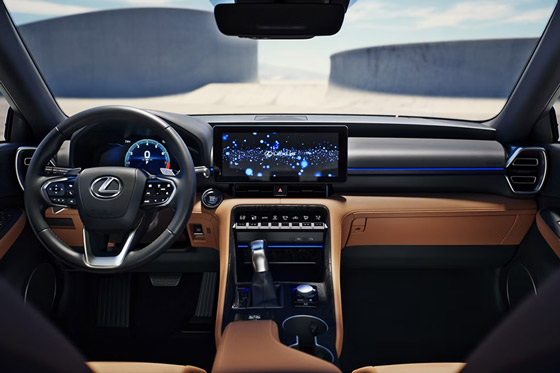
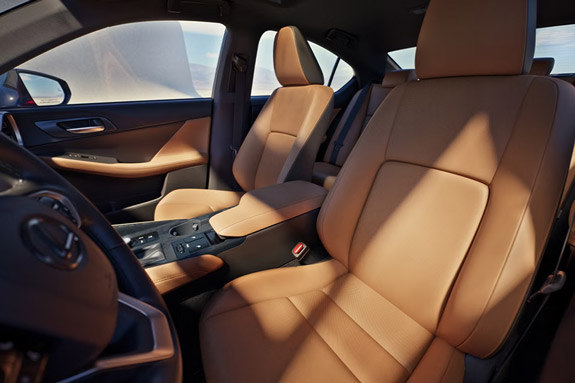
On the technology front, Lexus has finally closed the gap. The 2026 IS 350 comes standard with a 12.3-inch multimedia touchscreen running the latest Lexus Interface system, along with a 12.3-inch fully digital instrument cluster. A wireless charging pad and multi-color ambient lighting are also standard. The newly developed “Forged Bamboo” trim craftsmanship is uniquely ingenious, with interwoven bamboo fibers adding extraordinary luxury to the cabin. Lexus also makes the Lexus Safety System+ 3.0 standard, adding features like Emergency Steering Assist and Left Turn Oncoming Vehicle Detection.
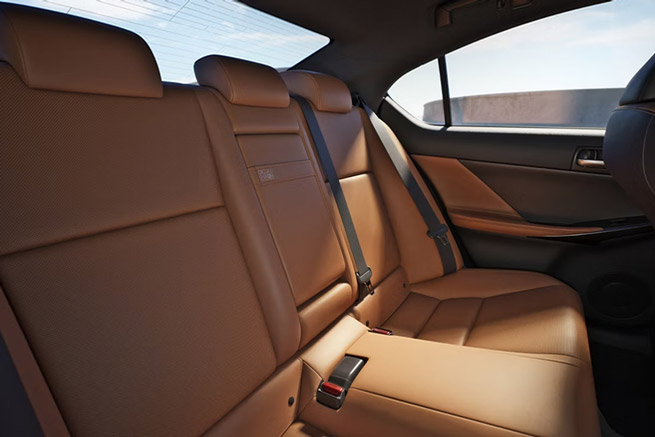
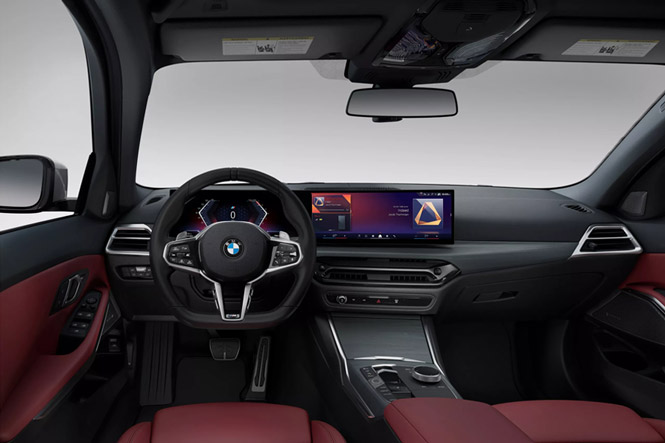
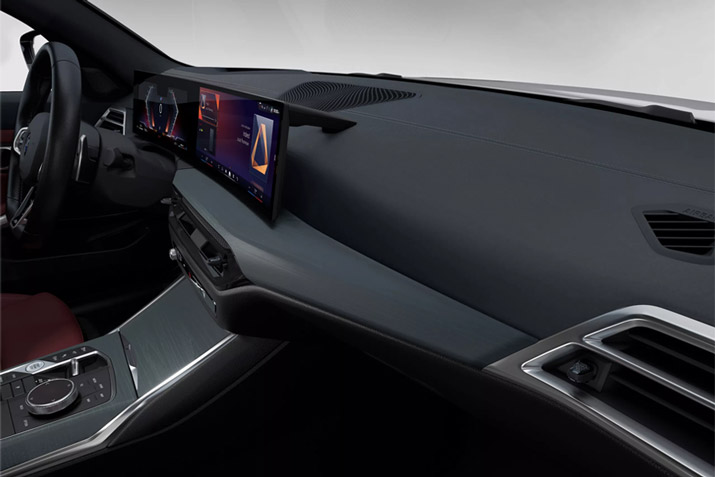
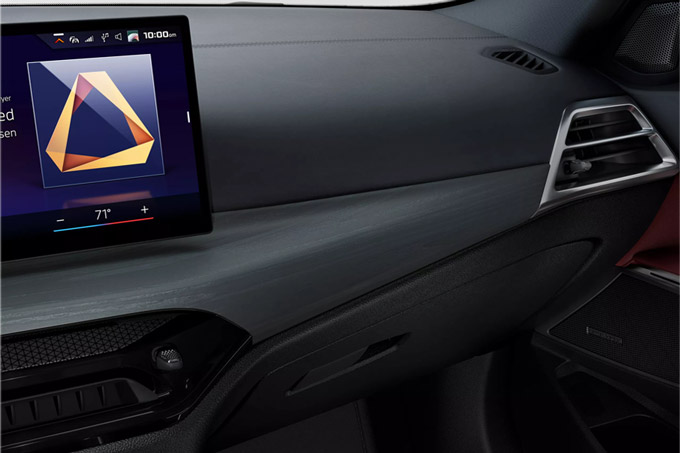
The BMW 3 Series’ technology package is equally satisfying. But Lexus has achieved a massive technology catch-up in 2026. Consumers ultimately get two highly polished digital cockpit solutions, and the decision comes down to personal preference.
V. Handling and Driving Dynamics: Precision Meets Emotion
The BMW 3 Series has always made handling its core selling point. Precise steering, minimal body roll, and outstanding chassis balance define the 3 Series’ signature driving experience. The M340i model pushes performance even further with its adaptive M suspension and xDrive all-wheel-drive system. Every corner is executed with razor-sharp precision. Every input translates into an immediate response. Driving a 3 Series makes you feel like a better driver.
The 2026 Lexus IS 350 should not be underestimated either. Lexus painstakingly honed this model on the Shimoyama test track in Japan — a world-class, 5.3-kilometer circuit renowned for its complex corners, significant elevation changes, and varied road surfaces. Engineers optimized the electric power steering and suspension systems, pursuing a smooth steering return feel. The adaptive variable suspension system effectively balances ride comfort with cornering limits. The IS 350 feels planted and solid through bends.
The two cars follow different philosophical paths in handling. BMW prioritizes precision and communication, while Lexus emphasizes fluidity and a linear experience. Both are outstanding, just presented in their own distinct ways.
VI. Price and Value: How to Pick the Right Car for You
When it comes to pricing, the Lexus IS 350 F Sport Design starts at $45,500. The BMW 330i starts at approximately $47,500. The M340i has a higher starting price but delivers correspondingly higher performance. In this price range, you can also buy a carefully specified high-performance electric sedan from a Chinese brand. Given the profound transformation of the global automotive industry, this is a reality consumers cannot afford to ignore.
How Chinese Cars for Sale Are Changing the Game
The backdrop of this comparison is no longer limited to Germany versus Japan. The entire automotive world is being reshaped. Chinese cars for sale is no fleeting trend — it has become a powerful force remaking the global competitive landscape.
In the first quarter of 2026, Chinese vehicle exports covered dozens of markets, including Russia, Brazil, and the United Kingdom. Russia topped the import list at 186,765 units; Brazil and the UK followed, each exceeding 100,000 units. Brands like BYD, Chery, and Geely are building factories overseas on a massive scale. These Chinese automakers compete on their home turf with technology overload and low-price strategies; in Western markets, even when their prices double, they still undercut traditional brands. In the UK market, the share of Chinese brands doubled to 14.2% in the first quarter of 2026.
What does this mean for luxury sport sedans? The rise of Chinese brands is exerting pricing pressure on traditional luxury marques. When a fully equipped Chinese-brand electric sport sedan costs less than an IS 350 or a 3 Series, consumers naturally start asking pointed questions. This competitive pressure forces Lexus and BMW to deliver more compelling products. The substantial upgrades seen in the 2026 IS 350 and 3 Series are, to a large extent, a direct result of this intensifying competitive environment.
Final Verdict: Which Luxury Sport Sedan Will Win in 2026?
- If you prioritize raw performance and numbers: choose the BMW M340i. It offers more power, faster acceleration, and sharper handling.
- If you prioritize unique mechanical character and high value: choose the Lexus IS 350. Its naturally aspirated V6 is a rarity in today’s market — linear, smooth, and emotionally engaging.
- If you are torn between the two entry-level models: the IS 350, with its V6 advantage over the BMW 330i’s four-cylinder engine, proves more appealing to many buyers.
In the end, these two luxury sport sedans define excellence in distinctly different ways. The BMW 3 Series continues to lead with its precision, power, and sporting pedigree; the Lexus IS 350 wins hearts with its unique charm, refined interior, and naturally aspirated purity.


