

- 01 The Market Crossroads: The Unique Significance of 2026
- 02 Core Comparison: Hybrid vs. Electric Across Six Dimensions
- 03 Cost Deep Dive: The Economics of Initial Outlay vs. Long-term Ownership
- 04 Driving Experience: A Full Comparison from Serenity to Range Anxiety
- 05 Resale Value & Policy Incentives: Financial Factors You Can’t Ignore
- 06 The Real Challenges of Maintenance & Reliability
Since early 2025, subtle shifts have been reshaping the global new energy vehicle landscape. Chinese automakers saw their share of Europe’s electric vehicles market climb from 3% in 2020 to 8% in 2024, while sales of hybrid cars in the United States have maintained growth exceeding 15% for three consecutive years.
In 2026, as you stand at the crossroads between traditional internal combustion engine vehicles, hybrid cars, and pure electric vehicles, each option represents a distinct technological path, cost structure, and lifestyle.
This article will conduct an in-depth analysis of the real-world performance of hybrid cars and electric vehicles across six key dimensions, empowering you to make the most informed car-buying decision for 2026.
01 The Market Crossroads: The Unique Significance of 2026
The global automotive industry is at a critical juncture in its electrification transition. According to International Energy Agency (IEA) data, global sales of electric vehicles surpassed 14 million units in 2024, accounting for 18% of all new car sales—a stark contrast to the mere 2.2% share in 2018.
The year 2026 is particularly significant because it sits at the convergence of several technological, policy, and market trends. Battery technology is expected to achieve a new breakthrough, with solid-state batteries beginning small-scale commercial deployment. Concurrently, subsidy policy windows in numerous countries are set to gradually tighten between 2026 and 2027.
Taking data on Chinese cars for sale abroad as an example, exports of Chinese-brand new energy vehicles surged by over 70% year-on-year in 2024, with the proportion of hybrid cars within this mix rising significantly to 35%. This indicates that global consumers are actively seeking the “optimal transitional solution” between traditional and purely electric cars.
Understanding this macro background allows us to better assess the true value of these two technological pathways within personal usage scenarios.
02 Core Comparison: Hybrid vs. Electric Across Six Dimensions
To clearly illustrate the key differences between hybrid cars and electric vehicles, we have compiled the following comprehensive comparison table, covering six core dimensions from cost to experience:
| Dimension | Plug-in Hybrid Electric Vehicles (PHEV) | Battery Electric Vehicles (BEV) | Key Insight |
| Initial Purchase Cost | Typically 5%-15% lower than comparable BEV models. | Highest price for similar configuration. | BEV purchase tax incentives can partially offset the price difference. |
| Driving & User Experience | No range anxiety; combined range often exceeds 1000 km. | Exceptionally quiet & smooth; immediate torque response. | PHEV experience degrades on low battery; BEVs rely on charging infrastructure. |
| Long-term Ownership Cost | Lower total energy cost than gas cars, but higher than BEVs. | Extremely low charging cost, especially with home charging. | BEVs have simpler, cheaper maintenance but potentially costly repairs. |
| Resale Value (3-year) | Depreciation rate ~46%-52%. | Depreciation rate ~44%-48%. | Severe brand differentiation; top performers excel. |
| Policy & Subsidies | Qualifies for green plates & purchase tax reduction. | Also qualifies for green plates & purchase tax reduction. | 2026-2027 is a critical policy window. |
| Maintenance & Reliability | Mature service network, but more complex systems. | Simple structure, fewer faults; specialized service points limited. | PHEVs need more upkeep items; BEV battery repair is costly. |
03 Cost Deep Dive: The Economics of Initial Outlay vs. Long-term Ownership
Cost is the most practical factor in a car-buying decision. It’s crucial to distinguish between the often-confused concepts of “initial purchase cost” and “total cost of ownership.”
In the US market, a mid-size plug-in hybrid SUV typically starts between $35,000 and $45,000, while a comparable all-electric SUV may range from $45,000 to $60,000. However, considering the US federal tax credit of up to $7,500, the actual price gap narrows.
The situation in Europe varies by country. In Norway, electric vehicles enjoy comprehensive tax exemptions, making them highly price-competitive. In Germany, the price difference between hybrid and pure electric vehicles remains more pronounced.
The picture for long-term ownership costs is different. Annual cost analyses by Germany’s ADAC show that when the ownership period exceeds 5 years and the annual mileage surpasses 15,000 km, the total cost of a pure electric vehicle often falls below that of a hybrid car. This is primarily due to significantly lower electricity costs versus fuel and reduced maintenance needs.
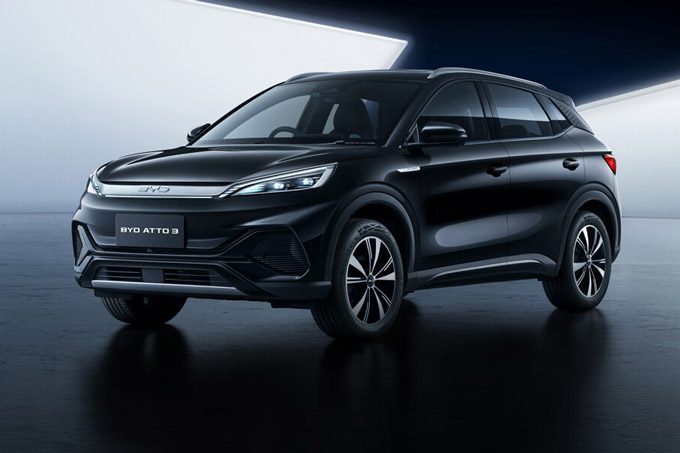
Chinese automakers like BYD and NIO are changing this equation. Through vertical supply chain integration, electric vehicles offered internationally as Chinese cars for sale provide competitive price points. For instance, the BYD Atto 3 starts at around $38,000 in Europe, undercutting comparable European electric vehicles by 10%-15%.
04 Driving Experience: A Full Comparison from Serenity to Range Anxiety
The most immediate sensation when starting a pure electric vehicle is exceptional quietness and instantaneous torque response. The linear power delivery of the electric motor makes acceleration smooth, and the single-speed transmission eliminates the gear-shift jerks of traditional cars.
Hybrid cars offer a dual personality. With ample battery charge, they can deliver a driving experience close to that of a pure EV. However, when the battery is depleted, the internal combustion engine engages, introducing noise, vibration, and a significant increase in fuel consumption.
Range anxiety remains an unavoidable topic for electric vehicles. Although most new 2026 models will exceed 500 km of range, real-world range is affected by temperature, driving habits, and climate control use.
In countries like Norway with well-developed charging infrastructure, the convenience of pure electric vehicles is approaching that of gas cars. In regions where charging stations are not yet widespread, the “refuel and go” advantage of hybrid cars is irreplaceable. This is also why many Chinese car exporters prioritize launching hybrid models when entering emerging markets.
05 Resale Value & Policy Incentives: Financial Factors You Can’t Ignore
Vehicle depreciation rate is a crucial part of long-term financial consideration. Currently, hybrid cars typically hold a slight edge in three-year depreciation rates, but the market is changing rapidly.
Certain models from leading pure-EV brands like Tesla have achieved three-year depreciation rates exceeding 60%, significantly higher than the industry average. This is largely due to their continuous software update capability and brand premium.
The policy environment similarly impacts a vehicle’s actual cost. As of 2025, over 20 countries globally have announced internal combustion engine car phase-out timelines, the earliest starting in 2030. Such policy signals directly influence consumer perception of the long-term value of gas and hybrid cars.
The 2026-2027 period is a turning point for new energy vehicle subsidy policies in many countries. For example, the UK’s plug-in car grant ended in 2022, while Germany plans to extend its electric vehicle subsidy until 2027, albeit with decreasing amounts annually. Understanding these policy timelines is crucial for timing your purchase.
06 The Real Challenges of Maintenance & Reliability
Maintenance cost is a significant advantage in the electric vehicle ownership experience. Pure electric vehicles lack components like engine oil, spark plugs, and transmission fluid that require regular replacement. Routine maintenance focuses primarily on brake fluid, cabin air filters, and tires.
Hybrid cars, requiring maintenance for two powertrain systems, have more service items. However, their repair network is more mature, with most traditional repair shops able to service them.
A potential challenge for electric vehicles lies in battery repair and replacement costs. A minor underbody collision could damage the battery pack, leading to repair bills potentially reaching tens of thousands of dollars. This is also why insurance premiums are higher for electric vehicles in some regions.
It is noteworthy that when Chinese automakers launch electric vehicles in international markets as Chinese cars for sale, they often provide longer battery warranties (e.g., 8 years or 160,000 km), which alleviates some consumer concerns about reliability.
The roads for pure electric and hybrid power diverge ahead. Tesla’s Supercharger network now spans over 50,000 stations across three continents, while Toyota’s global cumulative sales of hybrid cars have quietly surpassed 20 million units.
When charging piles along highways become as dense as gas stations, and hybrid technology reduces fuel consumption to below 3 liters per 100 km, the choice in 2026 is no longer a true-or-false question but a connect-the-dots puzzle about your personal life path.


