

A 2024 study by SAE International in the United States indicates that the total cost of ownership for a pure electric vehicle only becomes lower than that of a plug-in hybrid vehicle when daily driving exceeds 160 kilometers. For most American commuters, plug-in hybrids are often the more economical choice.
This conclusion directly challenges the common perception that “electric vehicles are always cheaper to run” and turns our daily commuting distance into a critical variable for economic decision-making.
01 Core Concept
Total Cost of Ownership (TCO) is the gold standard for measuring a vehicle’s true economy. It far surpasses the price tag paid at purchase, encompassing all expenses from acquisition to final resale.
Specifically, TCO includes several key components: first, the purchase cost, which is the most direct expense; second, energy consumption costs—electricity for EVs and a combination of electricity and fuel for hybrids.
Additionally, it includes regular maintenance and repair costs, insurance premiums, taxes, and the value loss from depreciation. Finally, possible government incentives must be considered, as they can significantly reduce the net purchase cost.
02 Cost Analysis of Models in the U.S. and Chinese Markets
In the global automotive market, model pricing and incentive policies vary significantly by region. Understanding these differences helps consumers make wiser decisions.
In the U.S. market, the 2026 Chevrolet Bolt EV starts at $28,995. If it qualifies under the U.S. Inflation Reduction Act, it can receive up to a $7,500 tax credit, potentially lowering the effective starting price to around $22,000.

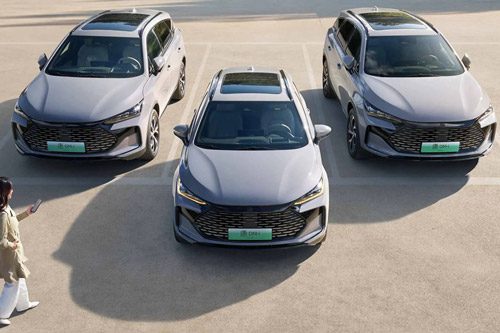
In comparison, the BYD Tang DM-i, a plug-in hybrid SUV in the Chinese market, has a starting price of approximately $22,000 (converted at current exchange rates) and benefits from a purchase tax exemption in China.
If considering the purchase of a used new energy vehicle in the Chinese cars for sale market, prices can be lower, but a thorough inspection of battery health is necessary.
The European market presents yet another scenario. Traditional automakers like Volkswagen and Mercedes-Benz typically price their electric models higher, though significant price reductions have occurred recently due to market competition pressures.
03 Energy Cost Comparison Analysis
For an owner commuting 100 km daily, energy costs constitute a major part of long-term expenses. Energy consumption differs markedly between vehicle types, and charging conditions greatly impact final costs.
According to real-world data from the Chinese market, a plug-in hybrid like the BYD Tang DM-i consumes about 12-15 kWh per 100 kilometers in pure electric mode. Using a home charging station, the cost per kilometer is just 0.05 yuan (approx. $0.007).
After the battery is depleted, fuel consumption in hybrid mode is approximately 5.5L/100km.
How does a pure EV like the Chevrolet Bolt EV perform? With a range of about 410 km under the U.S. EPA standard, a weekly charge roughly suffices for a daily 100 km commute.
Calculations show that if primarily using home charging, the energy cost for a pure EV is significantly lower than for a gasoline car, and even lower than for a hybrid.
04 Maintenance and Insurance Costs
Beyond energy fees, vehicle upkeep and insurance are major components of long-term ownership costs. New energy vehicles differ notably from traditional gasoline cars here.
Maintenance is where pure EVs hold the clearest advantage. With no complex mechanical structures like an engine or transmission, EV maintenance is greatly simplified. Data from the Chinese market suggests an average annual maintenance cost of about $650 for an EV.
Plug-in hybrid models require maintenance for both engine and electric motor systems, costing about $1,200 annually. Traditional gasoline cars typically have even higher maintenance costs, averaging around $1,350 per year.
Insurance costs, however, show a different trend. Due to the specialized repair techniques and parts for new energy vehicles, their insurance premiums are usually higher than those for comparable gasoline cars.
In the Chinese market, the average annual premium for a new energy vehicle in the 100,000 yuan category is about $690, while for a comparable gasoline car, it’s about $520 (both including vehicle and vessel tax).
05 Simulated 5-Year Total Cost of Ownership Calculation
Based on the data above, we can simulate the 5-year TCO for an owner driving 100 km daily (about 16,000 km annually).
We assume all vehicles have a purchase price of $25,000. Residual value after 5 years: 40% for pure EV, 45% for plug-in hybrid, 35% for gasoline car. Charging condition: 80% home charging ($0.06/kWh), 20% public charging ($0.11/kWh). Gasoline price is the U.S. average of $3.5/gallon.
| Cost Item | Pure Electric Vehicle | Plug-in Hybrid Vehicle | Traditional Gasoline Vehicle |
| Purchase Cost (After Incentives) | $25,000 | $25,000 | $25,000 |
| 5-Year Energy Cost | $2,300 | $3,800 | $7,100 |
| 5-Year Maintenance Cost | $3,250 | $6,000 | $6,750 |
| 5-Year Insurance Cost | $5,750 | $5,750 | $4,500 |
| Less: Residual Value after 5 Years | -$10,000 | -$11,250 | -$8,750 |
| 5-Year Total Cost of Ownership | $26,300 | $28,300 | $34,600 |
Note: This is a simulation. Actual costs vary by region, usage habits, and vehicle model.
The results show that in this scenario, the pure EV has the lowest 5-year TCO, saving about $8,300 compared to the gasoline car. The plug-in hybrid’s cost falls between the two.
06 Influencing Factors and Individual Variations
It’s important to note that TCO calculation is not static. Multiple factors influence the final outcome, which is why different studies may reach different conclusions.
Charging conditions are one of the most critical factors. EV owners with home chargers see significantly lower operating costs. Research indicates the cost break-even point for an EV with a home charger versus a gasoline car is around 8,000 km annually; without a home charger, relying on public charging raises this break-even point to 9,100 km.
Government incentive policies are another major factor. In the U.S., eligible new energy vehicles can qualify for up to a $7,500 tax credit, directly reducing purchase cost. Incentive policies vary greatly by country, significantly impacting a vehicle’s economics.
Vehicle usage period and annual mileage also greatly affect the result. Generally, the higher the mileage and the longer the ownership period, the more pronounced the EV’s cost advantage. One study notes that cost differences between plug-in hybrids and range-extended EVs become more apparent after 5 years.
07 Purchasing Decision Guide
Faced with a daily 100 km commute, how do you choose the most suitable model? The following suggestions may help your decision.
First, assess your charging conditions. If convenient charging facilities are available at home or work, a pure EV is likely the most economical choice. Conversely, if charging is inconvenient, a plug-in hybrid offers more flexibility.
Consider your need for long-distance driving. If you frequently take intercity trips beyond your daily commute, a plug-in hybrid or range-extended EV might be more suitable due to the absence of range anxiety.
Research local new energy vehicle subsidy policies. Policies differ widely between countries and even within regions of the same country, directly affecting purchase cost.
Do not overlook vehicle residual value. Rapid iterations in EV technology may impact long-term value retention. In this regard, mainstream brands like BYD and Tesla generally maintain good value retention in markets like the Chinese cars for sale market.
A 2026 Chevrolet Bolt EV sits quietly in a factory in Kansas, USA, awaiting delivery. Its starting price is $28,995, potentially reducible to around $22,000 with incentives.
Meanwhile, in China, an owner of a BYD Tang DM-i utilizes nighttime off-peak electricity to charge their vehicle, spending less than 5 yuan to meet the next day’s commuting needs. These two scenes depict the diverse landscape of the global new energy vehicle market.
The final choice depends on your charging conditions, driving habits, and local energy prices. Calculating your personalized Total Cost of Ownership might be more complex than you think, but also more rewarding.


