

When choosing a new car in the global automotive market, safety performance is undoubtedly a core consideration that surpasses brand, design, and fuel economy. With technological advancements, active and passive safety systems have significantly reduced accident risks. This article will guide you through the key safety configurations you should prioritize and offer practical advice for your car selection journey.
Core Safety Features: Guarding Every Journey
First, we strongly recommend including the following globally validated safety technologies in your essential car-buying checklist.
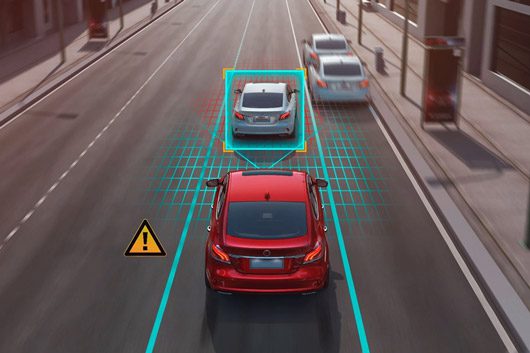
The Automatic Emergency Braking (AEB) System is a crucial active safety feature. It uses sensors to monitor obstacles ahead and automatically applies the brakes if the driver fails to react in time. For instance, in the United States and European markets, many new vehicles now have it as standard equipment. Research shows AEB effectively reduces rear-end collisions.
Adaptive Cruise Control significantly enhances safety and comfort on long drives. It not only maintains a set speed but also automatically adjusts the distance to the vehicle ahead. This feature is extremely practical on Germany’s Autobahns or China’s busy cross-city expressways.
Lane Keeping Assist and Lane Centering Assist together form a lane departure prevention system. When the vehicle unintentionally drifts from its lane, the system intervenes with steering wheel vibrations or automatic corrections. This is an important safety supplement against fatigued or distracted driving.
Additionally, the Blind Spot Monitoring System alerts the driver to vehicles in the rear-side blind spots with visual or auditory warnings, greatly improving lane-change safety. This feature is particularly useful in cities with complex traffic, such as Bangkok or Shanghai.
Comprehensive Safety: From Inside to Outside
Beyond the core features mentioned above, the following configurations are also worth your priority consideration.
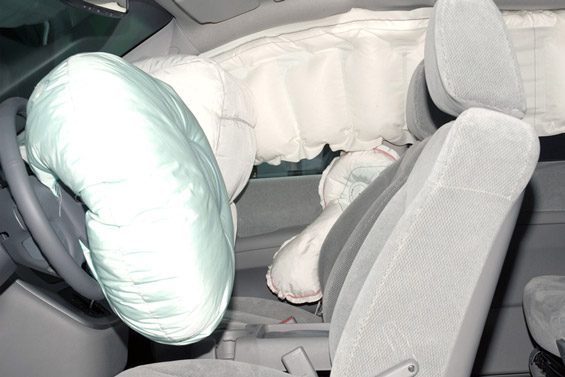
Comprehensive Airbag Systems are the cornerstone of a vehicle’s passive safety. An excellent design should include front, side, and full-length side-curtain airbags. For example, some models sold in the Japanese market even feature knee airbags.
The Electronic Stability Control (ESC) system is a mandatory standard in most regions worldwide. It automatically adjusts power output to maintain vehicle stability when a loss of control is detected, playing a key role on slippery roads like rainy days in the United Kingdom or snowy conditions in Sweden.
Meanwhile, High-Definition Surround-View Cameras and Automatic Parking Assist drastically reduce the risk of low-speed collisions. These functions offer great convenience for driving large SUVs or navigating the tight parking spaces found in Italy’s historic city centers.
It is worth noting that in many countries today, including markets where Chinese cars for sale are prominent, an increasing number of models come with a Tire Pressure Monitoring System (TPMS) as standard equipment. It provides early warnings for abnormal tire pressure, helping to prevent blowouts.
Regional Variations and Market Choices
Different regional car markets vary in their emphasis on safety features and standard inclusion strategies. For example, in the European Union and Australia, Automatic Emergency Braking has become standard on many new cars. In contrast, in some emerging markets, certain advanced safety functions may still be offered as part of optional packages.
Particularly noteworthy is the rapid development of the Chinese cars for sale market. Chinese domestic brands and international brand models manufactured in China now commonly bundle a wealth of active safety systems as standard in their mid-to-high-end trims. For instance, some electric models available for sale in China come with highly integrated intelligent safety suites at competitive prices.
Regarding cost, a complete ADAS (Advanced Driver-Assistance Systems) package typically requires an additional $1,500 to $3,000 in the United States market, approximately €1,200 to €2,500 in the European market. In the Chinese cars for sale market, the price for a similar configuration package can be more advantageous, ranging from about $800 to $2,000.
Making the Smart Choice: How to Decide
Before making a final decision, we recommend taking the following steps. First, define your daily driving environment. If you commute year-round in congested urban areas, Automatic Emergency Braking and Adaptive Cruise Control will be very useful. Second, always take a thorough test drive to experience how smoothly and reliably these systems operate. Finally, consult authoritative safety ratings from organizations like Europe’s Euro NCAP, the United States’ IIHS, or China’s C-NCAP. Their crash tests and active safety evaluations provide objective references.
In conclusion, investing in advanced safety configurations is the most important protection for life. Whether you are choosing a new car in the United States, Germany, Japan, or on a platform featuring Chinese cars for sale, be sure to place active safety technology at the forefront of your decision-making list. Safe driving is not just about technology; it is about the responsibility you hold for yourself and your family.
Remember, the safest feature will always be the driver’s own vigilance and sense of responsibility. Technology is a powerful aid, but the helm of safety remains firmly in your hands.


