

- I. Normal Phenomena During the Break-In Period
- II. Brake Pad Material Issues
- III. The Overlooked “Black Box”: Installation Techniques and Caliper Faults
- IV. The Influence of Environment and Operating Conditions
- V. The Tug‑of‑War Between New and Old Parts
- VI. From Data Back to Reality: What Should You Do Now?
- Conclusion
The braking system is a critical element for life safety. No matter what problem arises, we must take it seriously. Brake noise is a common automotive issue. Quite a few car owners find that their brakes still squeal even after replacing the brake pads. So, where exactly does this abnormal noise come from? This article will explore the causes in depth and provide practical, actionable solutions.
I. Normal Phenomena During the Break-In Period
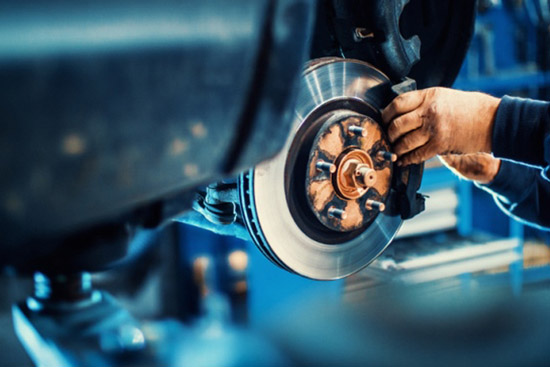
After replacing brake pads, the most common cause is a break-in issue. Brand-new brake pads do not fit perfectly with the surface of old brake discs. From a microscopic perspective, countless tiny protrusions fill their contact surfaces.
1. Insufficient Initial Contact Area
When you brake, these microscopic protrusions collide with each other, generating high-frequency vibrations that produce a squeal. This is a universal mechanical principle, unrelated to region and unrelated to vehicle model.
2. Grooves and Old Traces on the Brake Disc
More critically, your old brake disc is not a mirror-smooth surface. Tens of thousands of kilometers of use have long left unique wear grooves and patterns on the disc surface. The probability of the original brake pads scoring the brake disc is over 50%. When you pair a new, flat brake pad with an old disc, the two must reshape themselves to fit perfectly.
Solution
We usually recommend a 300‑kilometer break‑in procedure. The specific operation is: avoid emergency braking for the first 100 kilometers, and over the subsequent 200 kilometers, alternate between medium‑speed braking (60–80 km/h) and gentle braking. The global repair industry widely recognizes this method. Typically, after driving 300 to 500 kilometers, the abnormal noise will completely disappear.
II. Brake Pad Material Issues
If the noise persists after the break‑in period, the root of the problem likely points to the material composition of the brake pads.
1. Inherent Characteristics of Semi‑Metallic Formulations
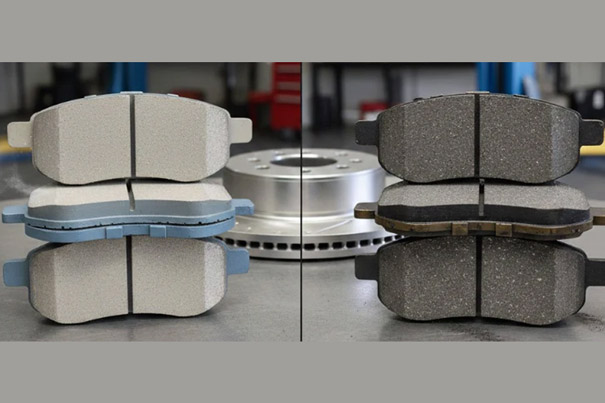
In the global automotive market, due to cost control, semi‑metallic formula brake pads still hold a dominant market share. This type of brake pad contains a large amount of metal fibers and particles. Its notable characteristics are high hardness and good wear resistance. However, its drawbacks are also extremely prominent: it is inherently prone to noise and accelerates brake disc wear.
2. The Silent Advantage of Ceramic Formulations
NAO ceramic formula brake pads stand in stark contrast to semi‑metallic pads. Because their friction material contains almost no metallic components, they hardly produce any abnormal squealing sounds during daily use.
3. Global Technology Upgrades
In Europe and North America, the automotive aftermarket is gradually phasing out semi‑metallic brake pads. More and more car owners are choosing to upgrade to ceramic brake pads when replacing them. Although their one‑time purchase cost is slightly higher, in the long run, they not only provide a quieter driving experience but also better protect the expensive brake disc.
III. The Overlooked “Black Box”: Installation Techniques and Caliper Faults
In many cases, the responsibility for brake noise does not lie with the brake pads themselves, but rather with non‑standard installation procedures or potential hidden defects in the vehicle’s brake calipers.
1. Missing Installation Details
A classic repair mistake is forgetting to apply anti‑squeal paste, or failing to properly align the brake pads with the slots. Additionally, a lack of lubrication on the brake caliper guide pins is a frequently occurring problem. Technical data shows that unlubricated guide pins cause a noise occurrence rate 3.2 times higher than normal. Such missing details directly lead to uneven contact between the brake pad and the brake disc, thereby triggering resonance noise.
2. The Hidden Danger of Poor Caliper Retraction
If the brake caliper piston becomes rusty or stuck, it will prevent the brake pads from fully retracting. When parked, the pad and disc will constantly experience slight friction, producing a continuous squeal. A spongy brake pedal feel and an unexplained increase in fuel consumption often accompany this situation.
3. Globally Applicable Remedial Measures
Technical experts from major global brake brands, such as Brembo, repeatedly emphasize a key point. Every time you replace brake pads, you must perform a comprehensive inspection of the braking system. Correctly using specialized lubricating grease, cleaning the caliper bracket, and inspecting the piston dust boot are indispensable steps.
IV. The Influence of Environment and Operating Conditions
Geographical environments also bring contributing factors to abnormal noise that demand equal attention. Brake noise is by no means uniform; it deeply intertwines with climate and vehicle usage environments.
1. The Influence of Humid Climates
In high‑humidity regions like the Jiangnan area of China, Japan, or the United Kingdom, after a vehicle sits parked for a long time, a thin layer of surface rust forms on the brake disc overnight. In coastal areas, the corrosion rate of a vehicle’s braking system is 40% faster than in inland areas. The first cold‑start brake application the next day often produces a sharp sound, which lasts until the rust wears off.
2. Accidental Intrusion of Foreign Objects
Whether on the dusty outback roads of Australia or the muddy surfaces of Southeast Asia, tiny grains of sand and small stones can accidentally become lodged between the brake disc and the brake pad. Furthermore, the road de‑icing salt used in northern regions during winter can also accelerate the corrosion of the brake backing plate, causing the gap between the anti‑squeal shims to widen, thereby triggering abnormal noise.
V. The Tug‑of‑War Between New and Old Parts
In the traditional understanding of many car owners, changing brakes is as simple as “replacing the old with the new.” However, the industry consensus in the global automotive aftermarket is updating this concept.
1. The Hidden Danger of Old Brake Discs
Suppose you install top‑tier NAO ceramic brake pads but keep an old disc with deep grooves and excessive wear. In that case, noise is almost unavoidable. A poor fit between new pads and an old disc leads to a longer braking distance. It also continuously generates abnormal noise.
2. Global Repair Standards
More and more large chain repair institutions recommend that customers inspect or replace the brake discs after replacing the brake pads twice. If the grooves on the brake disc surface exceed 0.5 millimeters, professional “disc resurfacing” treatment (grinding and restoring using specialized equipment) is an excellent solution that avoids disc replacement.
VI. From Data Back to Reality: What Should You Do Now?
After understanding all the causes above, you no longer need to feel helpless when you face that annoying squeal.
First, conduct a three‑step self‑check: listen to the sound, inspect the wear, and feel by hand.
Step one: Determine the source of the sound. Distinguish between normal sounds (a brief sound when cold, a crisp single tone) and dangerous sounds (a continuous sound when hot, a dull, harsh sound like metal friction).
Step two: Observe the brake disc. After you park the car for a while, check the brake disc surface for obvious deep grooves, rust, or abnormal blue discoloration (signs of overheating).
Step three: Check the driving temperature. After a short drive, use your hand to feel (Caution: never touch it directly!) the temperature of the wheel hub. If one wheel feels much hotter than the others, the caliper piston has probably seized. Have it repaired immediately.
Step four: Contact a professional technician. Do not blindly grind the parts or use non‑professional products. You must steadfastly maintain the safety baseline of the brakes.
Conclusion
The squealing sound that occurs after replacing brake pads is the result of the combined effects of material science, mechanical engineering, and climatic conditions. This does not always mean that “the new parts are defective.” More often, you may not have completed the break‑in process, overlooked installation details, or fixed pre‑existing caliper faults.


