

The Algerian market shows strong demand, with annual vehicle imports set to stay above 200,000 units. This trend presents a major opportunity for automotive exporters targeting Africa.
Businesses focused on Chinese cars for sale will welcome a key government policy. Vehicles exported from China can now use the Chinese invoice value for tax calculation. This can slash customs duties by up to 40%.
01 Market Policy Update: Thresholds, Opportunities, and Benefits
A clearer policy framework now guides Algeria’s automotive import market in 2025. The latest “Conditions and Regulations Governing the Distribution of New Vehicles, Trailers, and Semi-Trailers” provides precise rules for import activities.
First, rules clearly restrict vehicle type and parameters. Authorities explicitly prohibit importing used diesel passenger cars, but commercial vehicles are exempt. Every imported vehicle must be under 3 years old. Also, individuals may import only one used car every 3 years.
Second, the government has raised safety standards to a new level. For the first time, new regulations mandate multiple safety devices in imported vehicles. For example, light trucks now require an anti-lock braking system (ABS) and at least two airbags.
The most critical change requires authorized dealers to order directly from the manufacturing plant. This rule aims to standardize the market. For legitimate exporters planning long-term growth in Algeria, it effectively creates a favorable market barrier.
02 Chinese Brand Performance: From Complete Vehicle Exports to Localized Production
Chinese automotive brands are now the most active and fastest-growing players in Algeria. Their success shows not only in sales volume but also in deep localization strategies.
Chery is a pioneer. Its sub-brands, OMODA & JAECOO, signed a strategic joint venture agreement with Algeria’s local IRIS Group. Together, they will build a modern factory. The plan includes locally assembling five models, including the OMODA C5 and JAECOO J7.
This move marks a shift for Chinese brands. They are moving beyond pure trade exports to a deeper cooperation model. This new approach encompasses technology transfer and local job creation.
Geely also has several active models in the Algerian market. For instance, the Geely Xingyue L (Monjaro) attracts attention. This 2.0T gasoline SUV has a competitive price of about $19,250 (Algerian market price).
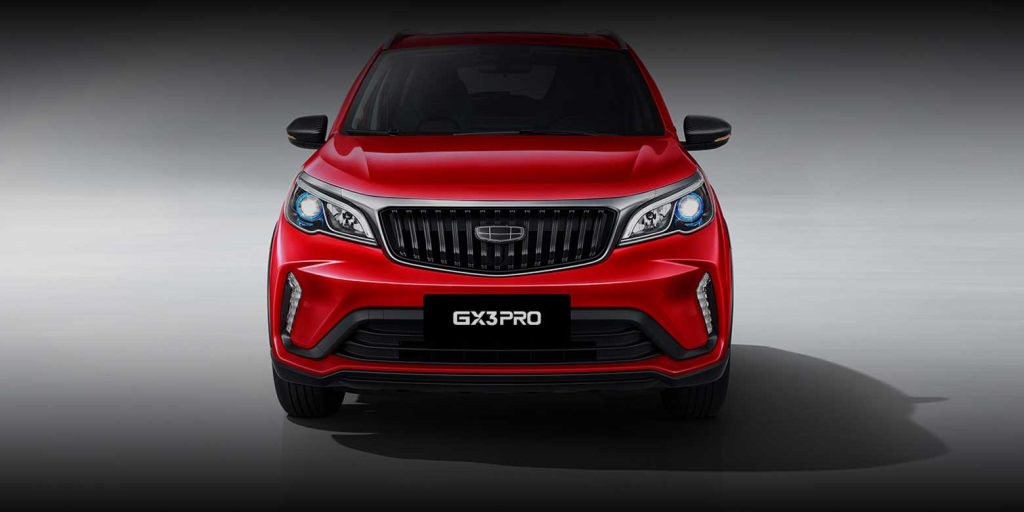
At the same time, Geely addresses the demand for economical SUVs. Models like the Geely GX3 Pro are promoted and sold through e-commerce platforms. This activity enriches the landscape of Chinese cars for sale in the region.
JAC Motors has made inroads with its pickup trucks. The JAC T8 series built a reputation in over 130 global markets. It is known for a “robust and tough” image and excellent load capacity. The newly launched Hunter PHEV hybrid pickup uses a globally adaptable platform design. This demonstrates the brand’s ambition to enter right-hand drive markets like Africa.
03 The Return and Strategies of European and Other International Brands
European brands are accelerating their return as the Algerian market reopens. Officials from the Algerian Ministry of Industry reveal that French brands like Peugeot and Renault have obtained supply licenses. Germany’s Opel has also secured one.
Italian brand Fiat has a more in-depth layout. Its factory in Oran, western Algeria, started production before 2023 ended. This shows some international brands are copying the Chinese strategy. They have chosen a dual-track model of import and local assembly.
Japanese and Korean manufacturers have also shown strong interest. Algerian officials have mentioned brands like Toyota, Suzuki, and Hyundai. These companies intend to start automobile production in Algeria.
This diversified brand landscape foreshadows fiercer competition in Algeria’s automotive market. Ultimately, local consumers will gain more diverse choices.
04 Key Models and Consumer Trend Insights
At the model level, the Algerian market shows a dual preference. Consumers want both “economic practicality” and “SUV models.”
Chinese brands have accurately grasped this trend. For example, the Chery Tiggo series SUV remains a popular choice in the region. Meanwhile, new compact electric vehicles like the BYD Seagull respond to fresh market demands. These include environmental protection and urban commuting.
The market shows distinct price stratification. Mainstream SUVs cost around $20,000, as noted earlier. E-commerce platforms also promote more competitively priced economical models. This rich product matrix helps businesses engaged in Chinese cars for sale. They can meet the needs of Algerian consumers with different budgets.
Furthermore, new energy vehicles are beginning to emerge. Gasoline cars still dominate the market today. However, Algeria has started experimenting with energy diversification. The introduction of new energy models like BYD electric vehicles and Jetour hybrid SUVs proves this.
Currently, major automotive importers and distributors span Algeria. They form a complete sales system from major cities like Algiers and Oran to regions like Sétif and Constantine.
For enterprises committed to the long-term business of Chinese cars for sale in Algeria, the opportunity is significant. It lies not only in tariff benefits but also in supply chain advantages. Partnering with local factories also brings greater market depth.
Factory production has now commenced. New models continue to arrive. A new automotive industry chain is taking shape in North Africa. It is characterized by “Made in China, Assembled in Algeria.”


