

In the global hybrid vehicle market, Toyota has always been a well-deserved leader. For instance, the Prius pioneered hybrid technology. Additionally, the Corolla has accumulated over 50 million global sales. Consequently, Toyota’s hybrid lineup covers a complete spectrum. Specifically, it ranges from entry-level family sedans to technological vanguards. Both models receive significant updates for the 2026 model year. As a result, many consumers now face a critical decision. Should they choose the futuristic Prius? Or alternatively, the classic, practical Corolla Hybrid? This article provides an in-depth analysis of their core differences. In particular, it examines powertrain, fuel economy, pricing, design style, and practicality. Ultimately, this will help you make an informed purchasing decision.
Powertrain: A Divergence in Performance and Positioning
The 2026 Toyota Prius and Corolla Hybrid share Toyota’s acclaimed hybrid powertrains. However, their performance orientations are distinctly different. The Prius features the fifth-generation Toyota Hybrid System (THS 5). Specifically, it pairs a 2.0-liter four-cylinder engine with a system combined maximum output of 196 horsepower. As a result, this robust power output gives the Prius surprisingly spirited acceleration. For example, the all-wheel-drive version accelerates from 0 to 60 mph in just 7.0 seconds. Consequently, this thoroughly dispels the outdated stereotype of hybrid vehicles being “sluggish.” Furthermore, the Prius is built on the second-generation TNGA-C platform. In turn, its low center of gravity design enhances handling stability. Moreover, the standard electronic all-wheel-drive system further improves driving enjoyment.
In contrast, the Corolla Hybrid maintains its “family-first” positioning. The 2026 Corolla Hybrid is powered by a 1.8-liter naturally aspirated engine. Specifically, it is combined with the fifth-generation intelligent hybrid electric system. Thus, the combined system output is 101 kW (approximately 137 horsepower). Additionally, the new Corolla introduces a 2.0-liter intelligent hybrid electric version for the first time. In fact, it replaces the previous 1.8-liter hybrid system in some markets. As a result, this offers consumers a broader range of powertrain choices. According to measured data from MotorTrend, the Corolla Hybrid (all-wheel-drive version) requires approximately 9.7 seconds to accelerate from 0 to 60 mph. Therefore, its power response and acceleration feel noticeably less swift and forceful than the Prius.
In short, the Prius’s powertrain is tuned more toward sportiness. Consequently, it delivers driving excitement that exceeds expectations. Meanwhile, the Corolla Hybrid prioritizes smoothness, comfort, and fuel savings. In this way, it is fully capable of daily commuting and family travel.
Fuel Economy: The Efficiency Duel
Fuel economy is an inescapable core topic for hybrid models. Interestingly, the 2026 Prius and Corolla Hybrid are very close in fuel consumption performance. Yet each has its unique areas of advantage.
The fuel economy of the 2026 Prius varies depending on the configuration. For instance, the base LE front-wheel-drive model achieves an outstanding EPA-estimated rating. Specifically, it is 57/56/57 mpg (city/highway/combined). On the other hand, the all-wheel-drive versions see a slight increase in fuel consumption. In particular, they have a combined rating of approximately 49-54 mpg. Converted to liters per 100 kilometers, the all-wheel-drive Prius consumes about 4.4-4.8 L/100 km combined. Moreover, this figure leads among global competitors in its class. It is worth noting the Plug-in Hybrid (PHEV) Prius capability. For example, it can travel approximately 44 miles in pure electric mode. As a result, this further reduces fuel costs for daily commuting.
Similarly, the Corolla Hybrid also demonstrates impressive fuel efficiency. Specifically, test data comes from Consumer Guide. The 2026 Corolla Hybrid achieves an EPA-estimated 47/41/44 mpg (city/highway/combined). Converted to liters per 100 kilometers, this equates to approximately 4.1-4.45 L/100 km. Interestingly, under WLTC testing standards in certain markets, the Corolla Hybrid’s fuel consumption is even slightly lower than the Prius. Naturally, this reflects the influence of different testing conditions. Additionally, MotorTrend points out a key comparison. The Corolla Hybrid’s fuel efficiency is nearly on par with the Prius. Yet its price is significantly lower. Consequently, this makes it highly competitive in terms of value for money.
Overall, the fuel economy of both models is at the top tier of the industry. While the Prius holds a slight edge under EPA testing standards, the Corolla Hybrid offers near-identical fuel consumption performance at a much more accessible price point. For users with longer daily commutes, the Prius Plug-in Hybrid is the most fuel-efficient choice. After all, it has a substantial all-electric range.
Price Comparison: Budget Determines the Choice
Price is often the most decisive factor in a car-buying decision. Indeed, the 2026 Prius and Corolla Hybrid show a clear gap in this dimension.
In the U.S. market, the 2026 Prius starts at approximately $28,550 (excluding destination charges). From there, it climbs to $35,565 for the top-tier Limited trim. Furthermore, the Prius Plug-in Hybrid starts at an even higher $37,795 (excluding destination charges). In fact, the test vehicle price can reach $41,304 with optional equipment. As a result, this price range firmly places the Prius in the mid-to-high-end segment of the compact car market.
In contrast, the Corolla Hybrid stands out with its accessible pricing strategy. According to MotorTrend, the 2026 Corolla Hybrid retains its crown. Specifically, it is the “most affordable hybrid vehicle” on the market. Moreover, its starting price is $25,770. Likewise, the Manufacturer’s Suggested Retail Price for the all-wheel-drive LE model is approximately $27,570.
In the Chinese market, the price gap is even more significant. For instance, the 2026 FAW-Toyota Corolla Dual Engine has a direct factory sale price of only RMB 99,000 – 115,000 yuan. Notably, this is more attractive than its guide price of RMB 126,800 – 149,800 yuan. Meanwhile, the Prius is an imported model. Therefore, it typically commands a much higher price in the Chinese market. Consequently, it targets a more niche audience.
MotorTrend’s review notes a key point. Consumers can obtain “almost identical fuel efficiency” in the Corolla Hybrid for a “significantly lower price.” However, some buyers are different. They are willing to pay a premium of several thousand dollars. Specifically, they want distinctive design and stronger performance. For them, the Prius offers a higher perceived value and driving enjoyment.
Design Style: A Clash of Avant-Garde and Classic
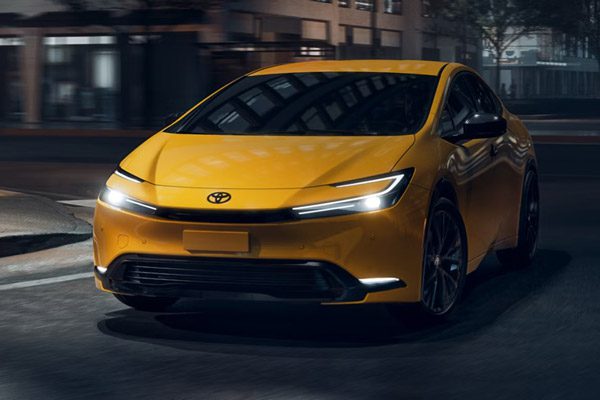
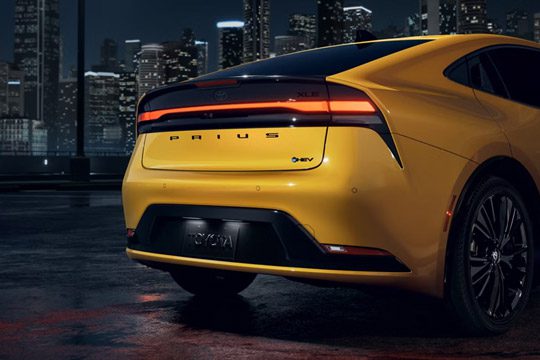
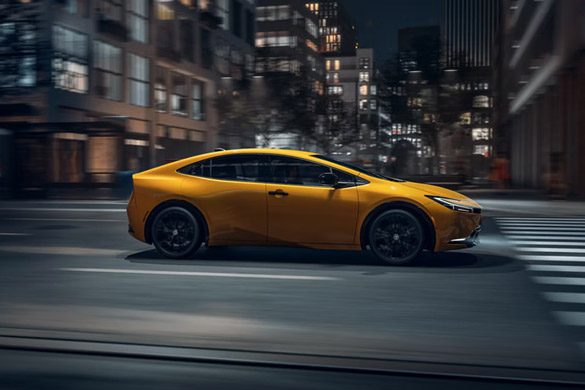
Exterior design is the most immediate and intuitive distinction. On one hand, the 2026 Prius continues its bold and futuristic design language. For example, it features a fastback silhouette, sharp crease lines, and a floating roof. Together, these combine to create a highly futuristic visual impact. In fact, Toyota officially describes this design as “Modern Japanese Design.” Moreover, it emphasizes a “sporty profile” and an “exciting visual experience.”

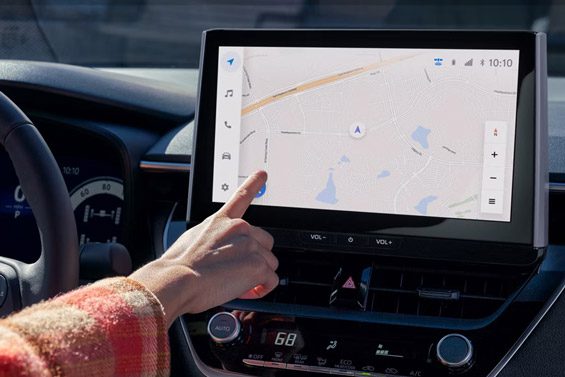
On the other hand, the Corolla Hybrid adheres to a more conservative design path. Specifically, the 2026 Corolla adopts Toyota’s latest “Hammerhead Shark” front fascia design language. In this design, a continuous light strip combines with a large grille. As a result, this gives the front end a wider and more expansive appearance. Furthermore, the dimensions of the new Corolla are 4710/1780/1435mm. Additionally, the wheelbase has been increased to 2750mm. In other words, that is an extension of 50mm compared to the previous generation. Inside, the Corolla features a 12.9-inch floating central touchscreen. It also has an 8.8-inch fully digital instrument cluster. Moreover, the system is upgraded with a Qualcomm Snapdragon 8155P chip. Consequently, this results in a significantly improved human-machine interface experience.
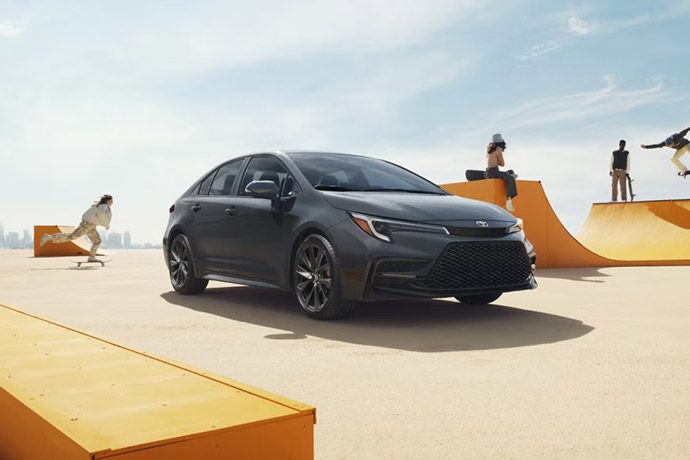
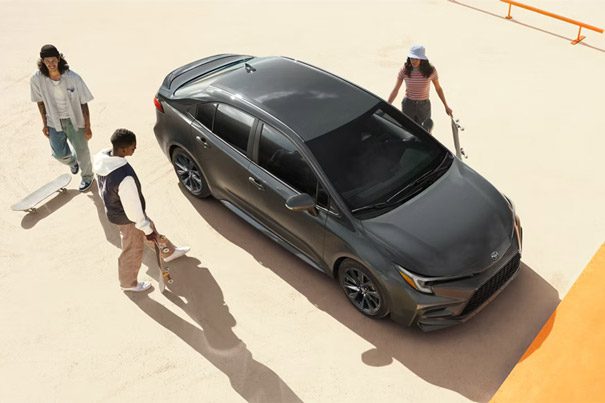
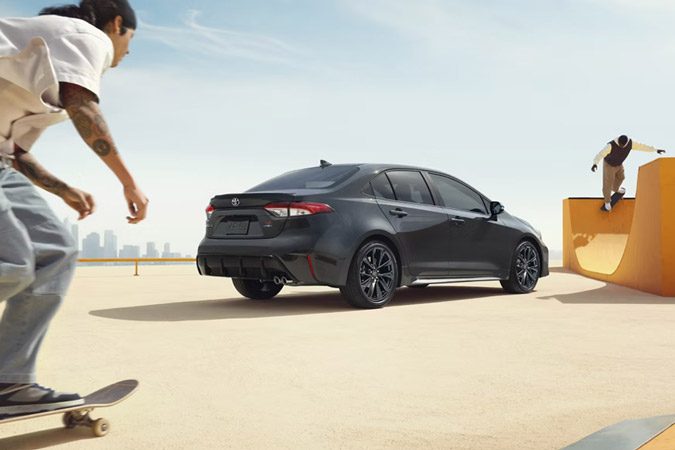
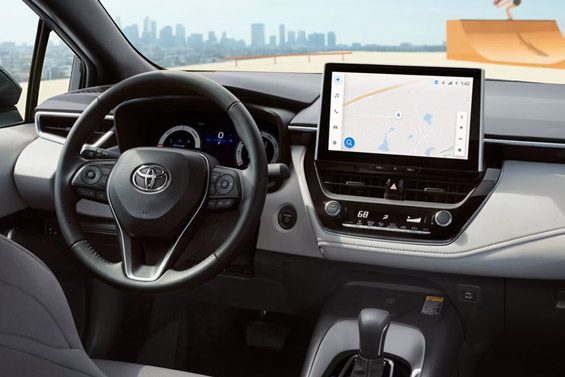
In terms of design philosophy, the Prius is a car that “wants to be seen.” Indeed, its very existence is a statement of attitude. In contrast, the Corolla Hybrid is a choice that “blends into daily life.” Thus, it is understated and unassuming. For owners who value personalized expression, the Prius commands far more attention.
Space and Practicality: Different Trade-offs
Regarding interior space and everyday practicality, the two models exhibit different trade-offs.
First, the Prius features a fastback (hatchback) body design. Specifically, it offers 23.8 cubic feet of cargo space behind the rear seats. Moreover, this space can be expanded further when the rear seats are folded down. As a result, this hatchback structure gives the Prius greater loading flexibility. In particular, it is especially suitable for users who occasionally need to transport bulky items. However, the sleek roofline compromises rear headroom. Consequently, taller passengers may find the rear seats somewhat confining.
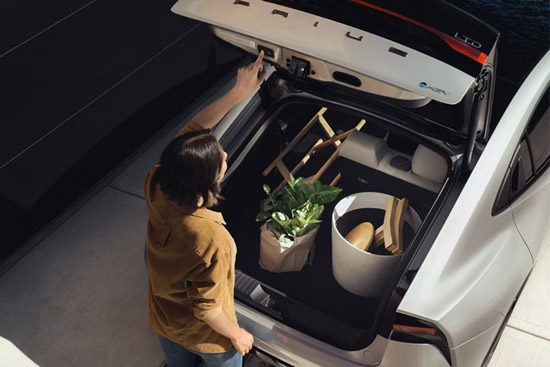

In comparison, the Corolla Hybrid utilizes a traditional three-box sedan structure. Specifically, its trunk volume is 470 liters (approximately 16.6 cubic feet). While the absolute volume is less than that of the Prius, the three-box structure offers advantages in sound insulation and privacy. More importantly, the 2026 Corolla has a 50mm wheelbase extension. Therefore, this significantly enhances rear legroom. In turn, it provides a more comfortable seating experience for family travel.
In terms of features, both models come standard with Toyota Safety Sense. Specifically, the Prius features TSS 3.0. This suite includes a Pre-Collision System and Lane Departure Alert. It also includes Full-Speed Range Dynamic Radar Cruise Control. Similarly, the Corolla Hybrid comes standard with Carlink/CarPlay/HiCar smartphone integration. Thus, this offers a more convenient connectivity experience.
Market Positioning and a Global Perspective
The 2026 Toyota Prius and Corolla Hybrid serve differentiated consumer groups. On one hand, the Prius targets early adopters. Specifically, they pursue a sense of technology, design, and outstanding fuel efficiency. As a result, it stands as an iconic product in the hybrid segments of the U.S., Japan, and European markets. On the other hand, the Corolla Hybrid has an accessible price and well-balanced product attributes. Consequently, it covers a vast family car market. In particular, this market spans from China and Southeast Asia to North America.
Currently, the global automotive industry landscape is undergoing profound changes. For example, in 2025, China’s automobile exports reached 7.098 million units. Moreover, that was a year-on-year increase of 21.1%. As a result, this secured the title of the world’s largest automobile exporter for the third consecutive year. Entering 2026, the export momentum remains robust. Specifically, cumulative exports in the first two months reached 1.35 million units. Furthermore, that is a year-on-year increase of 49%. The China Association of Automobile Manufacturers (CAAM) has a forecast. According to this forecast, China’s total automobile exports for the full year of 2026 could approach the 8-million-unit mark. Additionally, new energy vehicle exports are expected to reach 3.5 million units. Concurrently, an increasing number of Chinese auto brands are accelerating their global expansion. In particular, they are shifting from pure product export to deep localization strategies. Ultimately, they strive to establish long-term competitiveness in global markets. For readers following China’s automotive industry, chinese cars for sale is evolving from a regional topic into a global phenomenon. Indeed, this trend profoundly impacts the competitive dynamics of the international automotive market.
Against this backdrop, the market performance of these two models reflects Toyota’s product strategy. At the same time, it also mirrors the diverse demands of global consumers during the electrification transition. Whether you choose the avant-garde technology of the Prius or the pragmatic reliability of the Corolla Hybrid, Toyota’s hybrid technology offers a market-proven, reliable solution.
Conclusion
In summary, the 2026 Toyota Prius and Corolla Hybrid represent two parallel paths. Specifically, one path is continuous self-breakthrough and trend-leading technological pioneering. Meanwhile, the other path is rooted in the mass market and serves millions of households with a practical approach. Ultimately, both models have their respective strengths. In other words, there is no absolute superiority of one over the other. Above all, the key lies in your personal needs and lifestyle.


