

The 2026 Hyundai Venue continues to hold its place in the competitive subcompact SUV segment. This car is one of the most affordable new vehicles you can buy, with a starting price of just $20,550 in the United States. From city commuters to first-time car buyers, the Venue offers good value for money. However, it also has some clear shortcomings in terms of power and features. This article provides a comprehensive review of the 2026 Hyundai Venue’s specifications, price, features, pros and cons to help you determine if it suits your needs.
What’s New for the 2026 Venue?
For 2026, the Venue drops the top-tier Limited trim, streamlining the lineup to two versions: SE and SEL. Several features previously found on the Limited trim have been moved down to the SEL, including heated front seats, wireless charging, and heated side mirrors. Additionally, Hyundai has introduced an SEL version with a two-tone roof, offering more choices for buyers seeking individuality.
It’s worth noting that there are significant differences between Venues in different markets. In the U.S. market, the 2026 Venue largely carries over the 2025 model’s design, with only minor feature adjustments. However, in the Indian market, Hyundai has launched a completely redesigned second-generation Venue with increased overall dimensions and a dual 12.3-inch curved screen interior. The Australian market continues to sell the current Korean-built model, with no confirmed arrival date for the new model.
Exterior Design
The 2026 Venue’s exterior continues the classic small SUV shape – boxy, simple, and with a hint of crossover flair. Its overall length is just 159.1 inches (approx. 4.04 meters), making it very suitable for city driving and tight parking spaces. While not stunning, the overall design is durable and practical.


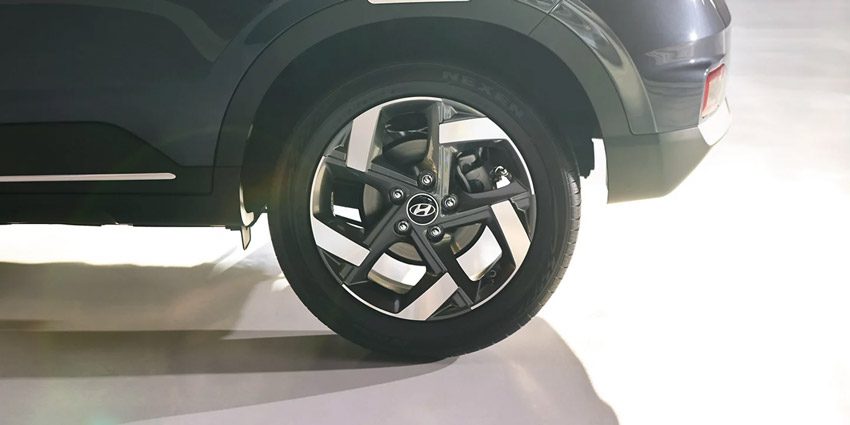


In the U.S. version, the SE trim comes with 15-inch alloy wheels, while the SEL upgrades to 17-inch alloy wheels. The SEL offers an optional two-tone roof and sunroof, adding a bit of personality to the exterior.
The Indian version’s design is completely different. The second-generation Venue adopts a new design language, with a new cascading grille and full-width LED light strip up front, resulting in a tougher, more modern look. The rear also features a full-width LED taillight for a more high-tech visual effect. The Indian version’s body dimensions have also increased across the board – height up by 48 mm, width up by 30 mm, and wheelbase lengthened by 20 mm.
Powertrain and Fuel Economy
U.S. Powertrain
The U.S.-spec 2026 Venue is powered by a 1.6-liter four-cylinder naturally aspirated engine producing 121 horsepower and 113 lb-ft of torque. It is paired with a continuously variable transmission (CVT) and is only available with front-wheel drive. EPA combined fuel economy is 31 mpg, with 29 mpg city and 33 mpg highway. Fuel tank capacity is 11.9 gallons.
In terms of real-world driving experience, this engine’s power delivery is on the mild side. The 0-60 mph acceleration time exceeds 9 seconds, requiring advance planning for highway merging and passing. The CVT prioritizes fuel efficiency over driving pleasure; despite having simulated shift points, its overall response is rather sluggish.
India and Global Market Differences
The Indian-market Venue offers two engine choices: a 1.2-liter naturally aspirated and a 1.0-liter turbocharged. The Australian-market Venue, on the other hand, uses the same 1.6-liter naturally aspirated engine as the U.S. version.
Interior and Features
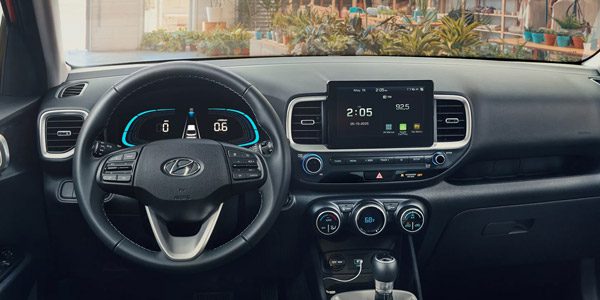
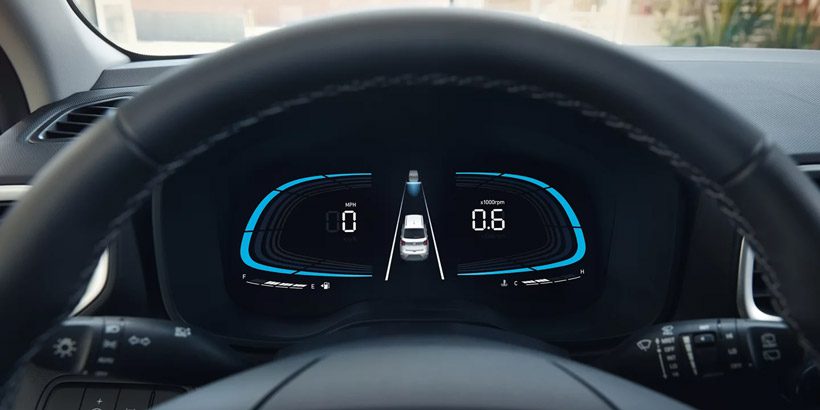



U.S. Interior
The U.S.-spec Venue’s interior design is practicality-oriented. An 8-inch touchscreen is standard across all trims, supporting wireless Apple CarPlay and Android Auto. The SE trim offers basic cloth seats and a 6-speaker audio system. The SEL adds heated front seats, dual-zone automatic climate control, wireless charging, and dual rear USB ports.
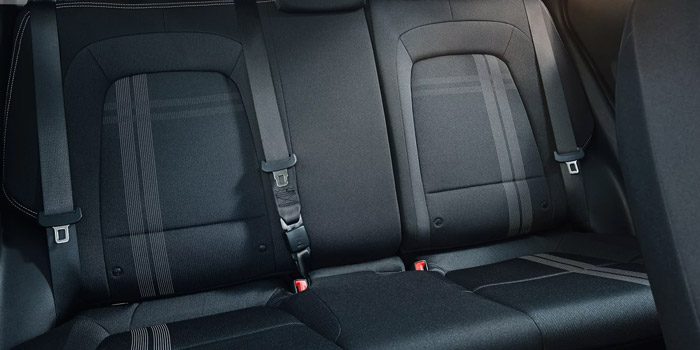
In terms of space, the Venue officially seats five, but the second row is better suited for two adults. Rear legroom is 34.3 inches, which can be tight for taller passengers. Cargo volume is 18.7 cubic feet, expanding to 31.9 cubic feet with the rear seats folded down.
India Interior (Second Generation)
The Indian version’s interior is a whole new world. The dual 12.3-inch curved screens integrate the instrument cluster and center display, creating a very modern look. Additionally, the Indian version comes with premium features such as ambient lighting, a Bose sound system, and rear air conditioning vents.
Note: Feature availability varies greatly by market. The U.S. version’s interior leans more toward minimalist practicality with more hard plastics; the Indian version is much closer to Hyundai’s latest design language.
Pricing (Major Global Markets)
| Market | Trim | Price (Currency) | Notes |
| USA | SE | $20,550 starting | Excluding $1,600 destination fee, total approx. $22,150 |
| USA | SEL | $22,825 starting | Excluding $1,600 destination fee |
| USA | SEL w/2-Tone Roof | $22,600 starting | Excluding $1,600 destination fee |
| Canada | Essential | CA$24,996 starting | — |
| Canada | Preferred | CA$27,096 starting | — |
| Canada | Ultimate | CA$29,596 starting | — |
| Australia | Manual | AU$23,750 starting | Excluding on-road costs |
| Australia | Auto | AU$25,750 starting | Excluding on-road costs |
| Australia | Elite | AU$30,500 starting | Excluding on-road costs |
| India | Entry-level | ₹7.90 lakh starting | Approx. RMB 68,000 |
| India | HX10 Top trim | ₹15.51 lakh starting | Approx. RMB 133,000 |
2026 Venue Pros and Cons Summary
Pros
- Excellent value for money – The Venue is one of the cheapest new cars on the U.S. market. For just over $20,000, you get a brand-name vehicle with Hyundai’s safety technology and smart connectivity features.
- Outstanding fuel economy – 31 mpg combined is excellent in its class. Low costs for city commuting and daily errands.
- Great for city driving – The compact dimensions make parking incredibly easy. Light steering and good visibility allow for nimble city maneuvering.
- Generous standard safety features – All Venue trims come with forward collision warning (with pedestrian detection), automatic emergency braking, lane keeping assist, driver attention warning, and other active safety functions.
- Hyundai’s industry-leading warranty – Hyundai offers a 10-year/100,000-mile powertrain warranty, which is highly competitive in this class.
Cons
- Underpowered – The 121 hp is adequate for city driving but clearly struggles during highway passing. The 0-60 mph time exceeding 9 seconds is hard to satisfy.
- Lack of all-wheel drive – The Venue is front-wheel drive only, unable to handle snow or light off-road scenarios. If you need AWD, Hyundai’s own Kona or other competitors are better choices.
- Mediocre interior materials – The cabin uses a lot of hard plastics, making the texture and feel less impressive than some rivals. Door armrests are quite firm, which can compromise long-distance comfort.
- Tight rear seat space – Although positioned as a 5-seat SUV, the second row is cramped for adults. The 34.3 inches of rear legroom limits long-journey comfort.
- Average high-speed stability – Due to its light weight and short wheelbase, the vehicle is susceptible to crosswinds at highway speeds, requiring frequent minor steering corrections.
Competitor Comparison
Key competitors for the 2026 Hyundai Venue include:
| Model | Starting Price (USA) | Engine Power | AWD Available |
| 2026 Hyundai Venue | $20,550 | 121 hp | No |
| Chevrolet Trax | $21,700 | Approx. 137 hp | No |
| Nissan Kicks | $22,430 | Approx. 122 hp | Optional |
| Kia Soul | Approx. $21,000 | Approx. 147 hp | No |
| Buick Envista | Approx. $23,000 | Approx. 136 hp | No |
From a price perspective, the Venue’s advantage is its lowest starting price. However, from a power and features standpoint, some competitors offer stronger performance at similar or slightly higher price points. If your budget allows, test drive several vehicles before deciding.
Owner Reviews and Reliability
According to a Kelley Blue Book survey of 2025 Venue owners, 93% of owners would recommend this vehicle, citing value and reliability as its strongest assets. 68% of owners gave a perfect five-star rating.
One owner, who is 6 feet 3 inches tall, commented: “I test-drove many vehicles under $20,000 and basically couldn’t fit inside. But the Venue is surprisingly spacious. The interior is modern and clean, and the seats are comfortable. The lane keeping assist system works great.”
Of course, some owners have noted issues. One owner reported a transmission failure after just 1,600 miles. Another mentioned that the door armrests are too hard, making long trips uncomfortable.
Overall, the Venue’s reliability reputation is generally good, but individual quality issues are worth noting. We recommend a thorough test drive before purchasing and paying attention to the warranty terms.
Final Recommendation: Who Is the 2026 Hyundai Venue For?
Ideal for:
- City commuters – driving daily in congested urban roads, need an easy-to-park, fuel-efficient car
- First-time car buyers – have a limited budget but want a brand-new vehicle with full warranty coverage
- Students or young professionals – high value for money, low running costs
- Family’s second runabout – for grocery getting, school runs, and other short trips
Less ideal for:
- Frequent highway drivers – power is weak, high-speed stability is only average
- Those needing all-wheel drive – not suitable for snow or off-road conditions
- Driving enthusiasts – the CVT and mild power tuning lack sportiness
- Those regularly carrying more than four adults – rear seat space is tight
Conclusion
The 2026 Hyundai Venue is an honest city runabout. It won’t surprise you, nor will it disappoint you. It delivers the core value of a new SUV – fuel efficiency, reliability, easy driving, and easy parking – at the lowest possible price. If you can accept its power limitations and simple interior, the Venue absolutely deserves a spot on your shopping list.


