

- 01 Core Innovation: When Rugged Off-Road Embraces Hybrid Power
- 02 Exterior Evolution: Modern Design Retains Rugged Genes
- 03 Interior Tech: Balancing Utilitarianism with a Sense of Technology
- 04 Global Price Comparison: Significant Regional Differences
- 05 Version Details: How to Choose Among Eight Configurations
- 06 Market Positioning and Competitor Analysis
- 07 Purchasing Advice and Market Outlook
North America has officially announced pricing for the 2025 Toyota 4Runner, which starts at $40,770 (approximately 297,000 RMB). The new generation inherits the classic rugged off-road pedigree. It also introduces an efficient hybrid powertrain, becoming a significant force within Toyota’s lineup of tough off-road vehicles.
Toyota builds the new vehicle on its TNGA-F platform. It shares this architecture with the new-generation Land Cruiser Prado and Tacoma pickup. Compared to the previous model, the wheelbase grows by 61 mm and the body length by 119 mm. These changes result in more spacious interior room and better off-road capability.
01 Core Innovation: When Rugged Off-Road Embraces Hybrid Power
The most notable change in the 2025 Toyota 4Runner is a comprehensive powertrain upgrade. The new model bids farewell to the old 4.0-liter V6 engine. It adopts two brand-new power systems instead.
The base version uses a 2.4-liter turbocharged four-cylinder engine. This unit delivers 282 horsepower and 430 Nm of peak torque. More exciting is the first-time introduction of the i-Force Max hybrid system.
This hybrid system combines a 2.4T engine with an electric motor. The combination boosts maximum power to 331 horsepower and achieves an impressive 630 Nm of peak torque.
An 8-speed automatic gearbox is standard across all variants. For off-road performance, the new vehicle offers different features by configuration. These include an LSD limited-slip differential, an electronically controlled transfer case, and a full-time four-wheel-drive system with a center differential lock.
02 Exterior Evolution: Modern Design Retains Rugged Genes
The new-generation 4Runner continues a rugged design style while incorporating modern elements. The front fascia adopts a design language similar to the Toyota Tacoma pickup. It features a two-layer blacked-out grille with prominent “TOYOTA” lettering in the center.
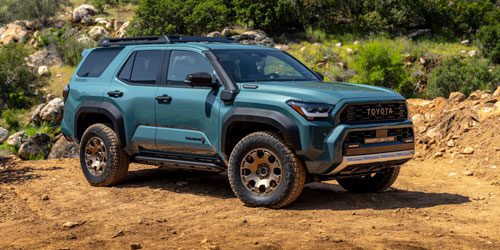
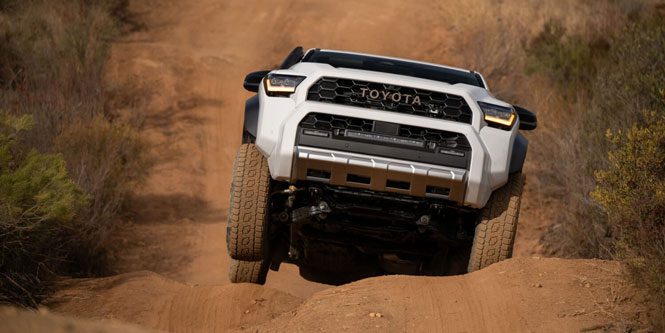
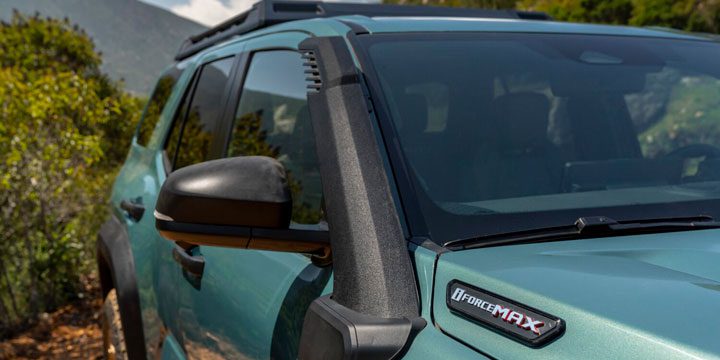
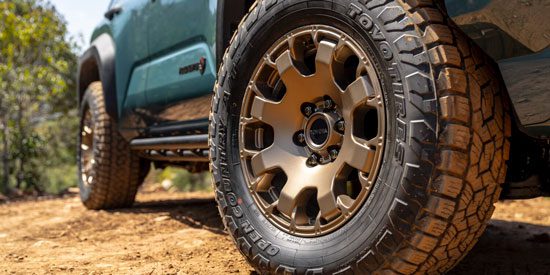
Bold and powerful lines define the body side. The approach angle is 32 degrees and the departure angle is 24 degrees, ensuring excellent off-road capability. At the rear, C-shaped tail lamp clusters use a high-visibility red-and-black internal design.
Notably for off-road enthusiasts, some versions offer professional equipment like all-terrain tires and a high-position air intake snorkel. Higher-spec models even feature ARB-branded OME 2.5-inch forged shock absorbers. These provide stronger support for extreme off-roading.
03 Interior Tech: Balancing Utilitarianism with a Sense of Technology
Inside the cabin, the 2025 4Runner significantly enhances the sense of technology and luxury while retaining rugged character. The dashboard uses generous soft-touch materials. Straight and horizontal lines complement them, exuding both luxury and a tough off-road feel.
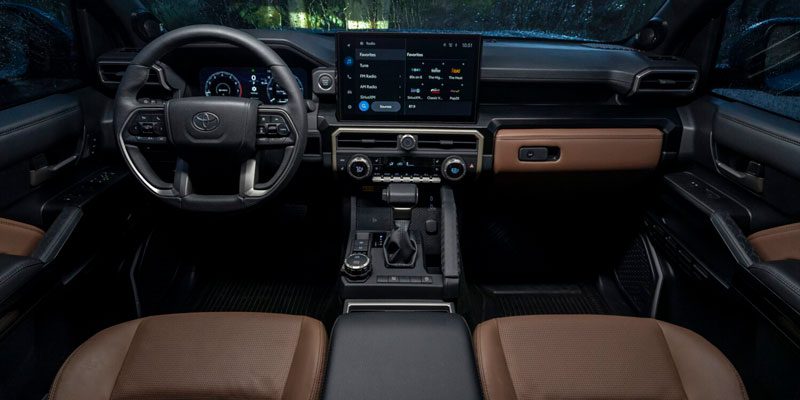
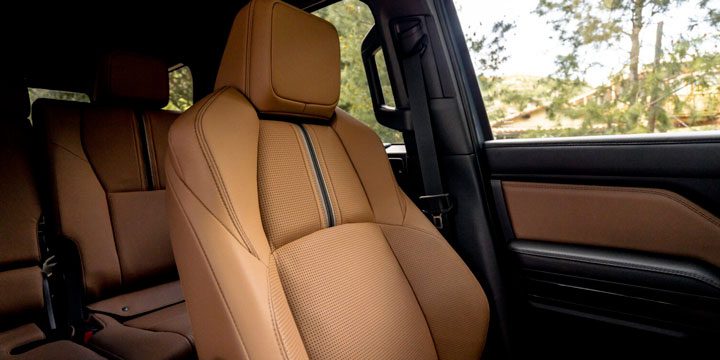
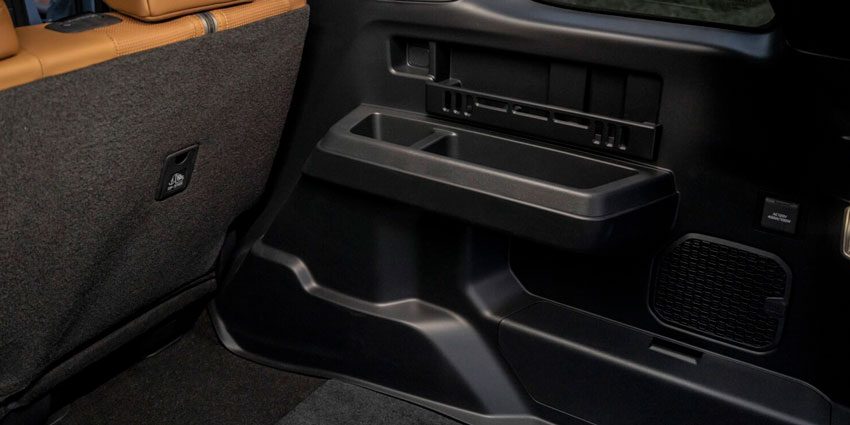
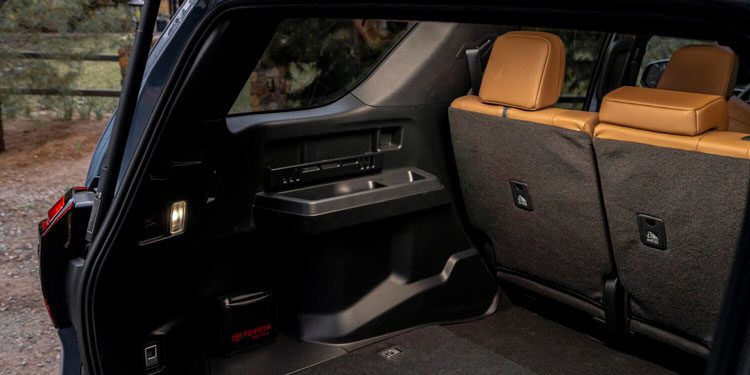
For tech features, the new vehicle comes with a 12.3-inch full digital instrument cluster and a 14-inch floating central touchscreen. These house Toyota’s latest infotainment system. A leather-wrapped four-spoke multifunction steering wheel offers a substantial grip.
For safety, the entire lineup standardly includes the Toyota Safety Sense 3.0 system. This system includes adaptive cruise control, a pre-collision system with pedestrian detection, lane departure alert, lane keeping assist, and road sign recognition.
04 Global Price Comparison: Significant Regional Differences
The price of the 2025 Toyota 4Runner varies significantly across different markets. Below is a price comparison for major markets:
| Market / Version | Starting Price (USD) | Approx. RMB | Remarks |
| USA (SR5 2WD) | 40,770-42,220 | 296k-304k | Base config, 2.4T engine |
| USA (TRD Sport) | 47,250-48,700 | 342k-351k | Sport-tuned suspension, 20-inch wheels |
| USA (TRD Off-Road) | 49,190-50,640 | 355k-365k | Skid plates, Multi-Terrain Select |
| USA (Limited) | 55,400-56,850 | 400k-410k | Luxury features, leather seats |
| USA (TRD Pro/Trailhunter) | 66,900-68,350 | 482k-492k | Top off-road config, FOX shocks |
| China (Parallel Import Est.) | ~96,000-112,000 | ~690k-800k | Includes tariffs, consumption tax, etc. |
Note that the 2025 Toyota 4Runner has not had an official launch in mainland China. It will most likely arrive through parallel import channels. The previous generation TRD Pro model cost approximately 690,000 RMB in China. Therefore, the new generation’s price should be even higher upon introduction.
05 Version Details: How to Choose Among Eight Configurations
The 2025 Toyota 4Runner offers eight different configurations to meet various consumer needs. Each version has clear positioning and distinctive features.
SR5 is the entry-level version with the most accessible Toyota 4Runner price. It still standardly includes the 2.4T engine, 8AT transmission, and Toyota Safety Sense 3.0.
TRD Sport optimizes for on-road driving. It features a sport suspension, glossy black engine air intake, and 20-inch wheels. TRD Off-Road focuses on off-road capability. It adds skid plates, all-terrain tires, and Multi-Terrain Select with Crawl Control.
Limited and Platinum versions emphasize luxury and comfort. They feature leather seats, seat ventilation/heating, power running boards, and a power moonroof. The Platinum version adds a HUD and second-row seat heating.
The top-tier TRD Pro and Trailhunter versions serve extreme off-road enthusiasts. TRD Pro features TRD-tuned FOX QS3 adjustable dampers. Trailhunter is a newly added version. It offers professional equipment like an ARB roof rack, high-position air intake, and OME shock absorbers.
06 Market Positioning and Competitor Analysis
In the North American market, the 2025 Toyota 4Runner directly competes with traditional rugged off-roaders like the Jeep Wrangler and Ford Bronco. Compared to these rivals, the 4Runner offers a more practical five-door design and a more spacious interior. It maintains formidable off-road capability.
Note that the starting Toyota 4Runner price in the US market is just over $40,000. However, the top-tier TRD Pro and Trailhunter versions already exceed the Land Cruiser’s price in some markets. This reflects Toyota’s high confidence in the 4Runner’s product strength and its ambition in the high-performance off-road segment.
For Chinese consumers, the official price for the 2025 Toyota 4Runner remains unannounced. Primary availability will be through parallel imports, so the actual purchase cost will significantly exceed North American prices. The previous generation model mostly priced above 600,000 RMB in China. Therefore, consumers interested in a Toyota 4Runner for sale in China need a corresponding budget. The landscape for Chinese cars for sale in the off-road segment may also see interesting dynamics with potential domestic competitors.
07 Purchasing Advice and Market Outlook
For North American consumers, the 2025 Toyota 4Runner offers rich choices. If driving is mainly on paved roads with occasional light off-roading, the TRD Sport is a good choice. True off-road enthusiasts should consider the TRD Off-Road or TRD Pro versions.
For Chinese consumers, the new car will likely arrive via parallel import. We advise waiting for the market price to stabilize before deciding. At the same time, one can watch the performance of the domestically produced new Prado. These two models share the same platform and will form an interesting competitive relationship in the rugged off-road vehicle market. The evolving options for Chinese cars for sale in this category add another layer to consumer choice.
Globally, the launch of the 2025 Toyota 4Runner signifies that rugged off-road vehicles are transitioning toward efficient powertrains and higher-tech configurations. The hybrid system not only enhances performance but also significantly improves fuel economy. This helps such vehicles meet increasingly stringent environmental regulations.


