

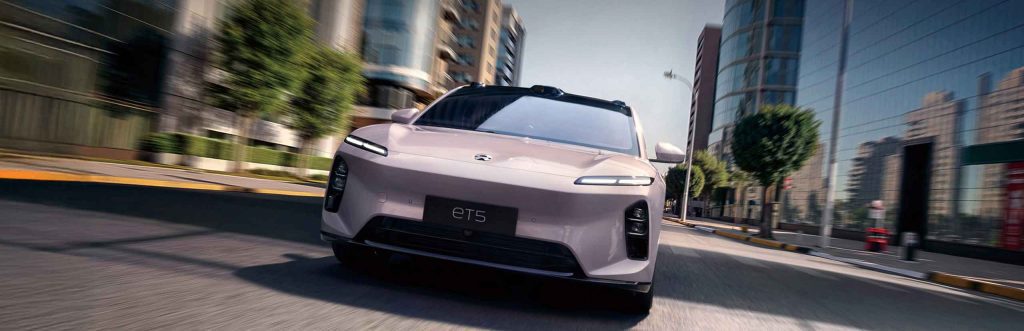
The NIO ET5 cruises along Germany’s A6 highway. With the battery level at just 32%, the driver feels no anxiety. The navigation system automatically guides the vehicle into a service area’s battery swap station. In a fully automated process taking merely 6 minutes, a new battery with a 91% state of charge is installed.
Chinese electric cars have long transcended national borders. From January to July 2025, China’s exports of new energy vehicles (NEVs) have already surpassed the total for the entire year of 2024. As consumers worldwide shop for electric vehicles, they frequently find Chinese brands topping the range leaderboards.
01 The Testing Benchmark
The range of an electric vehicle (EV), much like the battery life of a smartphone, is a key concern for users, but the various testing standards can often be confusing.
Understanding the real-world range is more important than the official figures. There are currently three main range testing standards: Europe’s WLTP, the USA’s EPA, and China’s CLTC. Among these, the CLTC standard, which focuses more on low-speed urban scenarios, often yields more optimistic test results.
In August 2025, Yiche conducted an extreme-range test on over 60 popular new energy models from more than 20 brands. The test simulated the most demanding real-world usage scenario: full vehicle load, sport mode, air conditioning set to 22°C, and continuous driving at 120 km/h.
The test derived a “range safety coefficient” – the percentage of the officially declared range a vehicle can achieve under the most adverse conditions. This metric provides users with “safety margin” information that is more practically relevant than data from ideal conditions.
02 Global Marathon Runners
When we turn our attention to the global market, the long-range characteristics of Chinese Electric Cars demonstrate unique value on long journeys. A 1000-kilometer round-trip test from Stuttgart to Dresden, Germany, illustrates this point.
In this test, three Chinese models competed alongside three non-Chinese brands. The findings revealed that while some Chinese models had shortcomings in charging performance, the NIO ET5 performed exceptionally well in a comparison with the Porsche Taycan.
NIO’s advantage lies not only in charging speed but more significantly in its unique battery swap network. In Europe, this Chinese automaker is building its own network of swap stations, offering added convenience for long-distance travel.
03 Top 10 Range Champions
The table below summarizes the ten longest-range Chinese Electric Cars currently available, providing a clear reference framework for global consumers.
| Rank | Model | Official Range (CLTC) | Key Features | Best Suited For |
| 1 | Zeekr 001 WE Version | 1032 km | 140kWh Qilin Battery, Shooting Brake design | Business trips, inter-provincial travel |
| 2 | Yuanhang Y6 AWD Version | 1020 km | Dual motors (520kW), 0-100km/h ~5 seconds | Those seeking both performance & range |
| 3 | Aion LX Plus 1000km Version | 1008 km | Sponge silicon anode battery, good winter performance | Family long-distance trips |
| 4 | NIO ET7 | 1000 km | Semi-solid-state battery, extensive swap network | Premium business, long journeys |
| 5 | Zeekr 007 RWD Version | 870 km | Full-domain 800V architecture, 500km range in 15-min charge | Users prioritizing fast charging |
| 6 | Xiaomi SU7 Max Version | 830 km | HyperOS ecosystem, drag coefficient 0.195 Cd | Tech-savvy young enthusiasts |
| 7 | Tesla Model Y Long Range | 769 km | Extensive Supercharger network, mature ADAS | Global travel, charging convenience |
| 8 | BYD Han EV 715KM Premium | 715 km | Blade Battery safety, Dynaudio sound system | Family users prioritizing safety |
| 9 | Xpeng P7 | 706 km | XNGP full-scenario ADAS system | Strong tech appeal, city commuting |
| 10 | Zeekr 001 (Earlier Version) | 712 km | Shooting brake design, high performance | Balance of driving fun & practicality |
Note: Tesla is an American brand, but some models produced in China are also considered a significant part of China’s EV industry chain.
04 Dual Trials of Cold and Heat
The range performance of EVs is significantly affected by temperature, a point of widespread concern among users in different climate zones globally.
In cold environments, reduced battery activity and high energy consumption for cabin heating take a toll. One test showed significant differences in overnight “phantom drain” for various models after being frozen at -15°C. Chinese brands like the Geely Galaxy E8 and BYD Han EV outperformed the Tesla Model 3.
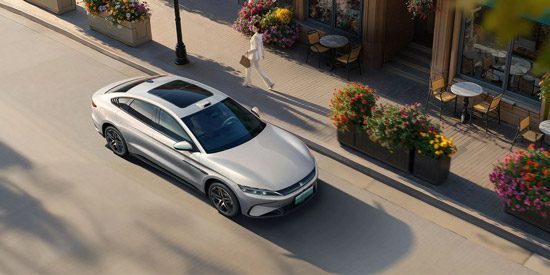

Hot environments equally challenge EV range. In a high-temperature test in southern Spain, the real-world range of a Tesla Model 3 was 44% lower than its official rating.
For every 1°C temperature increase, the rate of battery material degradation accelerates by 15%. Prolonged exposure to environments above 38°C may shorten battery lifespan by 30-40%.
05 Balancing Price and Value
As Chinese Electric Cars expand in the global market, price becomes a crucial consideration for many consumers. Fortunately, the approach to chinese cars for sale often emphasizes cost-effectiveness.
Taking the BYD Han EV as an example, its starting price in the Chinese market is around $28,000, while in the European market, the price may rise to approximately €45,000 (about $48,000). This model is not yet officially sold in the US market.
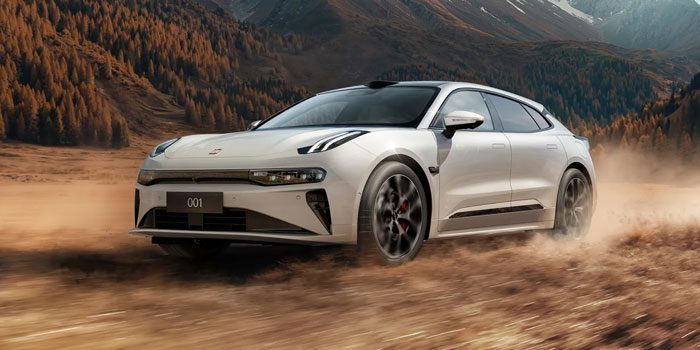
The Zeekr 001, the range champion, has a starting price in China of around $41,000. In Europe, the same model may cost around €55,000 (about $59,000).
It’s important to note these prices vary based on configuration, taxes, and regional policies. Furthermore, some Chinese brands offer battery leasing services, which can significantly lower the upfront purchase cost for consumers looking at chinese cars for sale.
06 The Global Network of Charging and Swapping
For global consumers, the convenience of charging infrastructure is almost as important as range itself.
Tesla boasts a global network of over 35,000 Superchargers, capable of adding 200 km of range in a 15-minute charge. This network is a key component of its global competitiveness.
Chinese brands have adopted diversified strategies. NIO is building its own battery swap station network in Europe, with 15 stations already operational in Germany. A swap takes roughly 6 minutes, equivalent to a charging speed of 2050 km/h.
Other Chinese brands like Zeekr are enhancing charging efficiency through full-domain 800V architectures. The Zeekr 007 RWD version supports gaining 500 km of range in 15 minutes, drastically reducing charging wait times.
Looking across the globe, from the cold roads of Norway to the sunny coasts of Spain, Chinese Electric Cars are breaking geographical boundaries with astonishing range capabilities. They are more than just vehicles; they are mobile showcases of Chinese innovation.
When the Zeekr 001 broke the 1000-kilometer range barrier, it carried not just a breakthrough in Chinese battery technology, but also a reimagining of the electric vehicle for consumers worldwide.


