

- 1. Design & Positioning: Distinct Target Audiences
- 2. Space & Dimensions: Karoq Holds a Significant Advantage
- 3. Powertrain & Handling: Economical vs. Powerful
- 4. Interior & Features: Pragmatism vs. Enhanced Quality
- 5. Price & Value: Defined Budget Ranges
- 6. Platform & Heritage: Global vs. Localized
- 7. Which One is Right For You? A Clear Guide
- Conclusion: No Absolute Best, Only the Best Fit
In the global compact SUV market, SKODA has won the favor of many consumers with its outstanding practicality and German engineering quality. Among its offerings, the Kamiq and the Karoq are two star models that often leave potential buyers struggling to choose. This article will provide an in-depth comparison of these two sibling models to help you make an informed decision based on your needs. We will focus on analyzing design, space, powertrain, features, price, and suitable scenarios, providing clear price references.
1. Design & Positioning: Distinct Target Audiences
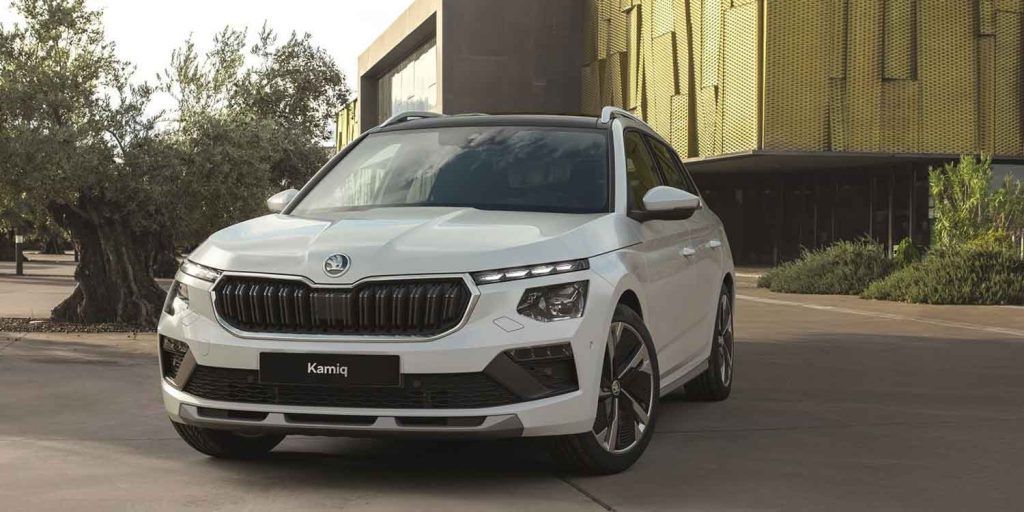
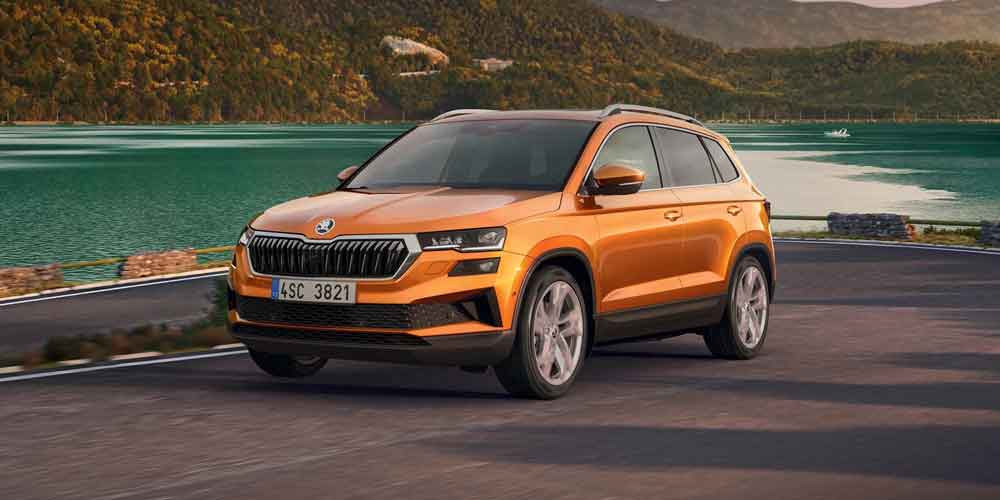
First, understanding the fundamental positioning difference is crucial. The Karoq is positioned as a compact SUV. It is larger, with an overall design geared more towards mature, steady family users who prioritize space utility and a certain level of refinement. It inherits SKODA’s latest family design language, featuring a more three-dimensional front fascia and fuller, more powerful lines.
In contrast, the Kamiq is positioned as a small SUV (often classified as an entry-level compact SUV in the Chinese market). Its dimensions are more compact and agile. While also drawing from the SKODA family design, its overall style is younger, more fashionable, and sportier, particularly appealing to young urban commuters. Design elements like a floating roof add a dynamic touch.
2. Space & Dimensions: Karoq Holds a Significant Advantage
Physical size is the most intuitive difference, directly impacting interior space:
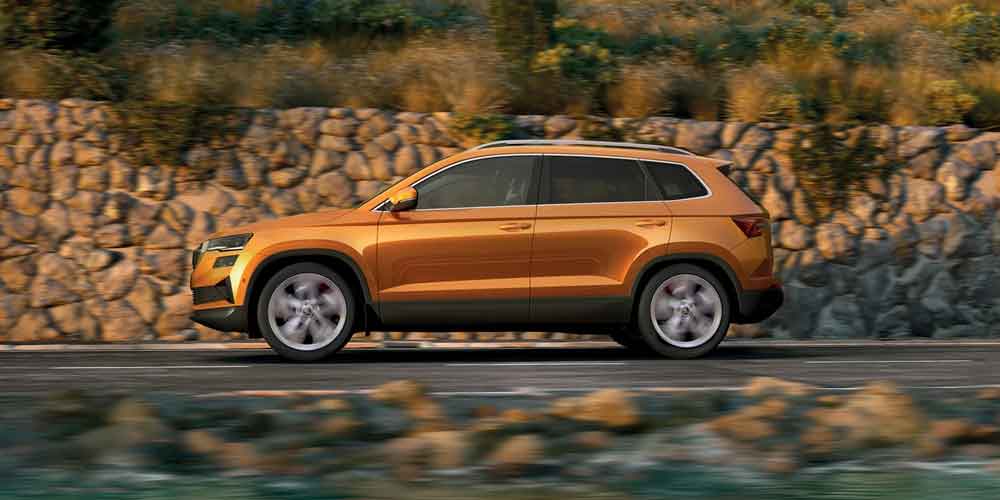
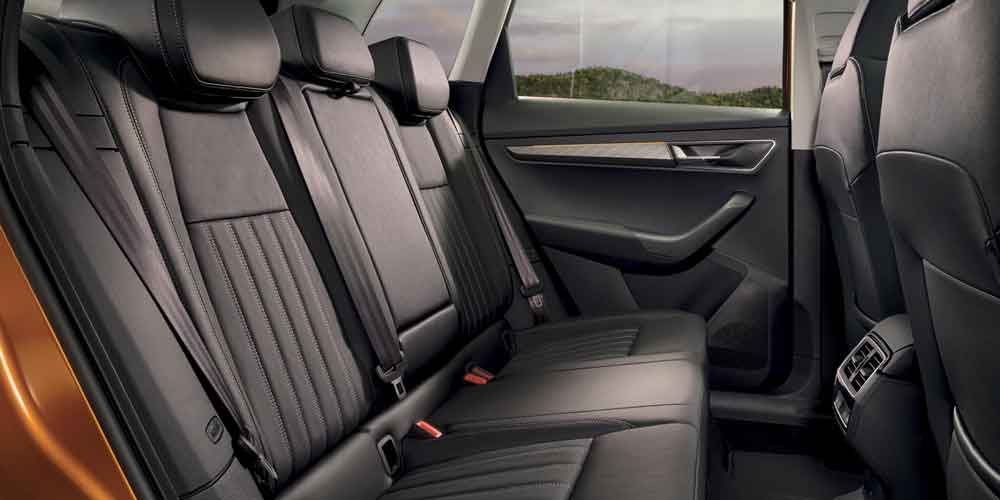
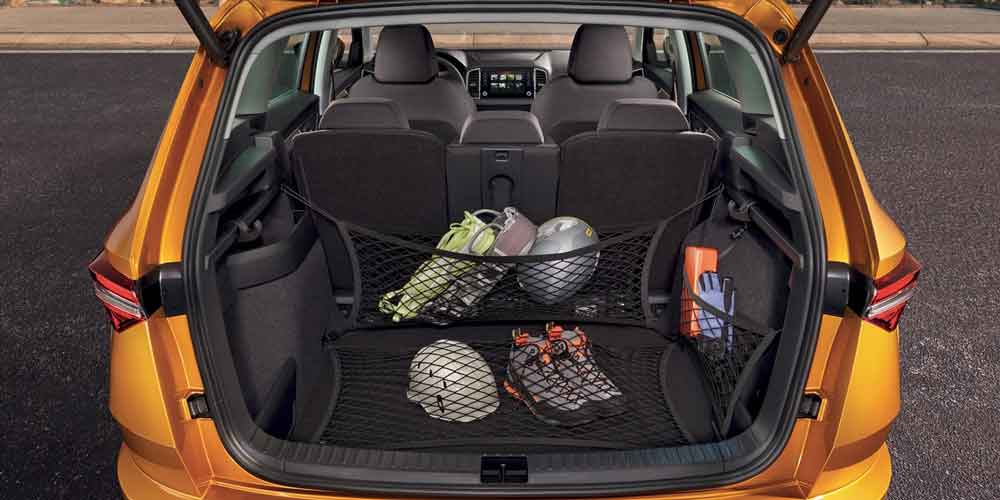
- Karoq: Typically around 4432mm long, 1841mm wide, 1614mm high, with a wheelbase of 2688mm. This provides above-average spacious seating and boot volume for its class. Rear legroom is generous, and cargo capacity is superior, making it ideal for family trips or scenarios requiring more luggage.
- Kamiq: Relatively compact, measuring approximately 4390mm long, 1781mm wide, 1606mm high, with a 2610mm wheelbase. While offering more space than mainstream joint-venture small SUVs, its interior space, especially rear legroom and boot volume, is indeed more limited compared to the Karoq. It’s usually sufficient for singles, couples, or primary city commuters.
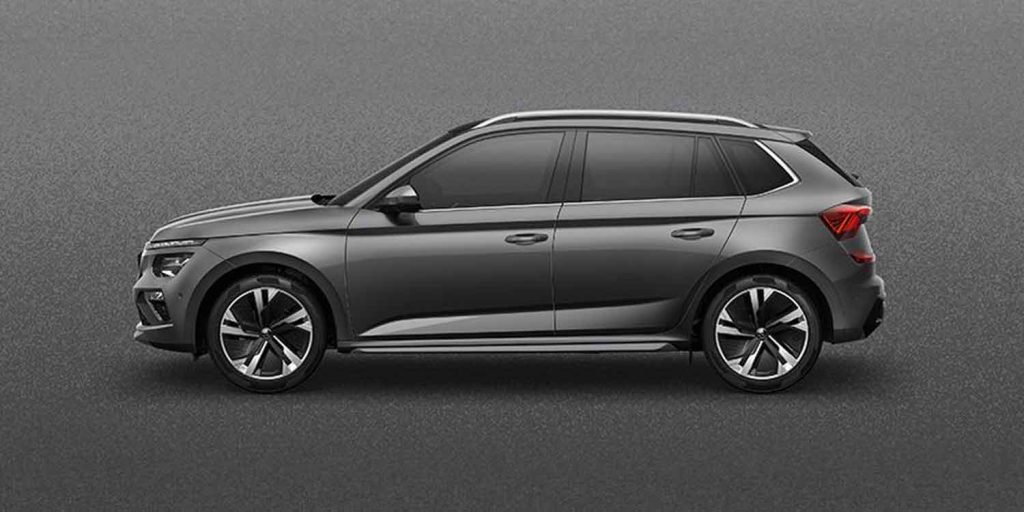
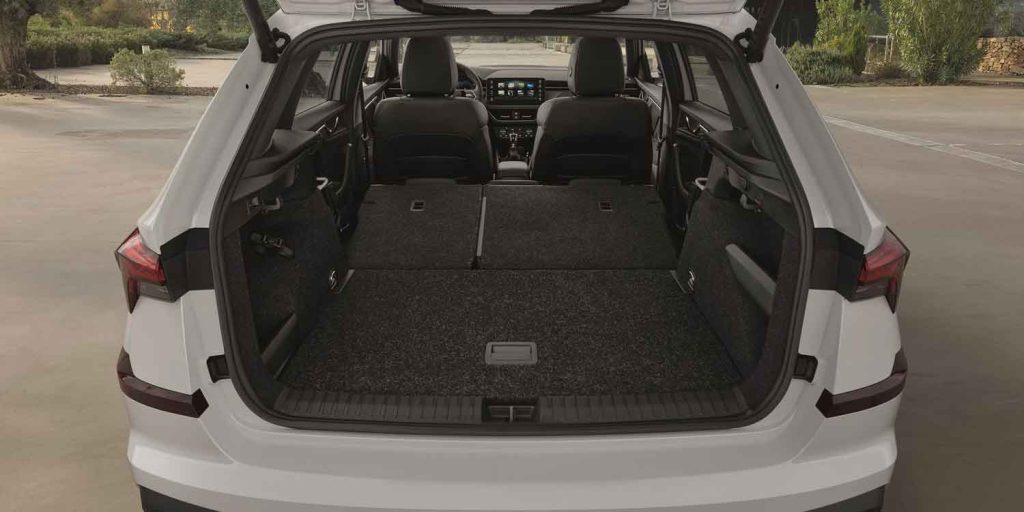
Simply put, if you frequently need to transport family or carry large items, the Karoq’s space advantage is very clear.
3. Powertrain & Handling: Economical vs. Powerful
The powertrain options cater to different driving needs:
- Karoq: Primarily equipped with turbocharged engines, most commonly a 1.4TSI or 1.5TSI (mainly 1.4TSI in China), paired with a 7-speed dual-clutch transmission (DSG). This combination delivers stronger acceleration and more abundant power reserve (e.g., ~150 hp for the 1.4T), inspiring more confidence during highway overtaking or climbing hills with a full load. Its suspension tuning also tends to favor comfort and a more refined feel, offering better driving stability.
- Kamiq: The main engine is a 1.5-liter naturally aspirated engine (in China), mated to a 5-speed manual or 6-speed automatic transmission. Its power output (~110-112 hp) emphasizes smoothness and fuel efficiency. It’s perfectly adequate for city driving, generally offers superior fuel economy, and has lower running costs. The suspension setup focuses more on basic comfort and agility.
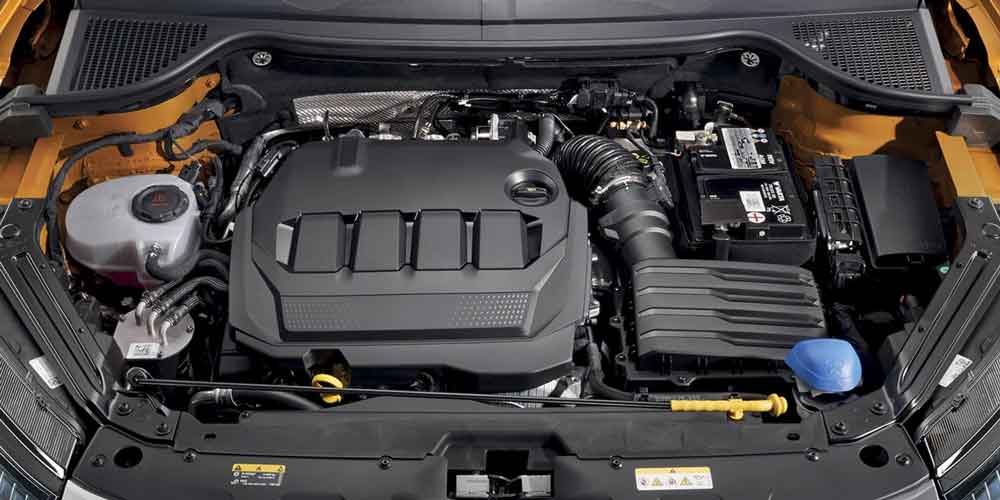
Therefore, if you seek driving enjoyment, power response, and high-speed stability, the Karoq is the better choice. If you primarily navigate city streets and prioritize fuel economy and smooth operation, the Kamiq is very competent.
4. Interior & Features: Pragmatism vs. Enhanced Quality
The interior ambiance and feature level reflect their positioning:
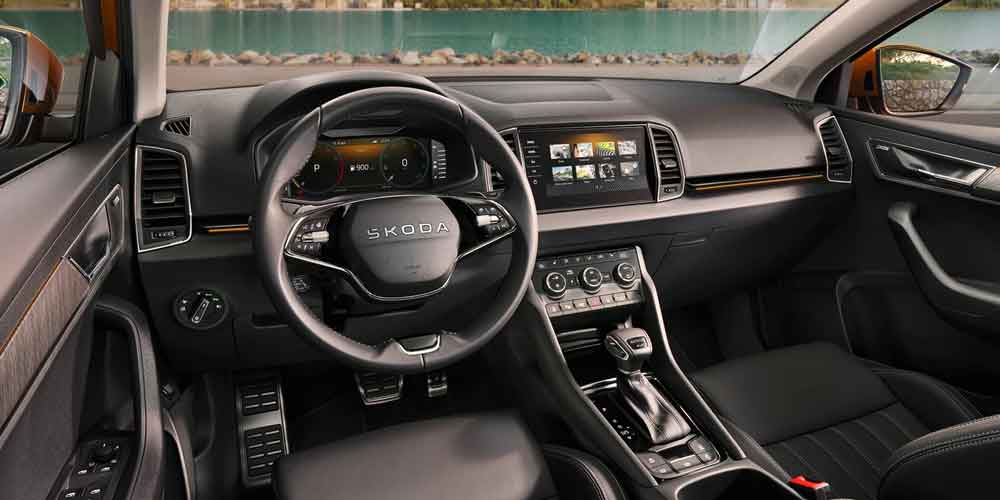
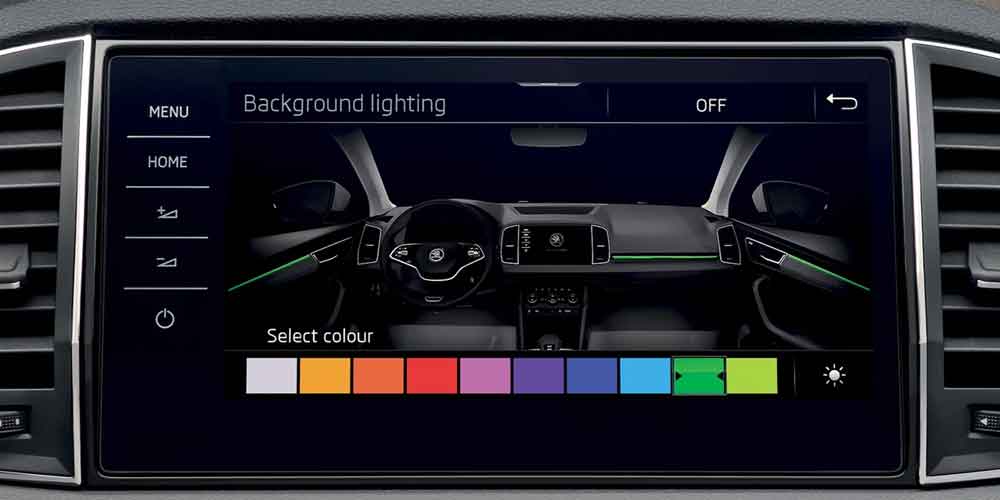
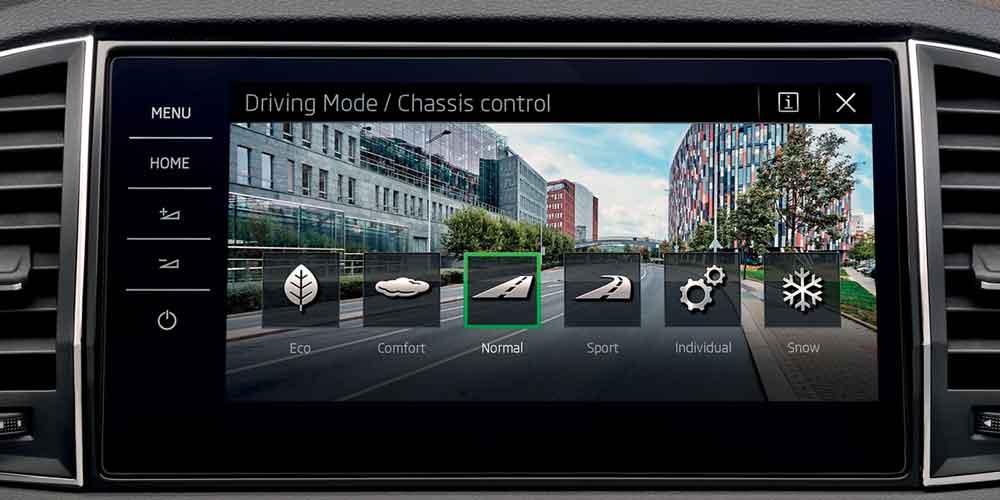
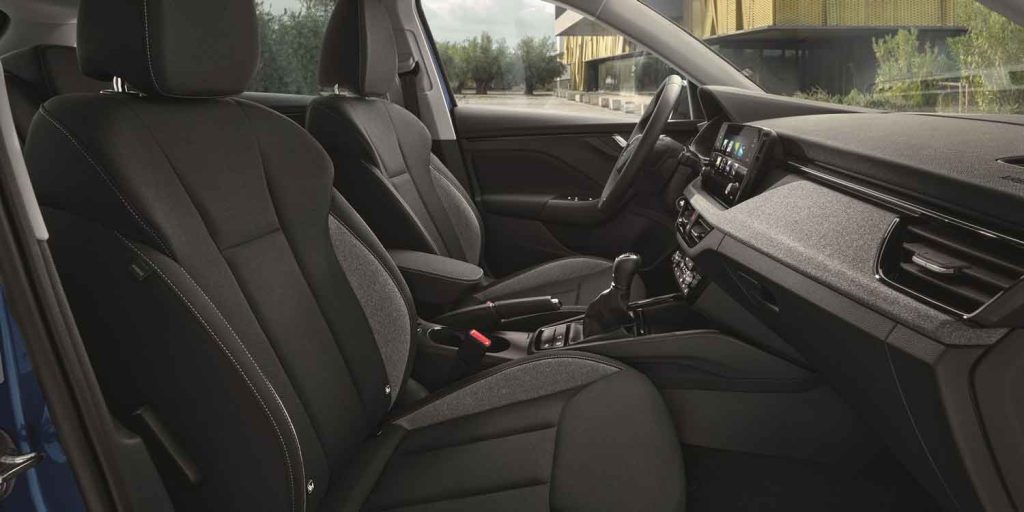
- Karoq: Uses more upscale materials, often with soft-touch materials on the dashboard. Seat upholstery (leatherette or fabric/leatherette combo) feels better. It boasts a higher feature level, typically including a larger central touchscreen (e.g., 9-inch), a fully digital instrument cluster, more advanced driver assistance systems (e.g., reaching L1/L2 level), automatic climate control, seat heating/electric adjustment. Tech and comfort features are its strengths.
- Kamiq: Interior design is simple and pragmatic, using more hard plastics but maintaining decent build quality. Features focus on meeting core needs and offering high value-for-money, such as an 8-inch touchscreen, keyless start, rear parking sensors, tire pressure monitoring. While less luxurious than the Karoq, it covers all essential functions and is user-friendly.
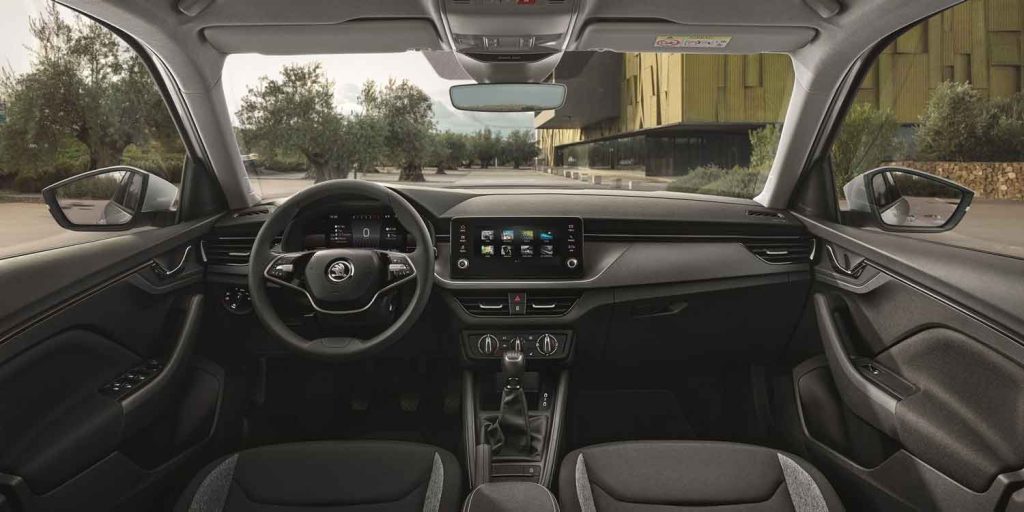
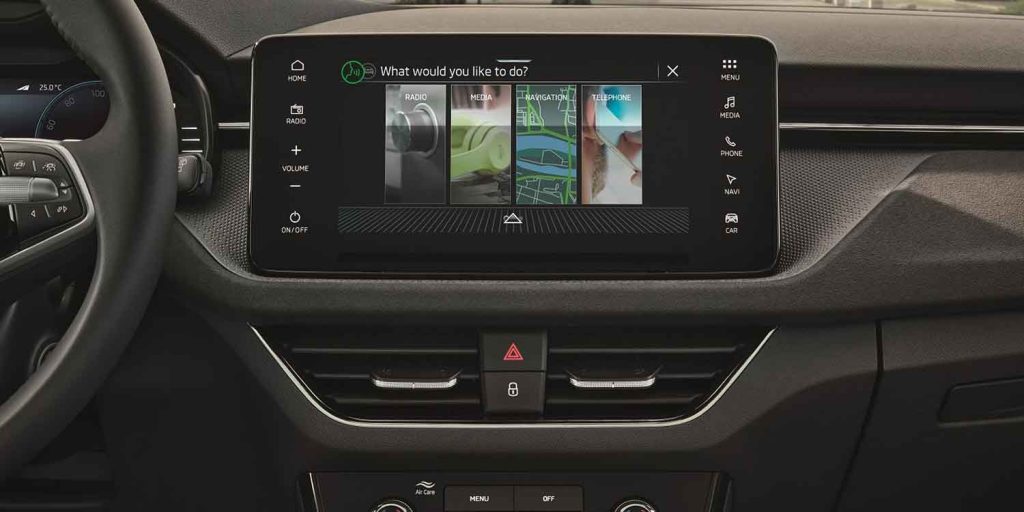
If you value interior quality, tech features, and comprehensive comfort/safety aids, the Karoq is more satisfying. If you have a limited budget and clear basic requirements, the Kamiq’s feature set is sufficient for daily use and offers outstanding value.
5. Price & Value: Defined Budget Ranges
Price is often the deciding factor, with a clear gap between the two (Prices below are based on Chinese MSRP converted at ~1 USD = 7 CNY, approximate. Consult local dealers for exact pricing):
| Model | Price Range (CNY) | Price Range (USD, approx.) | Region |
| SKODA Kamiq | 99,900 – 130,900 | ~14,270 – 18,700 | China |
| SKODA Karoq | 139,900 – 187,400 | ~20,000 – 26,770 | China |
- Kamiq: Highly attractive pricing, typically starting around $20,000 less than the Karoq. It’s the entry point into the SKODA SUV family, filling the low-to-mid range market with high cost-performance ratio.
- Karoq: Commands a higher price, reflecting its comprehensive upgrades in size, power, platform (based on VW Group’s advanced MQB platform), and features. It represents SKODA’s core value in the compact SUV segment.
The Kamiq’s core value lies in “economic practicality” – getting the core experience of a German-quality SUV at a lower price. The Karoq’s value is “value for money” – offering more space, stronger power, better quality, and richer features for the extra budget.
6. Platform & Heritage: Global vs. Localized
A noteworthy difference in platform:
- Karoq: Developed on Volkswagen Group’s global MQB platform. It has pure SKODA global model pedigree, often seen as a smaller version of the Kodiaq or the spiritual successor to the Yeti. This gives it technology and quality genes synchronized with international markets.
- Kamiq: Developed by SKODA through deep localization for specific markets (like China), based on SAIC Volkswagen’s mature platform (e.g., related to the Rapid Spaceback platform). This allows it to closely align with local consumer preferences, such as high price sensitivity and demand for specific features.
7. Which One is Right For You? A Clear Guide
Choose the SKODA Kamiq if you:
- Have a limited budget and seek high value-for-money entry.
- Primarily commute alone or have a small family for city use.
- Don’t have extreme demands for space.
- Highly value fuel economy and low running costs.
- Prefer a youthful, dynamic exterior design.
- Are satisfied with adequate basic power and practical features.
Choose the SKODA Karoq if you:
- Have a relatively sufficient budget.
- Need more spacious and comfortable seating and cargo room for family needs.
- Desire stronger power performance and a smoother, more stable driving experience.
- Value a more refined interior and richer tech, comfort, and safety features (e.g., driving aids).
- Prefer a more mature and steady design style.
- Appreciate its global model platform and quality.
Conclusion: No Absolute Best, Only the Best Fit
In summary, the SKODA Kamiq and Karoq are excellent products targeting different market segments. The Kamiq, with its very accessible price (starting from ~$14,270 in China), economical fuel consumption, youthful design, and sufficient space/features, is the ideal entry-level choice for budget-conscious buyers and young urban users. The Karoq, with its larger size (2688mm vs 2610mm wheelbase), stronger power (turbocharged vs naturally aspirated), more upscale interior materials, more comprehensive features (e.g., larger screen, more driving aids), and MQB global platform, offers a higher-tier choice for families seeking space, performance, quality, and features, starting from ~$20,000 in China.
Ultimately, your choice should be based on your personal budget, core needs (space vs power priority), and desired feature level. Both models inherit SKODA’s practical philosophy and German manufacturing quality, making them trustworthy companions. We strongly recommend visiting your local SKODA dealer for a detailed static inspection and test drive of both models to experience their different charms firsthand and find the SKODA SUV that best matches your global lifestyle.


