

Imagine you own a hybrid vehicle, and your daily life radius revolves almost entirely around the city. Dropping the kids off at school, going to the supermarket, short commutes — often no more than five kilometres each way. This efficient, quiet and fuel-saving experience is undoubtedly part of the charm of a hybrid. Yet a nagging worry may quietly creep in: could this kind of frequent, ultra-short-distance driving act like a chronic poison, silently and cumulatively damaging my expensive hybrid battery health day after day? This is a very common and extremely important question. Today, we will delve into this topic, uncover the complex relationship between short-distance driving and hybrid battery life, and, more importantly, provide you with a set of practical battery maintenance strategies.
1. The Unique Way a Hybrid Battery Works
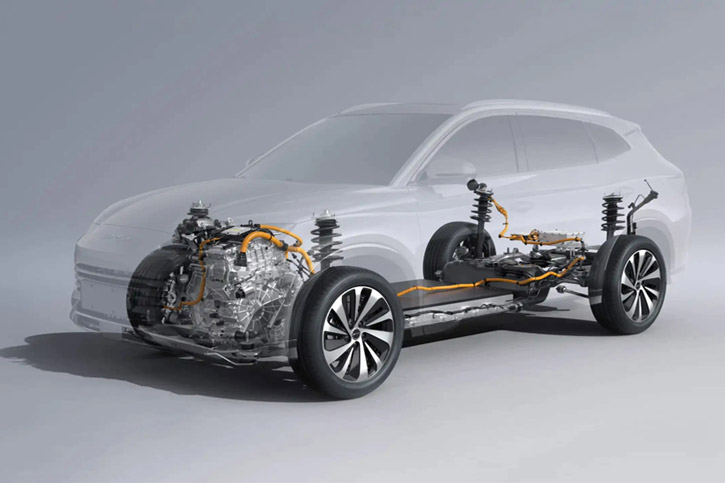
To answer this question, we cannot simply stop at a simple “yes” or “no” conclusion. First, we need to step into the world of the hybrid battery and see how it works. Unlike the large-capacity batteries in pure electric vehicles, the battery in a hybrid vehicle, especially the one used in non-plug-in hybrid systems like Toyota’s THS, operates on a philosophy of “shallow charge and shallow discharge.”
Specifically, the system is very clever. Through sophisticated energy management strategies, it actively keeps the battery’s state of charge within a relatively safe middle range, for example, between 40% and 80%. It will never let you fully deplete the battery, nor will it let you truly “fully charge” it. The core purpose of this design is to maximise the battery’s cycle life. You could say that the Battery Management System acts as the battery’s “personal nanny,” constantly protecting it from the two greatest enemies: overcharging and deep discharging. Therefore, when we discuss the impact of short-distance driving, we are actually exploring whether this usage pattern can breach the defences of this protective mechanism.
2. The Pros and Cons of Short-Distance Driving
From certain perspectives, gentle, short-distance driving seems beneficial to the battery. After all, you rarely have the chance to subject it to violent, high-power charging and discharging; the current flowing in and out is relatively gentle. However, the problem lies precisely in the word “short.” The challenge that short-distance city driving poses to the hybrid battery does not come from aggressive use, but from a more insidious, “slow-boiling frog” type of negative effect. Here, two core problems exist.

Challenge One: Incomplete Cycles Caused by Frequent “Opportunistic Charging”
When you take an extremely short drive, such as merely moving the car or crawling for a few hundred metres within a residential area on electric power alone, then park and turn off the engine, the battery’s charge may have only dropped by a tiny amount. When you start the car again, the engine will immediately fire up to warm itself up or “top up” the battery, charging it once more. Consequently, the battery goes through an extremely tiny “discharge-charge” micro-cycle.
Although lithium batteries have no memory effect and in theory this is not a problem, the key point is that such extremely frequent, trivial micro-cycles, when accumulated, increase the number of fluctuations in the battery’s State of Charge (SOC). Over the long term, the battery’s chemical activity can be slightly affected due to the lack of a complete and deep calibration. A more vivid analogy is that it is like a person who only takes countless short, shallow breaths every day but never a single deep, satisfying breath — over time, their lung capacity and respiratory health will inevitably be affected to some degree.
Challenge Two: The Battery Chronically Fails to Reach and Maintain Its Optimal Operating Temperature
This is the single greatest factor affecting battery health in short-distance city driving. Hybrid batteries, especially nickel-metal hydride batteries, are very sensitive to temperature. Their ideal operating temperature range, just like a comfortable, warm room, is typically between 25°C and 40°C.
The problem is that after a typical five-minute city trip, just as your engine and coolant are starting to warm up, the electrolyte inside the battery may not have fully “woken up” yet and is still far from the ideal temperature for chemical reactions. Then, almost immediately, you arrive at your destination, turn off the engine, and the entire system rapidly cools down. As a result, the battery spends most of the day in, or close to, a cold-soaked state, repeatedly going through a cycle of “briefly warming up — cooling down — briefly warming up again.”
This condition causes a double whammy of damage:
- Low charging efficiency and susceptibility to lithium plating at low temperatures: In low-temperature conditions, the chemical reactions inside the battery slow down and internal resistance increases. If regenerative braking charging occurs at this time (e.g., when braking), lithium ions may fail to intercalate smoothly into the graphite anode and instead deposit on its surface in the form of metallic lithium, forming “lithium dendrites.” This is an irreversible, permanent damage that gradually robs the battery of its usable capacity and can even puncture the separator, causing a safety hazard.
- Risk of condensation build-up: Frequent alternation between cold and hot, especially in high-humidity environments, increases the likelihood of condensation forming inside the battery pack. Although the battery pack has a sealed design, the long-term “breathing effect” can still allow moisture a chance to intrude, leading to corrosion of connectors, and damage to battery cells and monitoring circuit boards.
In summary, a single direct short trip will not immediately destroy the battery, but the “long-term low-temperature working environment” and “frequent micro-cycles” it creates act like an invisible hourglass, accelerating the aging process of the battery. For Plug-in Hybrid Electric Vehicles (PHEVs), if you always use pure electric mode for ultra-short commutes and the engine remains inactive for long periods, the battery similarly faces the problems of lacking a proper “warm-up” and state of charge calibration.
3. How to Scientifically Protect Your Car’s Battery?
Once we understand the issues, there is no need for excessive anxiety, because through some simple driving and maintenance habits, we can effectively counteract these negative effects. Here is your easily mastered “Battery Wellness Manual”:
Tip One: Arrange at Least One “Warm-the-Heart Journey” Every Week
This is the most important and simplest rule. Try to arrange at least one drive of over 30 minutes with smooth traffic conditions in your weekly schedule. The main purpose of this is not to fully charge the battery, but to allow the entire powertrain — including the engine, coolant and battery pack — to reach and maintain optimal operating temperature for a period of time. During this process, the electrolyte inside the battery gets fully “activated” and its chemical properties return to their prime state. This journey not only helps dry out any moisture inside the battery pack, but also gives the Battery Management System a chance to perform an accurate state of charge self-calibration, making the displayed range and battery health assessment more precise.
Tip Two: Make Good Use of “Maintenance Mode” or Forced Charging Functions
Many hybrid models, especially plug-in hybrids, have a maintenance mode that forces the engine to run for a period after prolonged pure-electric driving. If your car lacks this automatic function and you truly spend a long time in extremely short-distance driving conditions, you can consciously switch manually to “Charge Mode” or “Sport Mode” to keep the engine running and actively warm up the battery. This is like giving the battery an “active heat therapy” and is very beneficial.
Tip Three: Keep Your Driving Style as Smooth as Possible, but Occasionally Get a Little “Spirited”
In the city, gentle acceleration and coasting with proactive throttle-off anticipation, using regenerative braking to decelerate, is the golden rule for maximising efficiency. However, when safety allows, execute a few clean, decisive accelerations at motorway on-ramps or on open stretches of road, letting the engine and electric motor deliver power in tandem. This not only helps clear carbon deposits but, more importantly, allows the battery to undergo a healthy, moderately current-rated, deep charge-discharge cycle. This is known as “battery exercise.”
Tip Four: The Choice of Parking Environment Is Crucial
Whenever conditions permit, whether at home or at the office, prioritise parking in an underground garage or shaded spot. Doing so prevents the battery from being baked by high temperatures in summer, while effectively slowing the rate of battery cooling in winter, allowing the battery to start its next journey from a relatively friendly initial temperature. This point has a remarkably significant effect on slowing the overall degradation rate of the battery.
Conclusion: Balance is Key, Not Fear
In summary, back to our initial question: “Does short-distance city driving damage hybrid battery health over time?” The answer is: yes, it indeed causes a specific type of slow, “maintenance-related wear and tear,” but it is entirely within our control.
You need not panic over this, nor should you give up the excellent urban driving experience that a hybrid vehicle offers because of battery worries. Instead, you should turn this awareness into proactive maintenance actions. Remember, a car is a precision masterpiece of modern industry, and it is far tougher than you might imagine. The Battery Management System provides a foundational layer of protection, and all you need to do is become a mindful owner — by making a weekly long drive, choosing suitable parking, and occasionally performing deep charge-discharge cycles, you can compensate for the inherent shortcomings of short-distance driving.
Ultimately, you will discover that the lifespan of a hybrid battery is not determined by any single driving pattern, but is shaped by long-term, comprehensive usage habits. Embrace the knowledge, dismiss your doubts, and then go ahead and enjoy every one of your journeys better.


